논문 해설
Empirical evaluation of shallow and deep learning classifiers for Arabic sentiment analysis
아랍어 감성 분석을 위한 얕은 학습 및 깊은 학습 분류기의 실증적 평가
- 연구 문제 아랍어 감성 분석에서 얕은 학습과 깊은 학습 분류기가 같은 조건에서 어떻게 다른지 검증합니다.
- 연구 방법 HARD와 BRAD 데이터셋에서 얕은 학습 분류기와 CNN, LSTM 계열, GRU, transformer를 같은 전처리로 비교하고 데이터 크기에 따른 학습 곡선을 분석합니다.
- 주요 결과 이진 분류에서는 Bi-LSTM+CNN이 HARD 정확도 0.942로 가장 높았고, 5-label 분류에서는 RF가 0.742로 가장 높았습니다.
아랍어 감성 분석에서 깊은 학습은 정말 얕은 학습보다 나은가
아랍어 리뷰의 감성 분석은 방언이 많고 형태론이 풍부하며 중의성이 커서 자동 분류가 어렵습니다. 이 연구는 이러한 조건에서 얕은 학습 분류기와 깊은 학습 분류기를 같은 데이터와 전처리 절차로 비교합니다. 선행 연구 가운데 SVM이 CNN과 RNN보다 나았다고 보고한 연구가 있는데, 저자들은 그 결과가 데이터 크기가 부족해 깊은 학습의 잠재력을 충분히 쓰지 못한 탓일 수 있다고 가설을 세웁니다. 따라서 이 논문의 핵심 질문은 데이터 크기가 충분할 때 깊은 학습이 실제로 더 나은지, 그리고 그 차이가 어느 지점에서 나타나는지입니다.
데이터셋 구성과 전처리
실험에는 HARD와 BRAD 두 데이터셋이 쓰입니다. HARD는 373,750개 리뷰를 포함하며 이 연구는 불균형 버전을 사용했습니다. 이진 분류에서는 부정 46,001개와 긍정 252,252개 중 각각 45,500개를 무작위로 뽑아 91,000개 리뷰로 균형을 맞췄습니다. BRAD는 508,538개 도서 리뷰를 포함하며, 이진 분류에서는 부정 63,104개와 긍정 249,737개 중 60,000개씩 골라 120,000개로 구성했습니다. 5-label 분류에서는 평점 1의 약 12,500개에 맞춰 HARD를 62,500개로 균형 맞췄습니다. 전처리에서는 평점 3을 이진 분류에서 제외하고, 문장 길이와 단어 수 범위를 정하며, 반복 문자를 줄이고, 최종적으로 토큰화 후 길이 100 토큰으로 패딩합니다.
이 절차는 두 데이터셋에 공통으로 적용됩니다.
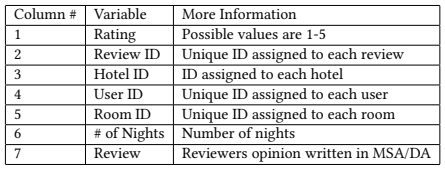
Table 2 . HARD dataset variables.
원문 · CC BY 4.0 · Ali Bou Nassif, Abdollah Masoud Darya, Ashraf Elnagar · Empirical evaluation of shallow and deep learning classifiers for Arabic sentiment analysis · 원문 그림 인용 · 원본 PDF 4쪽에서 그림 영역을 추출했습니다.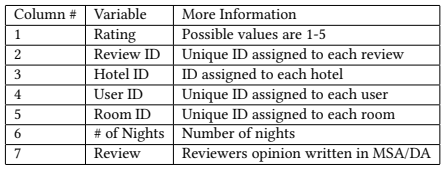
Table 3 . Two sample reviews from BRAD with their literal English translation.
원문 · CC BY 4.0 · Ali Bou Nassif, Abdollah Masoud Darya, Ashraf Elnagar · Empirical evaluation of shallow and deep learning classifiers for Arabic sentiment analysis · 원문 그림 인용 · 원본 PDF 4쪽에서 그림 영역을 추출했습니다.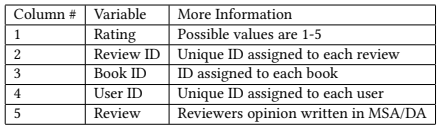
Table 4 . BRAD dataset variables.
원문 · CC BY 4.0 · Ali Bou Nassif, Abdollah Masoud Darya, Ashraf Elnagar · Empirical evaluation of shallow and deep learning classifiers for Arabic sentiment analysis · 원문 그림 인용 · 원본 PDF 5쪽에서 그림 영역을 추출했습니다.얕은 학습 분류기
얕은 학습 분류기로는 Decision Tree, Random Forest, SVM(RBF와 선형 커널), KNN, MLP, Gaussian Naïve Bayes, AdaBoost가 쓰였습니다. Random Forest는 여러 트리 예측기를 결합하며 각 노드에서 무작위로 선택한 예측변수 부분집합 중 최적 분할을 사용합니다. AdaBoost는 여러 약한 모델을 결합해 정확한 예측 모델을 만듭니다. 얕은 학습의 교차 검증은 학습 데이터의 9-fold 방식으로 수행되었습니다.
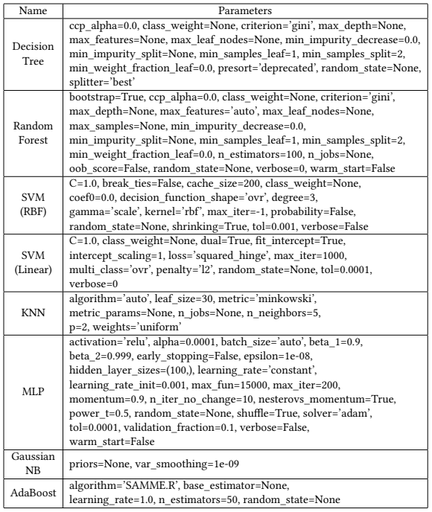
Table 24 . Shallow Learning Classifiers
원문 · CC BY 4.0 · Ali Bou Nassif, Abdollah Masoud Darya, Ashraf Elnagar · Empirical evaluation of shallow and deep learning classifiers for Arabic sentiment analysis · 원문 그림 인용 · 원본 PDF 24쪽에서 그림 영역을 추출했습니다.깊은 학습 구조와 transformer 전이 학습
깊은 학습 쪽에서는 CNN, Bi-LSTM, GRU와 이들의 조합 및 transformer를 평가했습니다. LSTM 대신 Bi-LSTM을 사용한 이유는 예비 실험에서 더 좋은 성능을 보였기 때문입니다. transformer 설정은 araBERT의 파라미터로 감성 분류기를 초기화하는 전이 학습 형태입니다. 즉 pre-training 모델을 가져와 소규모 지도 데이터로 미세 조정하는 방식이며, 이 설정은 CNN 계열과 같은 방식의 학습 구조로 보지 않아야 합니다.
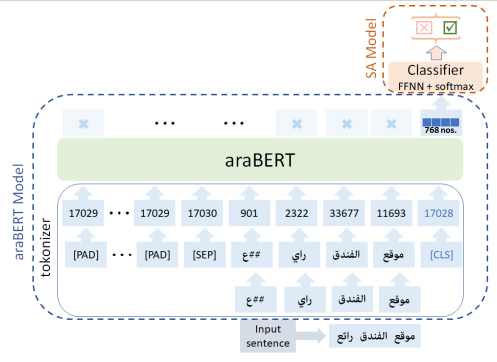
Fig. 1 . The workflow is summarized in the pipeline diagram above showing how the sentiment classifier (the fine-tuning task) is added on top of the araBERT transformer model.
원문 · CC BY 4.0 · Ali Bou Nassif, Abdollah Masoud Darya, Ashraf Elnagar · Empirical evaluation of shallow and deep learning classifiers for Arabic sentiment analysis · 원문 그림 인용 · 원본 PDF 8쪽에서 그림 영역을 추출했습니다.이진 분류 결과
이진 분류에서 얕은 학습 쪽은 Random Forest가 HARD 정확도 0.897로 가장 높았고, 그 다음이 Decision Tree와 AdaBoost였습니다. 깊은 학습 쪽에서는 Bi-LSTM+CNN 하이브리드가 HARD 정확도 0.942, BRAD 정확도 0.835로 가장 높았습니다. Wilcoxon 검정에서 Bi-LSTM+CNN은 여섯 개 모델과 95% 신뢰구간에서 통계적으로 다르다고 보고됩니다. 얕은 학습 분류기는 대체로 BRAD보다 HARD에서 더 좋은 성능을 보였는데, 저자들은 이를 BRAD의 어휘 규모가 HARD보다 커서 나타난 결과로 해석합니다.
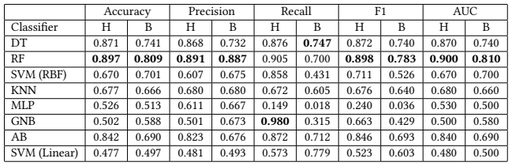
Table 5 . Binary classification results from training and testing the HARD (H) and BRAD (B) datasets using SL. Note: all results are rounded to three significant digits. Bold results represent the best performance from each category.
원문 · CC BY 4.0 · Ali Bou Nassif, Abdollah Masoud Darya, Ashraf Elnagar · Empirical evaluation of shallow and deep learning classifiers for Arabic sentiment analysis · 원문 그림 인용 · 원본 PDF 9쪽에서 그림 영역을 추출했습니다.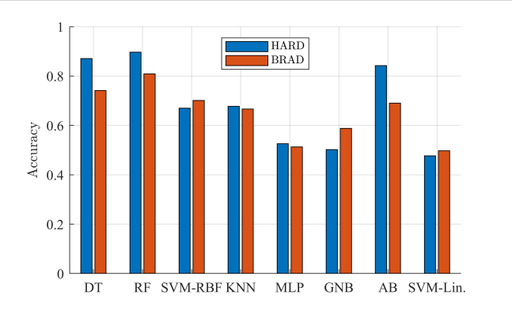
Fig. 2 . Comparison between the binary classification accuracy obtained for SL techniques for both datasets.
원문 · CC BY 4.0 · Ali Bou Nassif, Abdollah Masoud Darya, Ashraf Elnagar · Empirical evaluation of shallow and deep learning classifiers for Arabic sentiment analysis · 원문 그림 인용 · 원본 PDF 10쪽에서 그림 영역을 추출했습니다.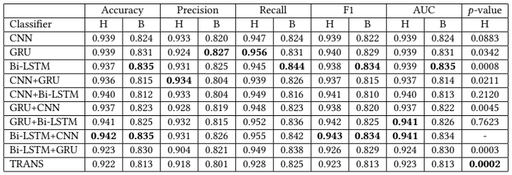
Table 7 . Binary classification results from training and testing the HARD (H) and BRAD (B) datasets using DL. Note: all results are rounded to three significant digits. Bold results represent the best performance from each category.
원문 · CC BY 4.0 · Ali Bou Nassif, Abdollah Masoud Darya, Ashraf Elnagar · Empirical evaluation of shallow and deep learning classifiers for Arabic sentiment analysis · 원문 그림 인용 · 원본 PDF 11쪽에서 그림 영역을 추출했습니다.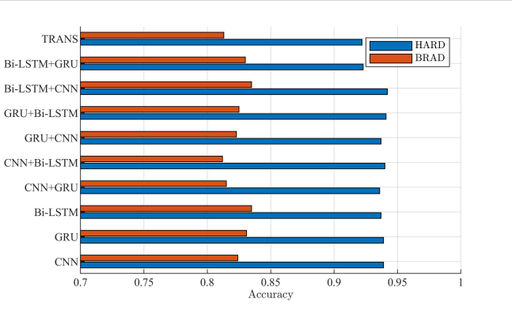
Fig. 4 . Comparison between the binary classification accuracy obtained for deep learning techniques for both datasets.
원문 · CC BY 4.0 · Ali Bou Nassif, Abdollah Masoud Darya, Ashraf Elnagar · Empirical evaluation of shallow and deep learning classifiers for Arabic sentiment analysis · 원문 그림 인용 · 원본 PDF 12쪽에서 그림 영역을 추출했습니다.5-label 분류 결과와 RF의 우위
5-label 분류에서는 Random Forest가 정확도 0.742로 가장 높았습니다. 깊은 학습 중 최고 정확도는 CNN의 0.674였으며, 깊은 학습 분류기는 대부분의 얕은 학습 분류기보다 높았지만 RF에는 미치지 못했습니다. 따라서 5-label 설정에서는 깊은 학습이 전체적으로 우세하다는 결론이 성립하지 않습니다.
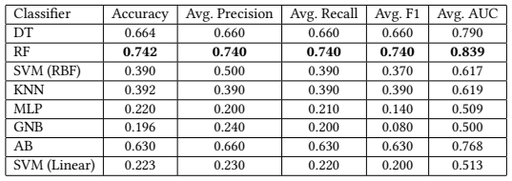
Table 6 . 5-label classification results from training and testing the HARD dataset using SL. Note: all results are rounded to three significant digits. Bold results represent the best performance from each category.
원문 · CC BY 4.0 · Ali Bou Nassif, Abdollah Masoud Darya, Ashraf Elnagar · Empirical evaluation of shallow and deep learning classifiers for Arabic sentiment analysis · 원문 그림 인용 · 원본 PDF 10쪽에서 그림 영역을 추출했습니다.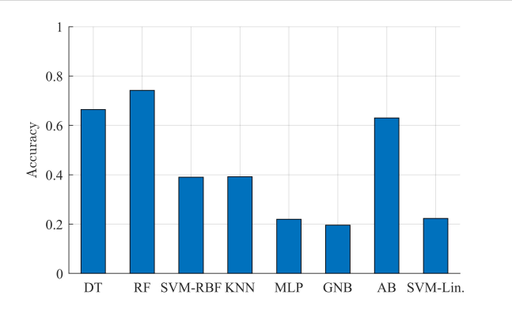
Fig. 3 . Comparison between the 5-label classification accuracy obtained for shallow learning techniques for the HARD dataset.
원문 · CC BY 4.0 · Ali Bou Nassif, Abdollah Masoud Darya, Ashraf Elnagar · Empirical evaluation of shallow and deep learning classifiers for Arabic sentiment analysis · 원문 그림 인용 · 원본 PDF 11쪽에서 그림 영역을 추출했습니다.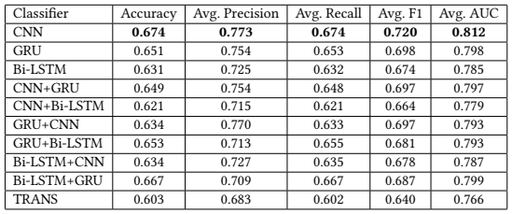
Table 8 . 5-label classification results from training and testing the HARD dataset using deep learning. Note: all results are rounded to three significant digits. Bold results represent the best performance from each category.
원문 · CC BY 4.0 · Ali Bou Nassif, Abdollah Masoud Darya, Ashraf Elnagar · Empirical evaluation of shallow and deep learning classifiers for Arabic sentiment analysis · 원문 그림 인용 · 원본 PDF 12쪽에서 그림 영역을 추출했습니다.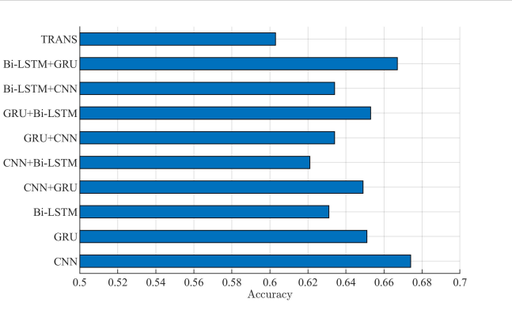
Fig. 5 . Comparison of classification accuracy in 5-label sentiment analysis obtained for deep learning techniques for the HARD dataset.
원문 · CC BY 4.0 · Ali Bou Nassif, Abdollah Masoud Darya, Ashraf Elnagar · Empirical evaluation of shallow and deep learning classifiers for Arabic sentiment analysis · 원문 그림 인용 · 원본 PDF 13쪽에서 그림 영역을 추출했습니다.데이터셋 크기에 따른 학습 곡선
Bi-LSTM+CNN과 RF를 HARD의 여러 크기에서 100회 무작위 재표본화로 비교했습니다. 데이터 비율이 커질수록 Bi-LSTM+CNN의 평균 정확도는 증가하고 RF의 평균 정확도는 조금씩 낮아졌습니다. 평균 정확도가 교차하는 지점은 약 6%, 즉 5,460개 리뷰 부근입니다. 5-label 실험에서도 CNN의 정확도는 데이터가 늘수록 커졌으나 RF는 거의 일정하게 유지되었습니다. 이 결과는 HARD 데이터셋과 특정 분할 조건에서 얻은 관찰이며, 다른 데이터셋으로 일반화하려면 별도 검증이 필요합니다.
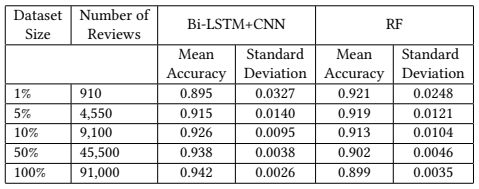
Table 9 . The performance of Bi-LSTM+CNN and RF versus dataset size variation for binary classification of HARD. Accuracy is averaged over 100 runs, where each run randomly resamples the dataset.
원문 · CC BY 4.0 · Ali Bou Nassif, Abdollah Masoud Darya, Ashraf Elnagar · Empirical evaluation of shallow and deep learning classifiers for Arabic sentiment analysis · 원문 그림 인용 · 원본 PDF 13쪽에서 그림 영역을 추출했습니다.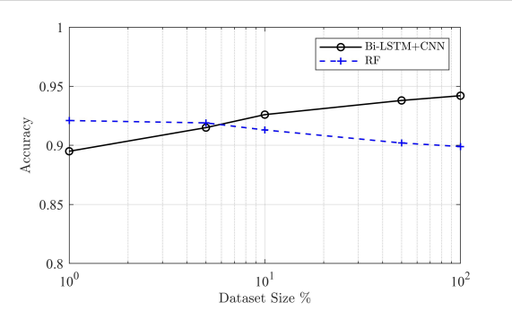
Fig. 6 . Binary classification accuracy versus the percentage of the dataset used for Bi-LSTM+CNN and RF. Accuracy is averaged over 100 runs, where each run randomly resamples the dataset. Note that the x-axis is in the logarithmic scale.
원문 · CC BY 4.0 · Ali Bou Nassif, Abdollah Masoud Darya, Ashraf Elnagar · Empirical evaluation of shallow and deep learning classifiers for Arabic sentiment analysis · 원문 그림 인용 · 원본 PDF 14쪽에서 그림 영역을 추출했습니다.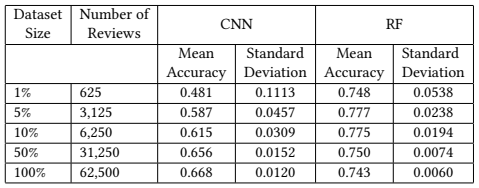
Table 10 . The performance of CNN and RF versus dataset size variation for 5-label classification of HARD. Accuracy is averaged over 100 runs, where each run randomly resamples the dataset.
원문 · CC BY 4.0 · Ali Bou Nassif, Abdollah Masoud Darya, Ashraf Elnagar · Empirical evaluation of shallow and deep learning classifiers for Arabic sentiment analysis · 원문 그림 인용 · 원본 PDF 15쪽에서 그림 영역을 추출했습니다.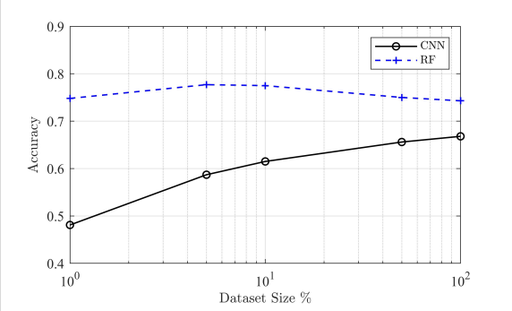
Fig. 7 . 5-label classification accuracy versus the percentage of the dataset used for CNN and RF. Accuracy is averaged over 100 runs, where each run randomly resamples the dataset. Note that the x-axis is in the logarithmic scale.
원문 · CC BY 4.0 · Ali Bou Nassif, Abdollah Masoud Darya, Ashraf Elnagar · Empirical evaluation of shallow and deep learning classifiers for Arabic sentiment analysis · 원문 그림 인용 · 원본 PDF 15쪽에서 그림 영역을 추출했습니다.임베딩 설정과 araBERT의 효과
transformer는 단일 기본 토큰 임베딩에서는 다른 깊은 학습 모델보다 낮았는데, 저자들은 이를 기본 임베딩이 단순했기 때문이라고 해석합니다. 임베딩 실험에서는 araBERT가 이진 정확도 0.927, 5-label 정확도 0.736으로 가장 높았습니다. 두 층 토큰과 위치 임베딩은 단일 토큰 임베딩보다 개선을 보였습니다. 이 비교는 transformer 아키텍처 중 임베딩 설정만 바꾼 결과입니다.
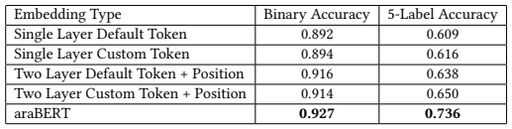
Table 11 . The effect of embedding testing on 3K sentences for binary classification and 5K sentences for 5-label classification. The accuracy recorded is the mean accuracy measured over 100 re-runs, where each re-run randomly resamples the dataset.
원문 · CC BY 4.0 · Ali Bou Nassif, Abdollah Masoud Darya, Ashraf Elnagar · Empirical evaluation of shallow and deep learning classifiers for Arabic sentiment analysis · 원문 그림 인용 · 원본 PDF 16쪽에서 그림 영역을 추출했습니다.해석 범위와 한계
결론의 주된 근거는 HARD와 BRAD의 두 데이터셋과 이 논문의 설정에서 나온 결과입니다. 데이터 크기가 깊은 학습의 우위를 설명한다는 해석은 학습 곡선 실험에 근거하지만, 이는 HARD 데이터셋과 제시된 분할 조건에서 관찰된 결과입니다. 5-label 분류에서는 RF가 가장 좋았으므로 깊은 학습의 전반적 우위는 이진 분류에 더 가깝습니다. 또한 misclassification 분석은 오류 사례를 보여 주지만, 그 사례들로부터 모델의 모든 실패 유형을 확정하지는 않습니다.
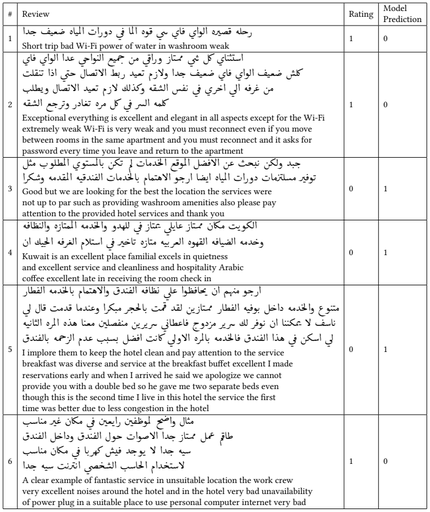
Table 12 . Examples of misclassifications by the CNN model (binary classification).
원문 · CC BY 4.0 · Ali Bou Nassif, Abdollah Masoud Darya, Ashraf Elnagar · Empirical evaluation of shallow and deep learning classifiers for Arabic sentiment analysis · 원문 그림 인용 · 원본 PDF 17쪽에서 그림 영역을 추출했습니다.논문 정보
- 저자
- Ali Bou Nassif, Abdollah Masoud Darya, Ashraf Elnagar
- 학회·저널
- arXiv · 프리프린트
- 최초 공개일
- 2021년 12월 1일
- 등록일
- 2026년 11월 6일
- 수정일
- 2021년 12월 1일
- 버전
- v1
- arXiv
- 2112.00534
- DOI
- 10.1145/3466171
- 분류
- cs.CL · cs.LG
- 원문 이용 조건
- CC BY 4.0
- 제공 범위
- 논문 정보, 해설, 허용된 원문 그림
AI 해설은 논문 원문과 별개의 설명이며 오류가 있을 수 있습니다. 원문과 그림은 각 출처의 이용 조건과 따로 표시된 권리를 따릅니다.
초록
This work presents a detailed comparison of the performance of deep learning models such as convolutional neural networks (CNN), long short-term memory (LSTM), gated recurrent units (GRU), their hybrids, and a selection of shallow learning classifiers for sentiment analysis of Arabic reviews. Additionally, the comparison includes state-of-the-art models such as the transformer architecture and the araBERT pre-trained model. The datasets used in this study are multi-dialect Arabic hotel and book review datasets, which are some of the largest publicly available datasets for Arabic reviews. Results showed deep learning outperforming shallow learning for binary and multi-label classification, in contrast with the results of similar work reported in the literature. This discrepancy in outcome was caused by dataset size as we found it to be proportional to the performance of deep learning models. The performance of deep and shallow learning techniques was analyzed in terms of accuracy and F1 score. The best performing shallow learning technique was Random Forest followed by Decision Tree, and AdaBoost. The deep learning models performed similarly using a default embedding layer, while the transformer model performed best when augmented with araBERT.
원문 인용
Ali Bou Nassif, Abdollah Masoud Darya, Ashraf Elnagar (2021). Empirical evaluation of shallow and deep learning classifiers for Arabic sentiment analysis. arXiv:2112.00534v1. https://doi.org/10.1145/3466171
BibTeX
@article{nassif2021empirical,
  title = {{Empirical evaluation of shallow and deep learning classifiers for Arabic sentiment analysis}},
  author = {Ali Bou Nassif and Abdollah Masoud Darya and Ashraf Elnagar},
  year = {2021},
  eprint = {2112.00534},
  archivePrefix = {arXiv},
  doi = {10.1145/3466171},
  url = {https://arxiv.org/abs/2112.00534v1}
}