논문 해설
Mastering the Game of Stratego with Model-Free Multiagent Reinforcement Learning
모델-프리 다중 에이전트 강화학습으로 스트라테고 게임 마스터하기
- 연구 문제 Stratego는 매우 큰 상태 공간과 비공개 배치 정보를 가진 불완전 정보 게임이며, DeepNash는 탐색 없이 자기대국 모델-프리 강화학습으로 이 게임의 전문가 수준 플레이를 학습하는 것을 목표로 합니다.
- 연구 방법 DeepNash는 R-NaD 알고리즘을 깊은 신경망으로 확장하여 배치와 게임 플레이를 함께 학습하며, 학습 중 fine-tuning과 테스트 시점 후처리를 추가합니다.
- 주요 결과 DeepNash는 기존 스트래티고 봇 상대로 최소 97% 이상의 승률을 기록했고, Gravon의 인간 전문가와의 50개 순위전에서 84%의 승률로 2022년 및 전체 기록 순위 3위에 올랐다고 보고합니다.
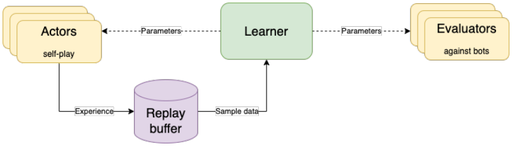
Figure 8 : Agent decomposition. Learner samples games/trajectories from Replay Buffer, improves weights, and periodically distributes these to actors and evaluators. Actors self-play and write experience into Replay Buffer. Evaluators play against other bots to assess performance.
원문 · CC BY 4.0 · Julien Perolat, Bart de Vylder, Daniel Hennes, Eugene Tarassov, Florian Strub, Vincent de Boer, Paul Muller, Jerome T. Connor, Neil Burch, Thomas Anthony, Stephen McAleer, Romuald Elie, Sarah H. Cen, Zhe Wang, Audrunas Gruslys, Aleksandra Malysheva, Mina Khan, Sherjil Ozair, Finbarr Timbers, Toby Pohlen, Tom Eccles, Mark Rowland, Marc Lanctot, Jean-Baptiste Lespiau, Bilal Piot, Shayegan Omidshafiei, Edward Lockhart, Laurent Sifre, Nathalie Beauguerlange, Remi Munos, David Silver, Satinder Singh, Demis Hassabis, Karl Tuyls · Mastering the Game of Stratego with Model-Free Multiagent Reinforcement Learning · 원문 그림 인용 · 원본 PDF 41쪽에서 그림 영역을 추출했습니다.Stratego가 왜 어려운 문제인가
Stratego는 두 플레이어가 40개의 말을 비밀리에 배치한 뒤 상대의 깃발을 잡는 불완전 정보 보드게임입니다. 게임 트리의 규모는 약 10^535 노드로 바둑보다 10^175배 크며, 배치 단계에서만 약 10^66가지의 배치를 고려해야 합니다. 원문은 이 때문에 기존의 완전 정보 탐색이나 불완전 정보 탐색 기법을 그대로 적용하기 어렵다고 설명합니다. 특히 상대의 비공개 말 배치를 공개 상태로부터 추정해야 하므로 탐색 공간이 다루기 어려워집니다.
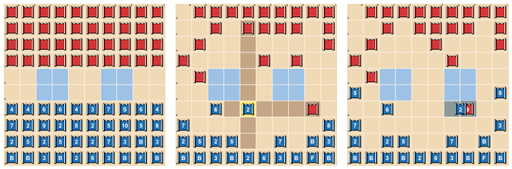
Figure 6 : The phases of a Stratego game: (a) the deployment phase during which players put their pieces on the board in a private configuration. (b) the game phase, where players alternate turns in moving pieces. Here a player chose to attack an opponent piece with the Scout (2), taking advantage of the long-range Scout action (c). As a result, both pieces are revealed; the Scout (2) is defeated by the General (9) and removed from the board.
원문 · CC BY 4.0 · Julien Perolat, Bart de Vylder, Daniel Hennes, Eugene Tarassov, Florian Strub, Vincent de Boer, Paul Muller, Jerome T. Connor, Neil Burch, Thomas Anthony, Stephen McAleer, Romuald Elie, Sarah H. Cen, Zhe Wang, Audrunas Gruslys, Aleksandra Malysheva, Mina Khan, Sherjil Ozair, Finbarr Timbers, Toby Pohlen, Tom Eccles, Mark Rowland, Marc Lanctot, Jean-Baptiste Lespiau, Bilal Piot, Shayegan Omidshafiei, Edward Lockhart, Laurent Sifre, Nathalie Beauguerlange, Remi Munos, David Silver, Satinder Singh, Demis Hassabis, Karl Tuyls · Mastering the Game of Stratego with Model-Free Multiagent Reinforcement Learning · 원문 그림 인용 · 원본 PDF 33쪽에서 그림 영역을 추출했습니다.이 논문은 탐색을 사용하지 않고, 자기대국(self-play) 기반의 모델-프리 강화학습으로 이 문제에 접근합니다. 저자들은 이 접근이 인간 전문가 수준에 도달할 수 있는지를 주요 질문으로 설정합니다.
R-NaD와 DeepNash의 학습 구조
DeepNash의 핵심은 Regularized Nash Dynamics(R-NaD) 알고리즘입니다. R-NaD는 정규화 정책 π_reg를 기준으로 보상을 변환하는 단계, 변환된 게임에서 복제자 동역학을 실행해 고정점을 찾는 단계, 그리고 그 고정점을 다음 반복의 정규화 정책으로 삼는 갱신 단계를 반복합니다. 원문은 이 과정에서 리아프노프 함수가 학습 중 감소하여 고정점으로의 수렴을 보장한다고 설명합니다.
보상 변환은 각 플레이어의 행동 확률을 정규화 정책과 비교하는 로그 항으로 수정하며, 정규화 계수 η는 0.2로 설정됩니다. DeepNash는 이 절차를 깊은 합성곱 신경망으로 확장하여 가치 함수와 배치·말 선택·말 이동 세 정책 헤드를 학습합니다. 가치 추정에는 v-trace를 두 플레이어 설정에 맞게 바꾼 추정기가 사용되고, 정책 갱신에는 NeuRD가 사용됩니다.
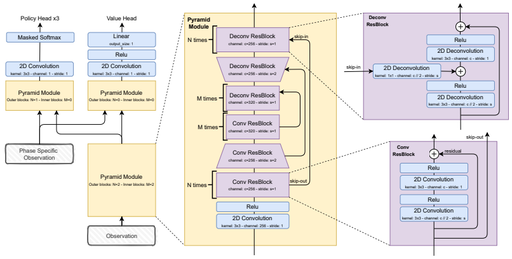
Figure 7 : Network implementation details. When applying striding, residual connections are also processed by a convolution layer with 1× 1 kernel (hidden for clarity).
원문 · CC BY 4.0 · Julien Perolat, Bart de Vylder, Daniel Hennes, Eugene Tarassov, Florian Strub, Vincent de Boer, Paul Muller, Jerome T. Connor, Neil Burch, Thomas Anthony, Stephen McAleer, Romuald Elie, Sarah H. Cen, Zhe Wang, Audrunas Gruslys, Aleksandra Malysheva, Mina Khan, Sherjil Ozair, Finbarr Timbers, Toby Pohlen, Tom Eccles, Mark Rowland, Marc Lanctot, Jean-Baptiste Lespiau, Bilal Piot, Shayegan Omidshafiei, Edward Lockhart, Laurent Sifre, Nathalie Beauguerlange, Remi Munos, David Silver, Satinder Singh, Demis Hassabis, Karl Tuyls · Mastering the Game of Stratego with Model-Free Multiagent Reinforcement Learning · 원문 그림 인용 · 원본 PDF 38쪽에서 그림 영역을 추출했습니다.학습 중 fine-tuning에서는 softmax 투영이 모든 행동에 0이 아닌 확률을 남기는 문제를 줄이기 위해 임계값 처리와 이산화를 적용합니다. 테스트 시점에는 정책의 매우 낮은 확률 행동을 제거하는 후처리, 반복 위협을 제한하는 휴리스틱, 가치 상한을 이용해 명백한 실수를 거르는 휴리스틱이 추가됩니다.
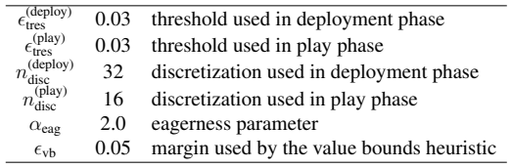
Table 4 : Test time improvement settings.
원문 · CC BY 4.0 · Julien Perolat, Bart de Vylder, Daniel Hennes, Eugene Tarassov, Florian Strub, Vincent de Boer, Paul Muller, Jerome T. Connor, Neil Burch, Thomas Anthony, Stephen McAleer, Romuald Elie, Sarah H. Cen, Zhe Wang, Audrunas Gruslys, Aleksandra Malysheva, Mina Khan, Sherjil Ozair, Finbarr Timbers, Toby Pohlen, Tom Eccles, Mark Rowland, Marc Lanctot, Jean-Baptiste Lespiau, Bilal Piot, Shayegan Omidshafiei, Edward Lockhart, Laurent Sifre, Nathalie Beauguerlange, Remi Munos, David Silver, Satinder Singh, Demis Hassabis, Karl Tuyls · Mastering the Game of Stratego with Model-Free Multiagent Reinforcement Learning · 원문 그림 인용 · 원본 PDF 49쪽에서 그림 영역을 추출했습니다.기존 봇과 Gravon 인간 전문가에 대한 평가
DeepNash는 Probe, Master of the Flag, Demon of Ignorance 등 기존 스트래티고 봇과 Gravon 플랫폼의 인간 전문가를 상대로 평가되었습니다. 봇 평가 표(Table 1)에서 DeepNash는 Probe와 Master of the Flag에 대해 각 30경기를, 나머지 봇에 대해 각 800경기를 진행한 결과를 보고합니다. 원문은 이 중 최소 승률이 97%라고 요약합니다.
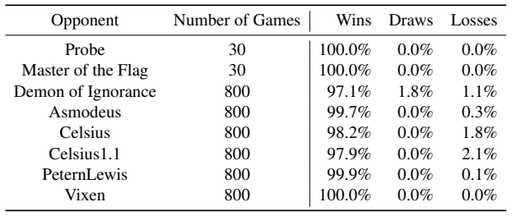
Table 1 : Evaluation of DeepNash against existing Stratego bots. The numbers are reported from Deep- Nash’s point of view. More games (800) were played against bots which we could run automatically. The same number of matches were played as Red and Blue, except against Master of the Flag which only plays as Blue.
원문 · CC BY 4.0 · Julien Perolat, Bart de Vylder, Daniel Hennes, Eugene Tarassov, Florian Strub, Vincent de Boer, Paul Muller, Jerome T. Connor, Neil Burch, Thomas Anthony, Stephen McAleer, Romuald Elie, Sarah H. Cen, Zhe Wang, Audrunas Gruslys, Aleksandra Malysheva, Mina Khan, Sherjil Ozair, Finbarr Timbers, Toby Pohlen, Tom Eccles, Mark Rowland, Marc Lanctot, Jean-Baptiste Lespiau, Bilal Piot, Shayegan Omidshafiei, Edward Lockhart, Laurent Sifre, Nathalie Beauguerlange, Remi Munos, David Silver, Satinder Singh, Demis Hassabis, Karl Tuyls · Mastering the Game of Stratego with Model-Free Multiagent Reinforcement Learning · 원문 그림 인용 · 원본 PDF 14쪽에서 그림 영역을 추출했습니다.인간 평가는 2022년 4월 초 약 2주 동안 진행되었으며 상위 인간 플레이어와 50개의 순위전을 치렀고, 그중 42경기(84%)를 이겼습니다. 이 결과는 Kleier 평점 체계로 2022년 순위에서 3위(평점 1799), 전체 기록 순위에서도 3위(평점 1778)로 환산되었습니다. 이 평가는 Gravon 플랫폼의 순위전 조건과 해당 기간의 대국에 한정됩니다.
결과의 적용 범위와 한계
Table 1의 결과는 DeepNash 관점에서 보고된 승·무·패 비율이며, 봇마다 대국 수가 다릅니다. Probe와 Master of the Flag는 30경기, 나머지 봇은 800경기이므로 봇 사이의 승률을 같은 조건의 비교로 확장할 수 없습니다. 원문은 Celsius1.1과의 일부 패배가 고위험 전략에서 비롯되었다고 설명하지만, 이는 저자의 해석이며 모든 패배의 원인으로 일반화되지 않습니다.
인간 평가는 Gravon의 특정 기간과 순위 규칙에 따른 것이며, 일부 대국은 이전 학습 스냅숏이나 시간 초과로 평점 계산에서 제외되었습니다. 또한 테스트 시점 휴리스틱은 인간 상대에 대한 대국 품질을 높였다고 보고되었지만, 자기 자신의 휴리스틱 제거 버전과의 승률 차이는 크지 않다고 원문에 기록되어 있습니다.
논문 정보
- 저자
- Julien Perolat, Bart de Vylder, Daniel Hennes, Eugene Tarassov, Florian Strub, Vincent de Boer, Paul Muller, Jerome T. Connor, Neil Burch, Thomas Anthony, Stephen McAleer, Romuald Elie, Sarah H. Cen, Zhe Wang, Audrunas Gruslys, Aleksandra Malysheva, Mina Khan, Sherjil Ozair, Finbarr Timbers, Toby Pohlen, Tom Eccles, Mark Rowland, Marc Lanctot, Jean-Baptiste Lespiau, Bilal Piot, Shayegan Omidshafiei, Edward Lockhart, Laurent Sifre, Nathalie Beauguerlange, Remi Munos, David Silver, Satinder Singh, Demis Hassabis, Karl Tuyls
- 학회·저널
- arXiv · 프리프린트
- 최초 공개일
- 2022년 6월 30일
- 등록일
- 2026년 11월 6일
- 수정일
- 2022년 6월 30일
- 버전
- v1
- arXiv
- 2206.15378
- DOI
- 10.1126/science.add4679
- 분류
- cs.AI · cs.GT · cs.MA
- 원문 이용 조건
- CC BY 4.0
- 제공 범위
- 논문 정보, 해설, 허용된 원문 그림
AI 해설은 논문 원문과 별개의 설명이며 오류가 있을 수 있습니다. 원문과 그림은 각 출처의 이용 조건과 따로 표시된 권리를 따릅니다.
초록
We introduce DeepNash, an autonomous agent capable of learning to play the imperfect information game Stratego from scratch, up to a human expert level. Stratego is one of the few iconic board games that Artificial Intelligence (AI) has not yet mastered. This popular game has an enormous game tree on the order of $10^{535}$ nodes, i.e., $10^{175}$ times larger than that of Go. It has the additional complexity of requiring decision-making under imperfect information, similar to Texas hold'em poker, which has a significantly smaller game tree (on the order of $10^{164}$ nodes). Decisions in Stratego are made over a large number of discrete actions with no obvious link between action and outcome. Episodes are long, with often hundreds of moves before a player wins, and situations in Stratego can not easily be broken down into manageably-sized sub-problems as in poker. For these reasons, Stratego has been a grand challenge for the field of AI for decades, and existing AI methods barely reach an amateur level of play. DeepNash uses a game-theoretic, model-free deep reinforcement learning method, without search, that learns to master Stratego via self-play. The Regularised Nash Dynamics (R-NaD) algorithm, a key component of DeepNash, converges to an approximate Nash equilibrium, instead of 'cycling' around it, by directly modifying the underlying multi-agent learning dynamics. DeepNash beats existing state-of-the-art AI methods in Stratego and achieved a yearly (2022) and all-time top-3 rank on the Gravon games platform, competing with human expert players.
원문 인용
Julien Perolat, Bart de Vylder, Daniel Hennes, Eugene Tarassov, Florian Strub, Vincent de Boer, Paul Muller, Jerome T. Connor, Neil Burch, Thomas Anthony, Stephen McAleer, Romuald Elie, Sarah H. Cen, Zhe Wang, Audrunas Gruslys, Aleksandra Malysheva, Mina Khan, Sherjil Ozair, Finbarr Timbers, Toby Pohlen et al. (2022). Mastering the Game of Stratego with Model-Free Multiagent Reinforcement Learning. arXiv:2206.15378v1. https://doi.org/10.1126/science.add4679
BibTeX
@article{perolat2022mastering,
  title = {{Mastering the Game of Stratego with Model-Free Multiagent Reinforcement Learning}},
  author = {Julien Perolat and Bart de Vylder and Daniel Hennes and Eugene Tarassov and Florian Strub and Vincent de Boer and Paul Muller and Jerome T. Connor and Neil Burch and Thomas Anthony and Stephen McAleer and Romuald Elie and Sarah H. Cen and Zhe Wang and Audrunas Gruslys and Aleksandra Malysheva and Mina Khan and Sherjil Ozair and Finbarr Timbers and Toby Pohlen and Tom Eccles and Mark Rowland and Marc Lanctot and Jean-Baptiste Lespiau and Bilal Piot and Shayegan Omidshafiei and Edward Lockhart and Laurent Sifre and Nathalie Beauguerlange and Remi Munos and David Silver and Satinder Singh and Demis Hassabis and Karl Tuyls},
  year = {2022},
  eprint = {2206.15378},
  archivePrefix = {arXiv},
  doi = {10.1126/science.add4679},
  url = {https://arxiv.org/abs/2206.15378v1}
}