논문 해설
Gradual Transition from Bellman Optimality Operator to Bellman Operator in Online Reinforcement Learning
온라인 강화학습에서 벨만 최적성 연산자에서 벨만 연산자로의 점진적 전환
- 연구 문제 연속 행동 공간의 온라인 강화학습에서 Bellman 연산자 기반 액터-크리틱은 정책 갱신에만 의존해 샘플 효율이 낮을 수 있습니다.
- 연구 방법 Bellman Optimality Operator를 expectile 손실로 근사하고, τ를 1 근처에서 0.5까지 선형으로 줄여 Bellman 연산자로 전환하는 Annealed Q-learning을 TD3와 SAC에 결합합니다.
- 주요 결과 DM Control 10개 과제의 3M 스텝 평균 점수에서 AQ-TD3 740.3, AQ-SAC 746.1로 TD3 492.7, SAC 657.9보다 높게 보고됩니다.
연속 행동 공간에서 Bellman 연산자의 한계
연속 행동 공간의 온라인 강화학습에서는 액터-크리틱 방법이 널리 쓰입니다. 이산 행동 과제의 Q-learning은 Bellman Optimality Operator로 최적 가치를 추정하지만, 연속 행동에서는 max 연산을 직접 계산하기 어렵습니다. 그래서 TD3와 SAC 같은 방법은 현재 정책의 Q값을 Bellman 연산자로 추정하고, 정책 갱신에만 의존해 개선합니다. 저자들은 이 구조가 샘플 효율을 떨어뜨릴 수 있다고 봅니다. 로봇 제어처럼 샘플 수집 비용이 큰 과제에서는 이 문제가 중요합니다.
저자들은 단순한 표 형식 액터-크리틱 예비 실험으로 이 문제를 살폈습니다. SARSA형 업데이트는 정책이 먼저 개선되어야 Q값이 최적값으로 움직이지만, Q-learning형 업데이트는 Q값이 최적값에 더 빨리 다가갑니다. 반면 max 연산과 함수 근사의 잡음이 결합하면 Q-learning형 업데이트는 과대추정 편향을 일으킵니다. 따라서 이 연구의 질문은 최적 연산자의 가속 효과를 얻으면서 편향을 줄이는 방법이 가능한지입니다.
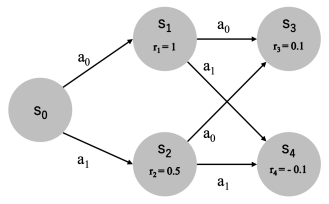
Figure 1 . A simple MDP used in preliminary experiments. A re- ward ri is obtained upon reaching state si , and the episode termi- nates when the agent reaches either state s3 or s4. The discount rate γ is set to 0.9.
원문 · CC BY 4.0 · Motoki Omura, Kazuki Ota, Takayuki Osa, Yusuke Mukuta, Tatsuya Harada · Gradual Transition from Bellman Optimality Operator to Bellman Operator in Online Reinforcement Learning · 원문 그림 인용 · 원본 PDF 3쪽에서 그림 영역을 추출했습니다.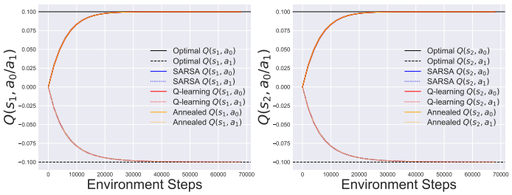
Figure 8 . The estimated Q-values for s1 and s2 in the experiment where noise was added to reproduce the randomness of Q-value estimation in the environment of Figure 1.
원문 · CC BY 4.0 · Motoki Omura, Kazuki Ota, Takayuki Osa, Yusuke Mukuta, Tatsuya Harada · Gradual Transition from Bellman Optimality Operator to Bellman Operator in Online Reinforcement Learning · 원문 그림 인용 · 원본 PDF 12쪽에서 그림 영역을 추출했습니다.τ 어닐링을 통한 expectile 손실 기반 전환
제안 방법인 Annealed Q-learning(AQ-L)은 크리틱 학습의 L2 손실을 expectile 손실로 바꾸고, expectile 파라미터 τ를 학습 중 줄이는 방식입니다. τ가 1에 가까우면 추정값은 최댓값 쪽에 가까워져 Bellman Optimality Operator에 대응하고, τ=0.5이면 L2 손실과 같아져 기대값 기반의 Bellman 연산자에 대응합니다. 이 연산은 연속 행동에서 max를 직접 계산하지 않고도 최적 쪽 목표값을 근사하게 합니다.
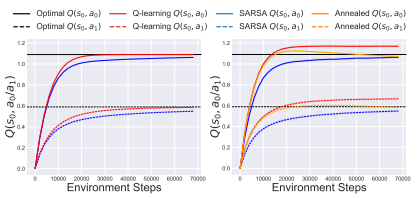
Figure 2 . Left: The estimated values of Q(s0, a0) and Q(s0, a1) when using tabular actor-critic with a Q-learning-based critic up- date under T ∗, compared to a SARSA-based critic update based on T π in the environment of Figure 1. Right: The estimated Q-values when Gaussian noise from N (0, 0.3) is added to the Q-value be- fore calculating the target value to simulate the randomness in Q-values when approximated with functions. In Annealed, both Q-learning-based and SARSA-based target values are computed, and the learning process transitions linearly from Q-learning-based at the beginning to SARSA-based at the end.
원문 · CC BY 4.0 · Motoki Omura, Kazuki Ota, Takayuki Osa, Yusuke Mukuta, Tatsuya Harada · Gradual Transition from Bellman Optimality Operator to Bellman Operator in Online Reinforcement Learning · 원문 그림 인용 · 원본 PDF 4쪽에서 그림 영역을 추출했습니다.구현은 기존 TD3와 SAC의 제곱 오차를 expectile 손실로 교체하는 간단한 수정입니다. 어닐링 스케줄은 τ(t)=τinit−(τinit−0.5)·t/T로 정의되며, τinit은 초기 값, T는 최대 타스텝, t는 현재 타스텝입니다. 이 선형 스케줄은 AQ-TD3와 AQ-SAC에 적용됩니다. 저자들은 여러 어닐링 패턴을 시험했지만 선형 스케줄이 충분히 잘 작동했다고 보고합니다.
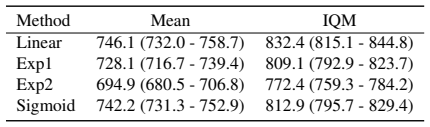
Table 5 . The average scores across the 10 DM Control tasks for AQ-SAC using various annealing patterns. A simple linear annealing showed the best performance.
원문 · CC BY 4.0 · Motoki Omura, Kazuki Ota, Takayuki Osa, Yusuke Mukuta, Tatsuya Harada · Gradual Transition from Bellman Optimality Operator to Bellman Operator in Online Reinforcement Learning · 원문 그림 인용 · 원본 PDF 17쪽에서 그림 영역을 추출했습니다.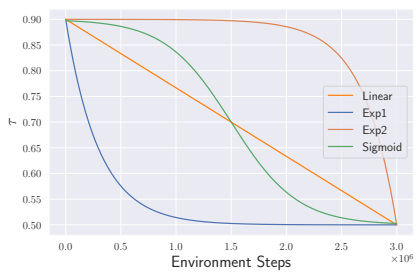
Figure 19 . The annealing patterns of τ used in the experiments.
원문 · CC BY 4.0 · Motoki Omura, Kazuki Ota, Takayuki Osa, Yusuke Mukuta, Tatsuya Harada · Gradual Transition from Bellman Optimality Operator to Bellman Operator in Online Reinforcement Learning · 원문 그림 인용 · 원본 PDF 20쪽에서 그림 영역을 추출했습니다.DM Control에서의 성능 비교
DM Control의 10개 locomotion 과제에서 AQ-TD3와 AQ-SAC는 TD3, SAC, XQL과 비교되었습니다. 결과는 10개 랜덤 시드로 평균되며, 3M 스텝 시점의 평균 점수는 AQ-TD3 740.3, AQ-SAC 746.1, TD3 492.7, SAC 657.9, XQL 564.4로 보고됩니다. 따라서 어닐링된 expectile 손실을 쓴 두 방법은 각각의 기준 방법보다 높은 평균 점수를 보입니다.
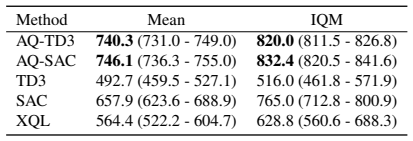
Table 1 . The average score at 3M steps across the DM Control tasks. The range in parentheses represents the confidence interval.
원문 · CC BY 4.0 · Motoki Omura, Kazuki Ota, Takayuki Osa, Yusuke Mukuta, Tatsuya Harada · Gradual Transition from Bellman Optimality Operator to Bellman Operator in Online Reinforcement Learning · 원문 그림 인용 · 원본 PDF 5쪽에서 그림 영역을 추출했습니다.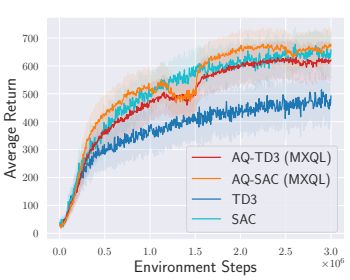
Figure 20 . The average scores across the 10 locomotion tasks in DM Control.
원문 · CC BY 4.0 · Motoki Omura, Kazuki Ota, Takayuki Osa, Yusuke Mukuta, Tatsuya Harada · Gradual Transition from Bellman Optimality Operator to Bellman Operator in Online Reinforcement Learning · 원문 그림 인용 · 원본 PDF 20쪽에서 그림 영역을 추출했습니다.과제별로 보면 hopper-hop, humanoid-run, humanoid-walk처럼 기존 방법이 낮은 점수에 머문 과제에서 AQ-TD3와 AQ-SAC의 점수가 크게 올라갑니다. 반대로 hopper-stand, quadruped-run, quadruped-walk처럼 기존 방법이 이미 높은 점수를 보인 과제에서는 더 적은 스텝에서 높은 점수에 도달하고 분산이 줄어듭니다. 저자들은 이를 최적 가치 추정에 따른 샘플 효율 향상과 초기 탐색에 따른 안정성 향상으로 해석합니다.
τ 어닐링과 고정 τ의 차이
AQ-SAC에서 τ를 0.9에서 어닐링한 최종 평균 점수는 746.1이며, 고정 τ 0.6, 0.7, 0.8, 0.9, 0.95의 평균 점수는 각각 713.6, 730.7, 683.4, 588.2, 364.9로 보고됩니다. 고정 τ의 최고값은 0.7이지만, 어닐링 방식은 초기값을 0.7부터 0.95까지 바꿔도 점수가 크게 변하지 않았다고 보고됩니다. 이 결과는 어닐링이 초기 τ 선택에 대한 민감도를 줄였다는 근거입니다.
과제별로 보면 hopper-hop에서는 고정 τ를 0.5에서 0.7로 높이면 점수가 오르지만 0.8에서 불안정해집니다. humanoid-run에서는 고정 τ=0.7이 초기 학습은 빠르지만 후반에 점수가 크게 떨어집니다. 이 결과는 DM Control 10개 과제의 평균 점수와 두 과제의 학습 곡선에 근거하며, 다른 과제 전체에 같은 정도의 효과가 있다고 확장하지는 않습니다.
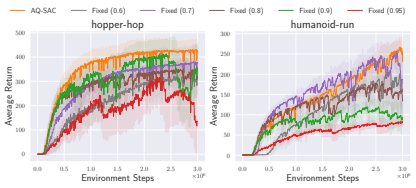
Figure 7 . The average return of AQ-SAC on hopper-hop and humanoid-run when τ is annealed compared to when τ is fixed. Annealing τ improves asymptotic performance and stability.
원문 · CC BY 4.0 · Motoki Omura, Kazuki Ota, Takayuki Osa, Yusuke Mukuta, Tatsuya Harada · Gradual Transition from Bellman Optimality Operator to Bellman Operator in Online Reinforcement Learning · 원문 그림 인용 · 원본 PDF 8쪽에서 그림 영역을 추출했습니다.과대추정 편향과 탐색의 관계
Monte Carlo 반환을 기준으로 측정한 편향에서는 τ가 커질수록 Q값의 편향이 커지며, AQ-SAC의 편향은 학습 후반에 SAC 수준에 가까워진다고 보고됩니다. 이는 예비 실험에서 Q-learning형 업데이트가 과대추정을 일으킨다는 관찰과 같은 방향입니다. 저자들은 과대추정이 초기 탐색을 돕는다는 선행 연구의 가설을 인용하며, 부록 I의 정책 엔트로피 측정이 이 해석과 일치한다고 설명합니다. 이 해석은 저자의 해석이며, 편향과 탐색의 인과 관계를 엄밀히 증명한 결과는 아닙니다.
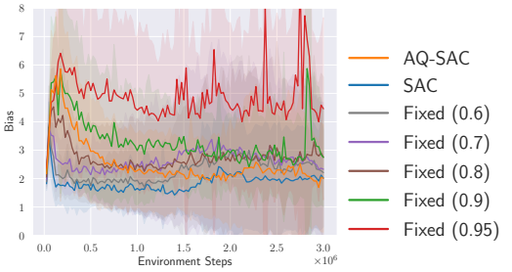
Figure 12 . The bias of the estimated Q-value with respect to the Monte Carlo return. The larger τ, the greater the bias, and in AQ-SAC, the bias eventually became comparable to that of SAC.
원문 · CC BY 4.0 · Motoki Omura, Kazuki Ota, Takayuki Osa, Yusuke Mukuta, Tatsuya Harada · Gradual Transition from Bellman Optimality Operator to Bellman Operator in Online Reinforcement Learning · 원문 그림 인용 · 원본 PDF 15쪽에서 그림 영역을 추출했습니다.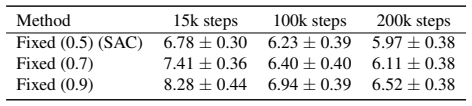
Table 6 . The average policy entropy in 10 DM Control tasks. 15k steps corresponds to shortly after training begins at 10k steps.These results suggest that a large τ in the early stages of training increases policy entropy and promotes exploration.
원문 · CC BY 4.0 · Motoki Omura, Kazuki Ota, Takayuki Osa, Yusuke Mukuta, Tatsuya Harada · Gradual Transition from Bellman Optimality Operator to Bellman Operator in Online Reinforcement Learning · 원문 그림 인용 · 원본 PDF 18쪽에서 그림 영역을 추출했습니다.Meta-World 조작 과제와 적용 범위
Meta-World에서는 낮은 성공률이 보고된 어려운 10개 조작 과제를 단일 과제 학습으로 사용했습니다. 결과는 5개 랜덤 시드로 보고되며, 학습 설정의 τinit은 AQ-TD3와 AQ-SAC 모두 0.7입니다. 저자들은 AQ-SAC가 대부분의 과제에서 SAC보다 높은 성공률을 더 적은 스텝에 얻고 점근 성능도 개선했다고 보고합니다. AQ-TD3는 TD3보다 약간 개선되었다고 설명합니다.
이 결과는 다중 과제 학습이 아니라 단일 과제 학습에 대한 것입니다. 또한 시드 수가 DM Control보다 적으므로 해석에는 주의가 필요합니다.
남은 제약과 확인하지 않은 질문
이 논문은 선형 어닐링이 충분히 잘 작동한다고 보고하지만, 최적 스케줄을 찾는 문제는 남겨 둡니다. 비선형 패턴 실험에서 Exp2는 높은 τ 구간을 길게 유지하여 초기 편향이 커지고 후반 학습에 부정적인 영향을 주었습니다. 또한 Meta-World 결과는 5개 시드로 계산되었고, DM Control 결과는 10개 시드로 평균되었습니다. 앙상블 기법과 결합하는 방향은 향후 연구로 남아 있습니다.
논문 정보
- 저자
- Motoki Omura, Kazuki Ota, Takayuki Osa, Yusuke Mukuta, Tatsuya Harada
- 학회·저널
- arXiv · 프리프린트
- 최초 공개일
- 2025년 6월 6일
- 등록일
- 2026년 10월 29일
- 수정일
- 2025년 8월 13일
- 버전
- v2
- arXiv
- 2506.05968
- 분류
- cs.LG · cs.AI · cs.RO
- 원문 이용 조건
- CC BY 4.0
- 제공 범위
- 논문 정보, 해설, 허용된 원문 그림
AI 해설은 논문 원문과 별개의 설명이며 오류가 있을 수 있습니다. 원문과 그림은 각 출처의 이용 조건과 따로 표시된 권리를 따릅니다.
초록
For continuous action spaces, actor-critic methods are widely used in online reinforcement learning (RL). However, unlike RL algorithms for discrete actions, which generally model the optimal value function using the Bellman optimality operator, RL algorithms for continuous actions typically model Q-values for the current policy using the Bellman operator. These algorithms for continuous actions rely exclusively on policy updates for improvement, which often results in low sample efficiency. This study examines the effectiveness of incorporating the Bellman optimality operator into actor-critic frameworks. Experiments in a simple environment show that modeling optimal values accelerates learning but leads to overestimation bias. To address this, we propose an annealing approach that gradually transitions from the Bellman optimality operator to the Bellman operator, thereby accelerating learning while mitigating bias. Our method, combined with TD3 and SAC, significantly outperforms existing approaches across various locomotion and manipulation tasks, demonstrating improved performance and robustness to hyperparameters related to optimality. The code for this study is available at https://github.com/motokiomura/annealed-q-learning.
원문 인용
Motoki Omura, Kazuki Ota, Takayuki Osa, Yusuke Mukuta, Tatsuya Harada (2025). Gradual Transition from Bellman Optimality Operator to Bellman Operator in Online Reinforcement Learning. arXiv:2506.05968v2. https://arxiv.org/abs/2506.05968v2
BibTeX
@misc{omura2025gradual,
  title = {{Gradual Transition from Bellman Optimality Operator to Bellman Operator in Online Reinforcement Learning}},
  author = {Motoki Omura and Kazuki Ota and Takayuki Osa and Yusuke Mukuta and Tatsuya Harada},
  year = {2025},
  eprint = {2506.05968},
  archivePrefix = {arXiv},
  url = {https://arxiv.org/abs/2506.05968v2}
}