논문 해설
A Study of the Efficacy of Generative Flow Networks for Robotics and Machine Fault-Adaptation
로보틱스와 기계 고장 적응을 위한 생성 흐름 네트워크의 효능 연구
- 연구 문제 기계와 로봇은 고장 이후 학습된 행동이 맞지 않게 되므로, 고장에 빠르게 적응하는 방법이 필요합니다. 이 연구는 기존 RL의 낮은 샘플 효율을 지적하며 CFlowNets로 고장 적응을 검토합니다.
- 연구 방법 Reacher-v2 로봇 팔에서 정상 환경으로 학습한 정책과 리플레이 버퍼를 네 가지 고정 고장 환경으로 전이하고, CFlowNets를 DDPG, TD3, PPO, SAC와 비교합니다.
- 주요 결과 CFlowNets는 Reduced Range of Motion, Increased Damping, Structural Damage에서 적은 타임스텝으로 점근 성능에 도달했습니다. 다만 Actuator Damage에서는 약 1.2 million 타임스텝과 긴 실행 시간이 필요했고, PPO가 일부 조건에서 더 높은 점근 평균 보상을 보였습니다.
기계 고장 적응 문제와 RL의 한계
로봇과 기계는 제조, 구조, 의료 같은 현장에서 고장이 나면 원래 학습된 행동이 맞지 않게 됩니다. 이 논문은 이런 상황을 분포 밖(OOD) 상황의 한 예로 보고, 고장 이후 빠르게 적응하는 능력을 핵심 문제로 설정합니다. 기존 강화학습 알고리즘은 성능이 좋지만 샘플 효율이 낮아 새로운 고장 상황에 적응하는 속도가 느리다고 논문은 지적합니다. 저자들은 GFlowNets의 연속 행동·상태 변형인 CFlowNets가 보상에 비례하는 분포를 샘플링하므로 탐색과 활용의 균형을 맞추며 고장 적응에 더 적합할 것이라는 가설을 세웁니다. 이 가설은 저자들이 제시한 설계 동기이며, 실험으로 검증되는 범위는 아래 결과 절에서 다룹니다.
GFlowNets와 CFlowNets의 학습 구조
GFlowNets는 종료 상태 x를 보상 R(x)에 비례하는 확률로 샘플링하도록 학습되는 생성 모델입니다. 원문은 이를 순방향 샘플링 정책 PF와 역방향 정책 PB, 흐름 함수 F, 그리고 흐름 일치 목적으로 설명합니다. CFlowNets는 이 구조를 연속 상태·행동 공간으로 확장한 변형입니다. 학습에서는 각 상태에서 M개의 행동을 균등하게 뽑아 흐름 값으로 행동 확률 버퍼를 만들고, 이 분포에서 행동을 샘플링합니다. 흐름 일치를 위해 K개의 행동을 샘플링하여 유입 흐름과 유출 흐름을 근사하며, 유입 흐름은 부모 상태를 예측하는 retrieval network G의 출력으로 계산됩니다. 손실은 유입, 보상, 유출 항 사이의 제곱 오차이며 λ는 연속 행동 공간의 크기를 반영하는 스케일링 계수입니다.
이 논문의 구현은 retrieval network를 사전 학습한 뒤 flow network를 학습하는 방식이 중심입니다.
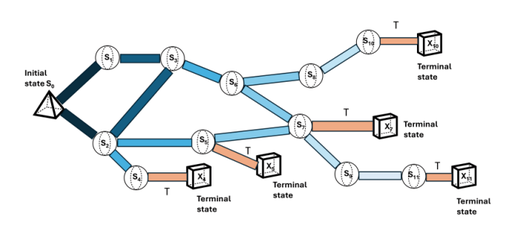
Figure 1 : Flow Network DAG Illustration based on [36].
원문 · CC BY 4.0 · Zahin Sufiyan, Shadan Golestan, Shotaro Miwa, Yoshihiro Mitsuka, Osmar Zaiane · A Study of the Efficacy of Generative Flow Networks for Robotics and Machine Fault-Adaptation · 원문 그림 인용 · 원본 PDF 7쪽에서 그림 영역을 추출했습니다.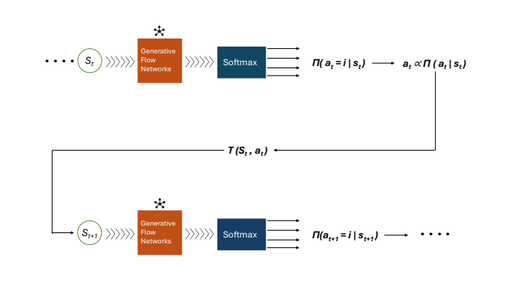
Figure 2 : GFlowNets Architecture based on [36]
원문 · CC BY 4.0 · Zahin Sufiyan, Shadan Golestan, Shotaro Miwa, Yoshihiro Mitsuka, Osmar Zaiane · A Study of the Efficacy of Generative Flow Networks for Robotics and Machine Fault-Adaptation · 원문 그림 인용 · 원본 PDF 8쪽에서 그림 영역을 추출했습니다.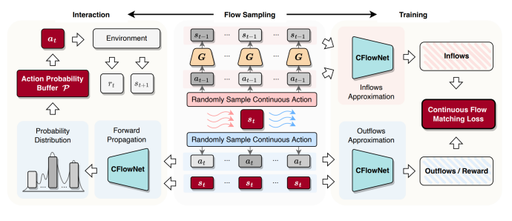
Figure 3 : Schamatics of CFlowNets Training Framework [25]. The leftmost part repre- sents the action selection procedure. The middle part is the flow-matching approximation visualization and the rightmost section shows the Continuous Flow-Matching Loss, which is utilized for training.
원문 · CC BY 4.0 · Zahin Sufiyan, Shadan Golestan, Shotaro Miwa, Yoshihiro Mitsuka, Osmar Zaiane · A Study of the Efficacy of Generative Flow Networks for Robotics and Machine Fault-Adaptation · 원문 그림 인용 · 원본 PDF 10쪽에서 그림 영역을 추출했습니다.Reacher-v2 기반 고장 환경과 3단계 실험 설계
실험은 MuJoCo의 Reacher-v2 두 관절 로봇 팔을 기반으로 합니다. 1단계에서는 정상 환경에서 10 million 타임스텝 동안 에이전트를 학습하고, 정책 파라미터와 경험 버퍼를 저장합니다. 2단계에서는 관절 1의 가동 범위를 줄이거나, 관절 1의 감쇠를 1에서 5로 늘리거나, 액추에이터 출력을 200에서 100으로 낮추거나, link1을 45도 구부리는 네 가지 고정 고장을 만듭니다. 3단계에서는 저장한 정책 파라미터와 리플레이 버퍼를 고장 환경으로 옮겨 같은 과제를 다시 학습합니다. 따라서 이 설정은 고장 발생 뒤의 적응을 보는 것이며, 고장 감지와 진단은 이미 되었다고 가정합니다. 고장 환경의 수정값은 정상 환경 기준 하이퍼파라미터 탐색 뒤 학습 추세를 보며 결정되었고, 고장 환경 자체에 맞춰 하이퍼파라미터를 조정하지는 않았습니다.
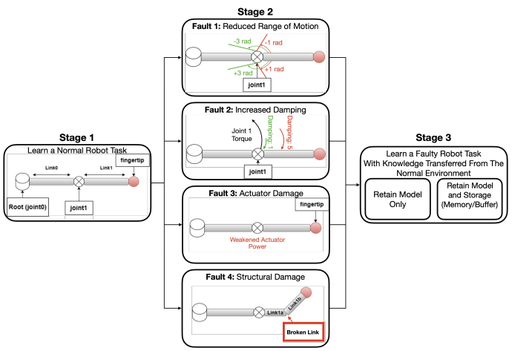
Figure 4 : An Overview of Our Experimental Setup.
원문 · CC BY 4.0 · Zahin Sufiyan, Shadan Golestan, Shotaro Miwa, Yoshihiro Mitsuka, Osmar Zaiane · A Study of the Efficacy of Generative Flow Networks for Robotics and Machine Fault-Adaptation · 원문 그림 인용 · 원본 PDF 18쪽에서 그림 영역을 추출했습니다.CFlowNets와 RL 기준 알고리즘의 구현 조건
CFlowNets의 retrieval network는 입력층과 256 뉴런의 은닉층 3개를 갖는 피드포워드 신경망으로 구성되며, Adam 학습률은 0.003입니다. flow network는 은닉층 2개로 구성되고 출력층의 Softplus로 흐름 값을 비음수로 만듭니다. 하이퍼파라미터 탐색은 정상 Reacher-v2 환경에서만 수행되었습니다. RL 기준 알고리즘인 DDPG, TD3, SAC, PPO는 원 논문의 설정을 기반으로 일부 조정하여 구현되었습니다. 각 실험은 10번 반복되었고 평가는 5,000 타임스텝마다 10 에피소드로 수행되었습니다. 또한 CFlowNets 실험은 종료 상태에서만 보상을 받는 희소 보상 설정이었고, 기준 알고리즘은 중간 보상을 받는 설정이었다는 점을 함께 읽어야 합니다.
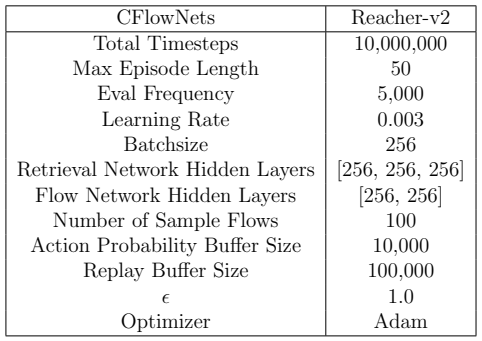
Table 1 : Best Performing Hyperparameters in the CFlowNets training.
원문 · CC BY 4.0 · Zahin Sufiyan, Shadan Golestan, Shotaro Miwa, Yoshihiro Mitsuka, Osmar Zaiane · A Study of the Efficacy of Generative Flow Networks for Robotics and Machine Fault-Adaptation · 원문 그림 인용 · 원본 PDF 23쪽에서 그림 영역을 추출했습니다.고장별 적응 성능과 점근 성능
CFlowNets는 Reduced Range of Motion과 Increased Damping 환경에서 비교적 안정된 학습 곡선을 보였고, 샘플 효율 측면에서도 두 고장에서 가장 적은 실제 경험으로 근접한 점근 성능에 도달했다고 보고됩니다. 표 2의 점근 평균 보상은 CFlowNets가 Reduced Range of Motion -4.6, Increased Damping -4.9, Actuator Damage -6.8, Structural Damage -3.9입니다. PPO는 Reduced Range of Motion -4.9, Increased Damping -4.7, Actuator Damage -6.5, Structural Damage -4.9입니다.
따라서 Fault 2에서는 PPO가 소폭 높고, Fault 3에서는 PPO가 CFlowNets보다 높습니다. 원문은 Fault 1, 2, 4에서 약 100k에서 200k 타임스텝 수준으로 CFlowNets가 점근 성능에 도달했다고 보고합니다. 반면 Fault 3에서는 약 1.2 million 타임스텝과 5시간 34분이 필요했으며, 이 결과는 추가 학습이 필요했던 한 조건으로 해석해야 합니다.
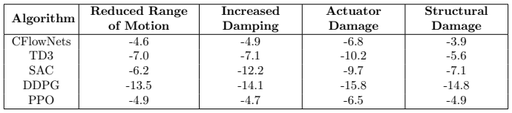
Table 2 : Asymptotic Adaptation Performance of Each Algorithm Across Fault Environ- ments
원문 · CC BY 4.0 · Zahin Sufiyan, Shadan Golestan, Shotaro Miwa, Yoshihiro Mitsuka, Osmar Zaiane · A Study of the Efficacy of Generative Flow Networks for Robotics and Machine Fault-Adaptation · 원문 그림 인용 · 원본 PDF 29쪽에서 그림 영역을 추출했습니다.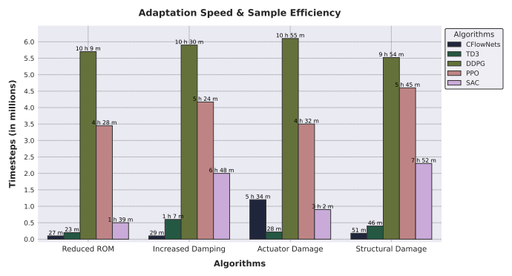
Figure 7 : Adaptation Speed and Sample Efficiency in the four fault Reacher-v2 Envi- ronments (10 million time steps). Execution time to achieve asymptotic performance is indicated on top of each algorithm’s bar in an Hour-Minute format.
원문 · CC BY 4.0 · Zahin Sufiyan, Shadan Golestan, Shotaro Miwa, Yoshihiro Mitsuka, Osmar Zaiane · A Study of the Efficacy of Generative Flow Networks for Robotics and Machine Fault-Adaptation · 원문 그림 인용 · 원본 PDF 30쪽에서 그림 영역을 추출했습니다.
Table 3 : Comparative Convergence Analysis: Timesteps and Execution Time per Fault Environment
원문 · CC BY 4.0 · Zahin Sufiyan, Shadan Golestan, Shotaro Miwa, Yoshihiro Mitsuka, Osmar Zaiane · A Study of the Efficacy of Generative Flow Networks for Robotics and Machine Fault-Adaptation · 원문 그림 인용 · 원본 PDF 32쪽에서 그림 영역을 추출했습니다.정상 환경에서의 실행 시간과 GPU 메모리
정상 Reacher-v2 환경에서 1 million 타임스텝을 실행했을 때 CFlowNets의 실행 시간은 5시간 39분으로 비교된 알고리즘 가운데 가장 길었습니다. 다른 RL 방법은 대략 1시간에서 3시간 30분 사이였습니다. GPU 메모리 평균은 CFlowNets가 17.91 GB, PPO가 5.32 GB, DDPG가 2.51 GB, SAC가 4.26 GB, TD3가 2.30 GB였습니다. 이 비용은 CFlowNets가 경로 분포를 넓게 저장·처리하는 방식과 연결된 것으로 저자들이 설명하며, 연속 정규화 흐름의 계산 부담도 함께 언급됩니다. 실행 시간은 사전 학습된 retrieval network가 있는 상태에서 flow network 학습만 포함하여 측정되었습니다.
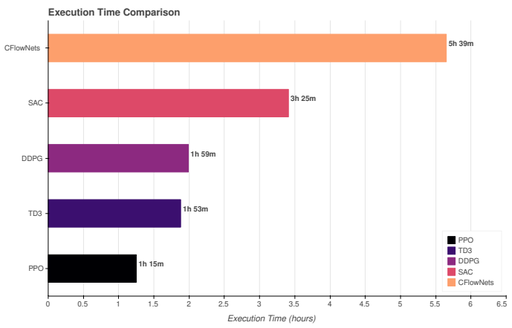
Figure 8 : Execution Time in Normal Reacher-v2 Environment (1 million time step).
원문 · CC BY 4.0 · Zahin Sufiyan, Shadan Golestan, Shotaro Miwa, Yoshihiro Mitsuka, Osmar Zaiane · A Study of the Efficacy of Generative Flow Networks for Robotics and Machine Fault-Adaptation · 원문 그림 인용 · 원본 PDF 32쪽에서 그림 영역을 추출했습니다.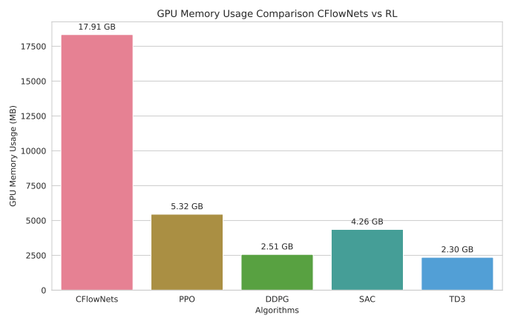
Figure 9 : Bar chart illustrating the average GPU memory usage of various algorithms: CFlowNets, PPO, DDPG, SAC, and TD3 for Reacher-v2 (Normal Environment)
원문 · CC BY 4.0 · Zahin Sufiyan, Shadan Golestan, Shotaro Miwa, Yoshihiro Mitsuka, Osmar Zaiane · A Study of the Efficacy of Generative Flow Networks for Robotics and Machine Fault-Adaptation · 원문 그림 인용 · 원본 PDF 34쪽에서 그림 영역을 추출했습니다.적용 범위와 남은 질문
이 연구의 실험은 하나의 2D 시뮬레이션 로봇 과제에서 수행되었고, 네 고장 환경은 하나의 Reacher-v2 설정을 바꾼 변형입니다. 따라서 3D 로봇이나 실제 기계 환경으로 결과가 일반화되는지는 이 논문에서 확인되지 않았습니다. 또 네 고장 모두 시간에 따라 값이 변하지 않는 고정 고장이었으며, 점진적 마모나 여러 고장의 동시 발생은 다루지 않았습니다. CFlowNets는 희소 보상 설정에서 실행되었고 기준 RL은 중간 보상을 받았으므로, 두 조건의 차이를 알고리즘 자체의 우열로 단정할 수 없습니다. 기준 RL의 하이퍼파라미터는 광범위하게 탐색되지 않았다는 한계도 저자들이 밝혔습니다.
논문 정보
- 저자
- Zahin Sufiyan, Shadan Golestan, Shotaro Miwa, Yoshihiro Mitsuka, Osmar Zaiane
- 학회·저널
- arXiv · 프리프린트
- 최초 공개일
- 2025년 1월 6일
- 등록일
- 2026년 11월 6일
- 수정일
- 2025년 1월 6일
- 버전
- v1
- arXiv
- 2501.03405
- 분류
- cs.RO
- 원문 이용 조건
- CC BY 4.0
- 제공 범위
- 논문 정보, 해설, 허용된 원문 그림
AI 해설은 논문 원문과 별개의 설명이며 오류가 있을 수 있습니다. 원문과 그림은 각 출처의 이용 조건과 따로 표시된 권리를 따릅니다.
초록
Advancements in robotics have opened possibilities to automate tasks in various fields such as manufacturing, emergency response and healthcare. However, a significant challenge that prevents robots from operating in real-world environments effectively is out-of-distribution (OOD) situations, wherein robots encounter unforseen situations. One major OOD situations is when robots encounter faults, making fault adaptation essential for real-world operation for robots. Current state-of-the-art reinforcement learning algorithms show promising results but suffer from sample inefficiency, leading to low adaptation speed due to their limited ability to generalize to OOD situations. Our research is a step towards adding hardware fault tolerance and fast fault adaptability to machines. In this research, our primary focus is to investigate the efficacy of generative flow networks in robotic environments, particularly in the domain of machine fault adaptation. We simulated a robotic environment called Reacher in our experiments. We modify this environment to introduce four distinct fault environments that replicate real-world machines/robot malfunctions. The empirical evaluation of this research indicates that continuous generative flow networks (CFlowNets) indeed have the capability to add adaptive behaviors in machines under adversarial conditions. Furthermore, the comparative analysis of CFlowNets with reinforcement learning algorithms also provides some key insights into the performance in terms of adaptation speed and sample efficiency. Additionally, a separate study investigates the implications of transferring knowledge from pre-fault task to post-fault environments. Our experiments confirm that CFlowNets has the potential to be deployed in a real-world machine and it can demonstrate adaptability in case of malfunctions to maintain functionality.
원문 인용
Zahin Sufiyan, Shadan Golestan, Shotaro Miwa, Yoshihiro Mitsuka, Osmar Zaiane (2025). A Study of the Efficacy of Generative Flow Networks for Robotics and Machine Fault-Adaptation. arXiv:2501.03405v1. https://arxiv.org/abs/2501.03405v1
BibTeX
@misc{sufiyan2025study,
  title = {{A Study of the Efficacy of Generative Flow Networks for Robotics and Machine Fault-Adaptation}},
  author = {Zahin Sufiyan and Shadan Golestan and Shotaro Miwa and Yoshihiro Mitsuka and Osmar Zaiane},
  year = {2025},
  eprint = {2501.03405},
  archivePrefix = {arXiv},
  url = {https://arxiv.org/abs/2501.03405v1}
}