논문 해설
Interference Suppression Using Deep Learning: Current Approaches and Open Challenges
딥러닝을 이용한 간섭 억제: 현재 접근법과 남은 과제
- 연구 문제 무선 스펙트럼의 공유가 늘면서 간섭 억제는 여전히 어려운 과제이며, 기존 기법은 도메인 지식과 간섭 위치 검출에 의존합니다.
- 연구 방법 간섭 억제 기법을 기존 방법과 딥러닝 방법으로 나누고, CNN, RNN, 오토인코더, DNN을 중심으로 검토합니다.
- 주요 결과 대표 CNN 연구는 SINR에서 기존 기법보다 높은 결과를 보고했고, 오토인코더 연구는 샘플 제거 조건에서 강건성을 보고했습니다. 이는 주로 시뮬레이션이나 특정 조건의 결과입니다.
간섭 억제가 어려워지는 배경
무선 스펙트럼은 유한한데 Wi-Fi, LTE-U, LAA, 5G NR 등 공유 대역의 사용이 늘면서 간섭 문제는 계속 남아 있습니다. 전통적인 간섭 억제 기법은 간섭의 종류와 특성을 알고 있어야 하며, 간섭이 발생한 위치와 지속 시간을 정밀하게 검출해야 하는 경우가 많습니다. 원문은 이러한 기존 기법의 한계로 도메인 지식에 대한 의존, 일반화 능력 부족, 간섭 위치 검출에 따른 복잡도를 제시합니다. 이 논문은 이 문제에 대해 딥러닝 기반 간섭 억제 기법을 검토하고 응용별로 비교하는 것을 목표로 합니다.
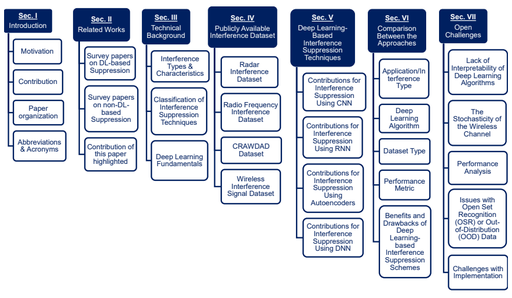
Fig. 1 : High Level Structure of the Survey Paper
원문 · CC BY 4.0 · Taiwo Oyedare, Vijay K Shah, Daniel J Jakubisin, Jeff H Reed · Interference Suppression Using Deep Learning: Current Approaches and Open Challenges · 원문 그림 인용 · 원본 PDF 4쪽에서 그림 영역을 추출했습니다.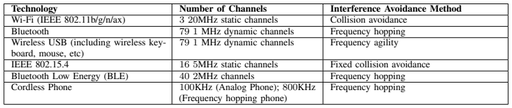
원문 그림 TABLE I: Wireless Technologies sharing the 2.4GHz band with their interference avoidance methods
원문 · CC BY 4.0 · Taiwo Oyedare, Vijay K Shah, Daniel J Jakubisin, Jeff H Reed · Interference Suppression Using Deep Learning: Current Approaches and Open Challenges · 원문 그림 인용 · 원본 PDF 6쪽에서 그림 영역을 추출했습니다.딥러닝 기법의 분류와 기본 구조
이 논문은 간섭 억제 기법을 기준선, 다이버시티 기반, 임계값 기반, 보간, 딥러닝 기반으로 나누어 제시합니다. 딥러닝 기법은 CNN, DNN, RNN 같은 지도 학습과 오토인코더 같은 비지도 학습으로 구분됩니다. CNN은 합성곱, ReLU, 풀링 층을 쌓고 완전 연결 층으로 출력하는 구조이며, ReLU는 max(0, x)로 정의되어 음수 입력을 0으로 만듭니다. 오토인코더는 입력을 잠재 표현으로 압축한 뒤 다시 복원하며, 잠재 표현 h에서 간섭 성분을 억제하는 방식으로 설명됩니다.
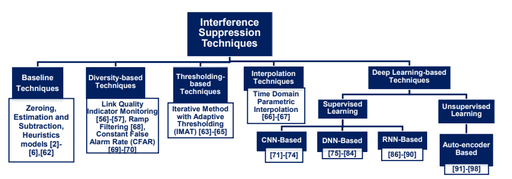
Fig. 2 : Interference Suppression Techniques
원문 · CC BY 4.0 · Taiwo Oyedare, Vijay K Shah, Daniel J Jakubisin, Jeff H Reed · Interference Suppression Using Deep Learning: Current Approaches and Open Challenges · 원문 그림 인용 · 원본 PDF 7쪽에서 그림 영역을 추출했습니다.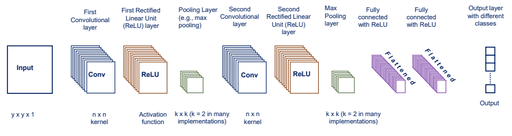
Fig. 3 : A generic CNN architecture with convolution layers, ReLU activation function, pooling layer interlaced with each other and two fully connected layers
원문 · CC BY 4.0 · Taiwo Oyedare, Vijay K Shah, Daniel J Jakubisin, Jeff H Reed · Interference Suppression Using Deep Learning: Current Approaches and Open Challenges · 원문 그림 인용 · 원본 PDF 9쪽에서 그림 영역을 추출했습니다.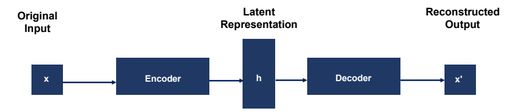
Fig. 4 : A Generic Autoencoder Architecture
원문 · CC BY 4.0 · Taiwo Oyedare, Vijay K Shah, Daniel J Jakubisin, Jeff H Reed · Interference Suppression Using Deep Learning: Current Approaches and Open Challenges · 원문 그림 인용 · 원본 PDF 10쪽에서 그림 영역을 추출했습니다.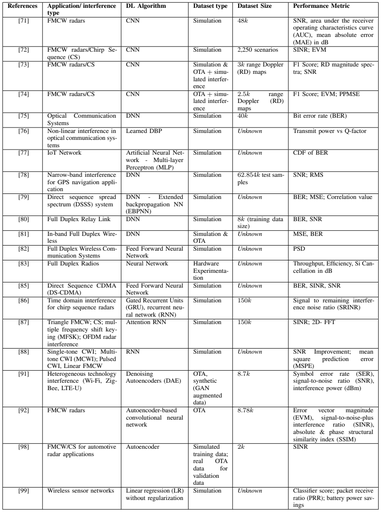
원문 그림 TABLE III: Summary of Selected DL-Based Interference Suppression Techniques
원문 · CC BY 4.0 · Taiwo Oyedare, Vijay K Shah, Daniel J Jakubisin, Jeff H Reed · Interference Suppression Using Deep Learning: Current Approaches and Open Challenges · 원문 그림 인용 · 원본 PDF 18쪽에서 그림 영역을 추출했습니다.대표 사례의 비교 결과
Rock 등의 CNN 기반 억제 방법은 SINR 지표에서 zeroing, ramp filtering, IMAT보다 40% 이상 높게 보고되었습니다. 같은 연구에서 CNN 방법은 zeroing, IMAT, RFmin보다 높은 EVM을 보였습니다. 이 결과는 시뮬레이션 프레임워크에서 얻어진 것이므로 실제 OTA 적용으로 바로 일반화할 수 없습니다. Chen 등의 오토인코더 기반 방법은 15% 이상의 샘플을 제거했을 때 AR 및 zeroing보다 더 강건한 SINR을 보였다고 보고됩니다.
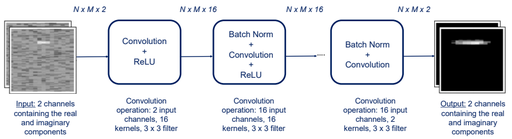
Fig. 6 : CNN Architecture proposed by Rock et al. [72] for radar signal denoising. The figure was reproduced from paper [72] titled: Complex Signal Denoising and Interference Mitigation for Automotive Radar Using Convolutional Neural Networks ; published at the 22nd IEEE International Conference on Information Fusion (FUSION).
원문 · CC BY 4.0 · Taiwo Oyedare, Vijay K Shah, Daniel J Jakubisin, Jeff H Reed · Interference Suppression Using Deep Learning: Current Approaches and Open Challenges · 원문 그림 인용 · 원본 PDF 13쪽에서 그림 영역을 추출했습니다.데이터와 실제 적용의 한계
논문은 많은 딥러닝 간섭 억제 연구가 시뮬레이션 데이터에 의존하며, 이러한 시뮬레이션 결과가 OTA 환경과 차이가 있을 수 있다고 지적합니다. 또한 벤치마크 데이터셋이 드물어 연구자들이 직접 데이터를 생성해야 하는 부담이 있습니다. 딥러닝 모델의 해석 가능성 부족과 무선 채널의 확률성, OSR 또는 OOD 데이터, 구현 비용도 실제 적용의 주요 과제로 제시됩니다.
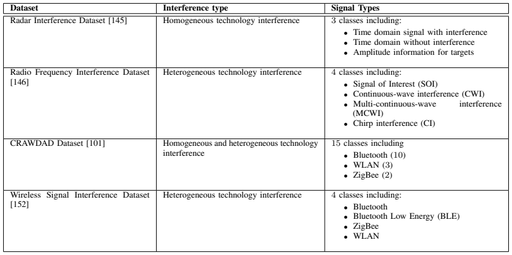
원문 그림 TABLE II: Comparison Between Interference Datasets
원문 · CC BY 4.0 · Taiwo Oyedare, Vijay K Shah, Daniel J Jakubisin, Jeff H Reed · Interference Suppression Using Deep Learning: Current Approaches and Open Challenges · 원문 그림 인용 · 원본 PDF 11쪽에서 그림 영역을 추출했습니다.논문 정보
- 저자
- Taiwo Oyedare, Vijay K Shah, Daniel J Jakubisin, Jeff H Reed
- 학회·저널
- arXiv · 프리프린트
- 최초 공개일
- 2021년 12월 16일
- 등록일
- 2026년 11월 6일
- 수정일
- 2021년 12월 16일
- 버전
- v1
- arXiv
- 2112.08988
- DOI
- 10.1109/access.2022.3185124
- 분류
- eess.SP · cs.LG · cs.NI
- 원문 이용 조건
- CC BY 4.0
- 제공 범위
- 논문 정보, 해설, 허용된 원문 그림
AI 해설은 논문 원문과 별개의 설명이며 오류가 있을 수 있습니다. 원문과 그림은 각 출처의 이용 조건과 따로 표시된 권리를 따릅니다.
초록
In light of the finite nature of the wireless spectrum and the increasing demand for spectrum use arising from recent technological breakthroughs in wireless communication, the problem of interference continues to persist. Despite recent advancements in resolving interference issues, interference still presents a difficult challenge to effective usage of the spectrum. This is partly due to the rise in the use of license-free and managed shared bands for Wi-Fi, long term evolution (LTE) unlicensed (LTE-U), LTE licensed assisted access (LAA), 5G NR, and other opportunistic spectrum access solutions. As a result of this, the need for efficient spectrum usage schemes that are robust against interference has never been more important. In the past, most solutions to interference have addressed the problem by using avoidance techniques as well as non-AI mitigation approaches (for example, adaptive filters). The key downside to non-AI techniques is the need for domain expertise in the extraction or exploitation of signal features such as cyclostationarity, bandwidth and modulation of the interfering signals. More recently, researchers have successfully explored AI/ML enabled physical (PHY) layer techniques, especially deep learning which reduces or compensates for the interfering signal instead of simply avoiding it. The underlying idea of ML based approaches is to learn the interference or the interference characteristics from the data, thereby sidelining the need for domain expertise in suppressing the interference. In this paper, we review a wide range of techniques that have used deep learning to suppress interference. We provide comparison and guidelines for many different types of deep learning techniques in interference suppression. In addition, we highlight challenges and potential future research directions for the successful adoption of deep learning in interference suppression.
원문 인용
Taiwo Oyedare, Vijay K Shah, Daniel J Jakubisin, Jeff H Reed (2021). Interference Suppression Using Deep Learning: Current Approaches and Open Challenges. arXiv:2112.08988v1. https://doi.org/10.1109/access.2022.3185124
BibTeX
@article{oyedare2021interference,
  title = {{Interference Suppression Using Deep Learning: Current Approaches and Open Challenges}},
  author = {Taiwo Oyedare and Vijay K Shah and Daniel J Jakubisin and Jeff H Reed},
  year = {2021},
  eprint = {2112.08988},
  archivePrefix = {arXiv},
  doi = {10.1109/access.2022.3185124},
  url = {https://arxiv.org/abs/2112.08988v1}
}