논문 해설
A First Look at System One Decision Models for Malware Detection
악성코드 탐지를 위한 System One 결정 모델 첫 고찰
- 연구 문제 기존 PE 탐지기는 근거를 주지 않고, LLM은 보정되지 않은 생성 답변에 의존합니다.
- 연구 방법 정적 분석 상태를 System One 모델에 입력하고 A0, A1, A2 판독과 S1Mal 결합으로 점수를 냅니다.
- 주요 결과 BODMAS 테스트 분할에서 S1Mal은 AUROC 0.9946을 기록했고 τ1%에서 악성 파일의 93.47%를 탐지했습니다.
정적 분석 탐지의 어려움
Windows PE 악성코드 탐지기는 매우 낮은 FPR에서 쓸 수 있는 보정된 점수를 내야 하고, 분석가가 읽을 수 있는 근거도 함께 필요합니다. 공학적 특징 기반 탐지기는 점수는 내지만 근거를 보여 주지 않습니다. 디컴파일 코드를 읽는 LLM은 근거를 텍스트로 보여 줄 수 있으나 생성 텍스트의 신뢰도는 보정되지 않습니다. 이 논문은 System One 결정 모델이 이 공백을 메울 수 있는지 정적 분석 상태 위에서 확인합니다. 평가 대상은 악성 PE 파일 탐지이며, 실행 중 행동은 다루지 않습니다.
상태 구성과 세 가지 판독
격리된 가상 머신에서 Ghidra와 capa가 각 바이너리를 분석하고, 호스트는 그 기록을 텍스트 상태로 바꿉니다. 모델은 같은 typed 질문을 받아 답변 확률을 냅니다. A0는 하나의 verdict 질문의 로짓을 점수로 쓰고, A1은 32개 원자적 행동 질문의 로짓을 gradient-boosted tree 결합기로 묶습니다. A2는 상태 임베딩 위의 학습된 헤드로 점수를 냅니다. S1Mal은 CLM-8B의 원자적 답변과 A2 점수를 트리로 결합합니다. 컬렉션 차이를 만드는 타임스탬프와 도구 이름 같은 단서는 정규화로 제거합니다.
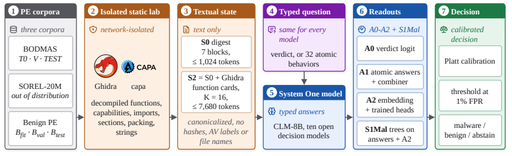
Figure 1 : Overview of the pipeline and of S1Mal.
원문 · CC BY 4.0 · Pier Mattia Basciano, Giovanni Farina, Salvatore Monteleone · A First Look at System One Decision Models for Malware Detection · 원문 그림 인용 · 원본 PDF 3쪽에서 그림 영역을 추출했습니다.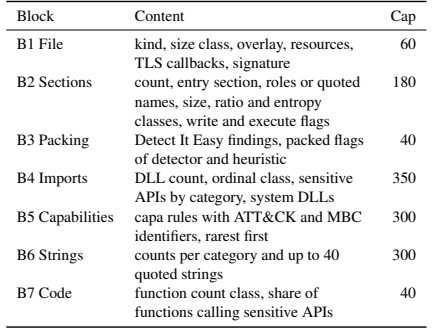
Table 2 : Blocks of the S0 digest.
원문 · CC BY 4.0 · Pier Mattia Basciano, Giovanni Farina, Salvatore Monteleone · A First Look at System One Decision Models for Malware Detection · 원문 그림 인용 · 원본 PDF 5쪽에서 그림 영역을 추출했습니다.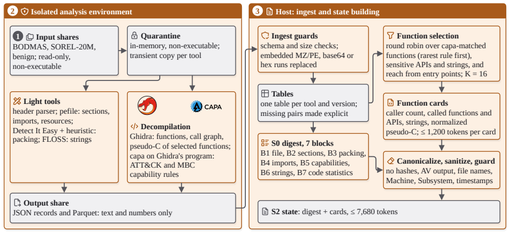
Figure 2 : From the binary to the textual state.
원문 · CC BY 4.0 · Pier Mattia Basciano, Giovanni Farina, Salvatore Monteleone · A First Look at System One Decision Models for Malware Detection · 원문 그림 인용 · 원본 PDF 6쪽에서 그림 영역을 추출했습니다.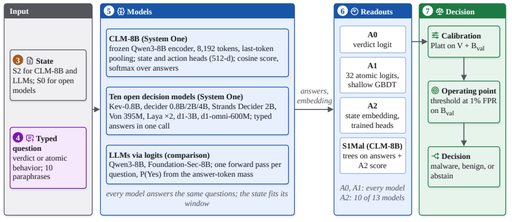
Figure 3 : From the state and the typed question to the decision.
원문 · CC BY 4.0 · Pier Mattia Basciano, Giovanni Farina, Salvatore Monteleone · A First Look at System One Decision Models for Malware Detection · 원문 그림 인용 · 원본 PDF 7쪽에서 그림 영역을 추출했습니다.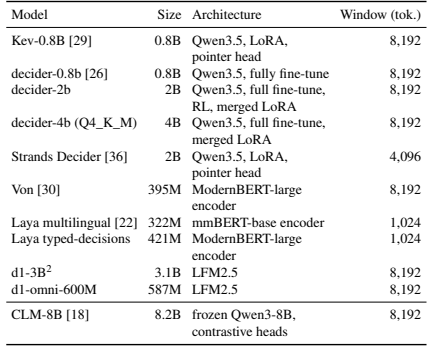
Table 3 : Decision models.
원문 · CC BY 4.0 · Pier Mattia Basciano, Giovanni Farina, Salvatore Monteleone · A First Look at System One Decision Models for Malware Detection · 원문 그림 인용 · 원본 PDF 7쪽에서 그림 영역을 추출했습니다.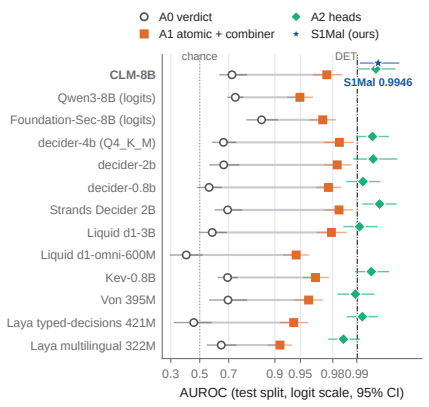
Figure 4 : Readouts of every prompt-reading model.
원문 · CC BY 4.0 · Pier Mattia Basciano, Giovanni Farina, Salvatore Monteleone · A First Look at System One Decision Models for Malware Detection · 원문 그림 인용 · 원본 PDF 9쪽에서 그림 영역을 추출했습니다.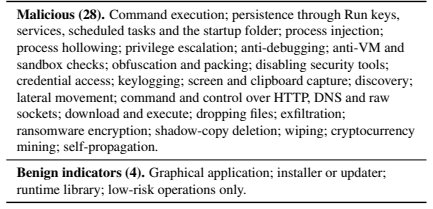
Table 8 : Behaviors of the atomic question set.
원문 · CC BY 4.0 · Pier Mattia Basciano, Giovanni Farina, Salvatore Monteleone · A First Look at System One Decision Models for Malware Detection · 원문 그림 인용 · 원본 PDF 19쪽에서 그림 영역을 추출했습니다.BODMAS 테스트 분할의 탐지 결과
테스트 분할에서 CLM-8B의 A0는 AUROC 0.7194를, A1은 0.9763을 기록했습니다. A2 헤드는 0.9943으로 올랐고, S1Mal은 0.9946이었습니다. S1Mal은 고정 임계값 τ1%에서 악성 파일의 93.47%를 탐지했고 실현된 FPR은 1.45%였습니다. 같은 조건에서 A2는 90.90%, DET는 88.24%였습니다. 0.1% FPR에서는 S1Mal이 59.15%를 유지했는데, 비교한 나머지 판독은 최대 46.59%였습니다. 이 수치는 BODMAS 테스트 분할과 고정된 검증 임계값에서 얻은 것입니다.
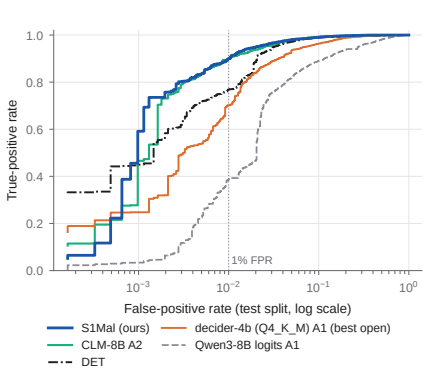
Figure 5 : Detection at low false-positive rates.
원문 · CC BY 4.0 · Pier Mattia Basciano, Giovanni Farina, Salvatore Monteleone · A First Look at System One Decision Models for Malware Detection · 원문 그림 인용 · 원본 PDF 10쪽에서 그림 영역을 추출했습니다.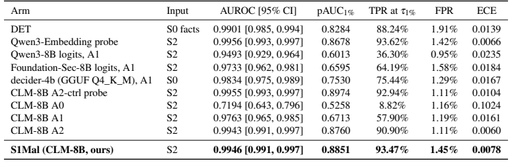
Table 5 : Detection on the test split (E1).
원문 · CC BY 4.0 · Pier Mattia Basciano, Giovanni Farina, Salvatore Monteleone · A First Look at System One Decision Models for Malware Detection · 원문 그림 인용 · 원본 PDF 11쪽에서 그림 영역을 추출했습니다.분포 외 전이와 정적 분석의 한계
SOREL-20M 분포 외 평가에서 동결된 τ1%를 적용하자 S1Mal은 악성 파일의 54.75%를 탐지했습니다. A2는 51.87%였고, DET는 66.46%였습니다. 저자들은 이 결과가 새 데이터 출처에서 임계값을 다시 맞출 필요가 있음을 보여 준다고 해석합니다. 또한 평가는 정적 분석에 기반하므로 실행 중에만 나타나는 행동은 상태에 포함되지 않습니다. 1% FPR 운영점은 27개의 거짓 양성에 근거하므로 0.1% FPR 임계값은 더 큰 양성 검증 집합이 필요합니다.
논문 정보
- 저자
- Pier Mattia Basciano, Giovanni Farina, Salvatore Monteleone
- 학회·저널
- arXiv · 프리프린트
- 최초 공개일
- 2026년 11월 16일
- 등록일
- 2026년 11월 17일
- 수정일
- 2026년 11월 16일
- 버전
- v1
- arXiv
- 2611.20699
- 분류
- cs.CR · cs.AI · cs.LG
- 원문 이용 조건
- CC BY 4.0
- 제공 범위
- 논문 정보, 해설, 허용된 원문 그림
AI 해설은 논문 원문과 별개의 설명이며 오류가 있을 수 있습니다. 원문과 그림은 각 출처의 이용 조건과 따로 표시된 권리를 따릅니다.
초록
Malware detection needs scores calibrated at a fixed false positive rate (FPR) and decisions an analyst can read: feature-based detectors give the first, large language models (LLMs) on decompiled code the second, through generated text of uncalibrated confidence. System One decision models answer a typed question about a text with a probability over its declared answers in one forward pass. We present the first evaluation of these models for Windows Portable Executable malware detection, analyze how they decide, and propose S1Mal, an ensemble on the typed answers and the embedding of CLM-8B. In an isolated virtual machine, Ghidra and capa decompose each binary, and the host renders the records into a canonical textual state, a digest of headers, imports, MITRE ATT&CK capabilities and strings, optionally with decompiled functions, without class shortcuts. Three readouts score each model on the state: A0, the probability of one verdict question; A1, 32 atomic behavioral questions weighed by gradient-boosted trees; A2, heads on the model's state embedding. S1Mal feeds gradient-boosted trees with the atomic answers and the A2 score of CLM-8B. We evaluate CLM-8B, ten open decision models and two LLMs read through logits on BODMAS temporal splits, SOREL-20M out-of-distribution malware and 14,534 matched benign files. On BODMAS, A0 wastes the static evidence: its area under the receiver operating characteristic curve (AUROC) spans 0.4025-0.8590 across 13 models. A1 recovers it, raising every model's AUROC by +54.61% on average; A2 lifts CLM-8B by +0.2749 to 0.9943, above a combiner on digest facts (0.9901), and reaches 0.9853-0.9948 on nine open models. S1Mal reaches 0.9946 and detects 93.47% of the malware at a realized FPR of 1.45%, and 59.15% at 0.1% FPR on the test ROC curve, against 46.59% with A2. S1Mal gives analysts calibrated decisions, each with the atomic answers behind it.
원문 인용
Pier Mattia Basciano, Giovanni Farina, Salvatore Monteleone (2026). A First Look at System One Decision Models for Malware Detection. arXiv:2611.20699v1. https://arxiv.org/abs/2611.20699v1
BibTeX
@misc{basciano2026first,
  title = {{A First Look at System One Decision Models for Malware Detection}},
  author = {Pier Mattia Basciano and Giovanni Farina and Salvatore Monteleone},
  year = {2026},
  eprint = {2611.20699},
  archivePrefix = {arXiv},
  url = {https://arxiv.org/abs/2611.20699v1}
}