논문 해설
Real-Time Optimal Trajectory Planning for Autonomous Vehicles and Lap Time Simulation Using Machine Learning
머신러닝을 이용한 자율주행 차량의 실시간 최적 궤적 계획 및 랩타임 시뮬레이션
- 연구 문제 자율주행 차량이 실시간으로 레이싱 라인을 얻기 어려운 이유를 다룹니다.
- 연구 방법 서킷을 Normal 윈도우로 나누고 최적 궤적 데이터로 학습한 피드포워드 신경망이 웨이포인트 위치를 예측합니다.
- 주요 결과 미지 서킷에서 평균 절대 오차 ±0.27m, 코너 apex 오차 ±0.11m이며 예측은 33ms 이내에 생성됩니다.
실시간 레이싱 라인 계산의 어려움
자율주행 차량은 주행 중에 목표 경로를 계산해야 하지만, 레이싱 라인을 구하는 기존 최적 제어(OCP) 기반 랩 타임 시뮬레이션은 한 바퀴를 계산하는 데 수 분에서 수십 분이 걸립니다. 최단 경로나 최소 곡률 경로(MCP)는 빠르지만 근사치이므로 랩 타임 관점에서 정확도가 부족합니다. 이 논문은 이 두 방식 사이의 간극을 메우기 위해 최적 궤적 데이터로 학습한 신경망이 미지의 서킷에서 레이싱 라인을 빠르고 정확하게 예측할 수 있는지를 묻습니다. 선행 연구에서 기계학습은 주로 차량 제어나 시각 인식에 쓰였고, 레이싱 라인 자체를 직접 예측하는 연구는 드물다고 소개됩니다.
학습 데이터 구축과 윈도우 분할
이 연구는 실제 서킷 82개의 경계를 수집하고, 스케일링·반전·진행 방향 역전으로 증강하여 6058개 서킷을 만듭니다. 각 서킷의 최적 레이싱 라인은 TUMFTM의 Global Race Trajectory Optimisation 도구로 계산되며, 이 도구는 IPOPT 솔버와 CasADi 프레임워크를 사용합니다. 서킷은 5m 간격의 Normal 선으로 나뉘고, 각 Normal 위에서 차량 궤적이 지나는 위치가 웨이포인트로 정의됩니다. 학습 입력은 Foresight 범위 안의 연속 Normal들로 구성된 슬라이딩 윈도우이며, Foresight는 중심 Normal 전후 70 waypoints, 즉 350m로 설정되었습니다.
특징은 Normal의 길이, 인접 Normal 사이의 각도 변화, 중심선 법선 대비 각도 θ로 구성되고, 예측 대상은 각 Normal 위 웨이포인트의 상대 위치 w입니다. 모든 최적 궤적은 차량 폭을 0으로 가정하여 계산되었습니다.
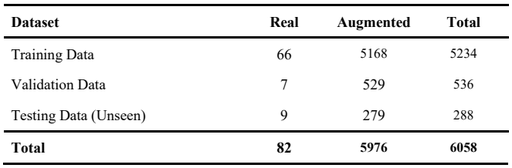
Table 1 . Number of circuits contained in each subset of the dataset.
원문 · CC BY 4.0 · Sam Garlick, Andrew Bradley · Real-Time Optimal Trajectory Planning for Autonomous Vehicles and Lap Time Simulation Using Machine Learning · 원문 그림 인용 · 원본 PDF 7쪽에서 그림 영역을 추출했습니다.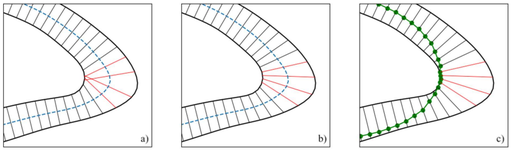
Figure 1 . - a) Lines normal to the track centreline divide the circuit, b) Normals adjusted to become ‘pseudo-Normals’ at tight hairpins, c) Waypoint location identifies the intersection of the racing line.
원문 · CC BY 4.0 · Sam Garlick, Andrew Bradley · Real-Time Optimal Trajectory Planning for Autonomous Vehicles and Lap Time Simulation Using Machine Learning · 원문 그림 인용 · 원본 PDF 8쪽에서 그림 영역을 추출했습니다.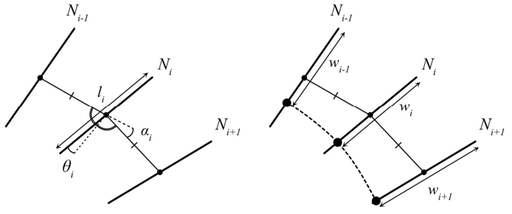
Figure 2 . Feature extraction: Track geometry (left) and waypoints describing the racing line (right).
원문 · CC BY 4.0 · Sam Garlick, Andrew Bradley · Real-Time Optimal Trajectory Planning for Autonomous Vehicles and Lap Time Simulation Using Machine Learning · 원문 그림 인용 · 원본 PDF 9쪽에서 그림 영역을 추출했습니다.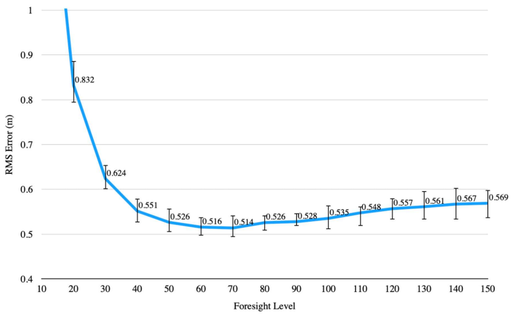
Figure 4 . Effect of Foresight upon racing line prediction accuracy (based upon a subset of the validation dataset). Error bars denote the variance through the different K-Folds.
원문 · CC BY 4.0 · Sam Garlick, Andrew Bradley · Real-Time Optimal Trajectory Planning for Autonomous Vehicles and Lap Time Simulation Using Machine Learning · 원문 그림 인용 · 원본 PDF 11쪽에서 그림 영역을 추출했습니다.신경망 구조와 샘플링 수준
예측기는 네 개의 완전 연결층으로 이루어진 피드포워드 신경망입니다. 은닉층의 유닛 수는 격자 탐색으로 450, 200, 200으로 정해졌고, 은닉층에는 sigmoid, 출력층에는 hard sigmoid 활성화 함수가 사용되었습니다. 학습 손실은 Huber 손실이며 최적화기는 Nadam입니다. 출력 차원은 샘플링 수준 s로 결정됩니다. 웨이포인트를 하나만 예측하면 윈도우 경계에서 노이즈가 생기므로, 네트워크는 중심 Normal 주변의 2s+1개 위치를 예측하고 이웃 윈도우에서 예측된 값을 평균합니다. 저자들은 s=4(출력 9개)에서 검증 데이터의 정확도가 가장 높았다고 보고합니다. 학습은 Keras로 구현되었고, 2.4GHz Intel Core i9-9980HK 프로세서에서 약 30분이 걸렸다고 보고합니다.
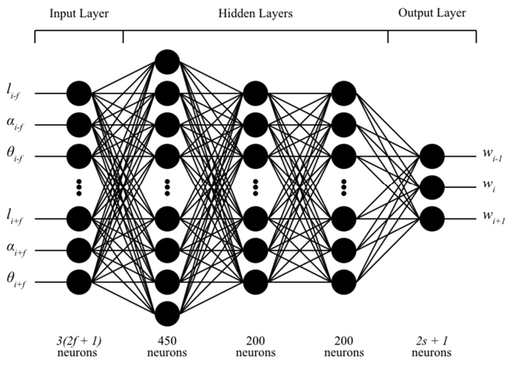
Figure 3 . Network structure (shown with sampling level s=1).
원문 · CC BY 4.0 · Sam Garlick, Andrew Bradley · Real-Time Optimal Trajectory Planning for Autonomous Vehicles and Lap Time Simulation Using Machine Learning · 원문 그림 인용 · 원본 PDF 10쪽에서 그림 영역을 추출했습니다.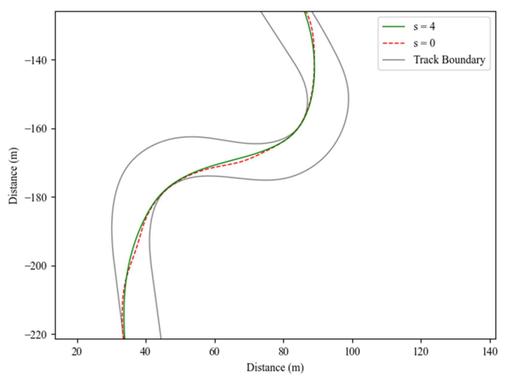
Figure 5 . Adjustment of the Sampling level provides a smoothing effect to the predicted line.
원문 · CC BY 4.0 · Sam Garlick, Andrew Bradley · Real-Time Optimal Trajectory Planning for Autonomous Vehicles and Lap Time Simulation Using Machine Learning · 원문 그림 인용 · 원본 PDF 12쪽에서 그림 영역을 추출했습니다.미지 서킷에서의 예측 정확도
평가는 학습에 쓰지 않은 테스트 서킷 288개(실제 9개와 증강 279개)에서 수행되었고, 예측 라인은 OCP 방법의 라인과 비교되었습니다. 실제 서킷 9개에 대한 평균 MAE는 0.289m이며 Brands Hatch GP에서 0.226m로 가장 낮았습니다. 테스트 전체에서 평균 MAE는 ±0.27m이고 RMSE는 0.376m입니다. 오차 분포는 0에 가까운 평균을 가지며 50% 신뢰구간은 ±0.18m, 95% 신뢰구간은 ±0.83m입니다. 코너 apex에서의 평균 오차는 ±0.11m입니다. 이 값들은 이 연구의 테스트 데이터와 OCP 기준선에 대한 측정입니다. 저자들은 좌우 반전 증강이 좌우 회전을 균형 있게 학습시켜 오차 분포의 대칭성에 기여했다고 해석합니다.
반면 Paul Ricard와 Nordschleife처럼 긴 직선이나 복잡한 코너가 많은 서킷에서는 오차가 커졌습니다.
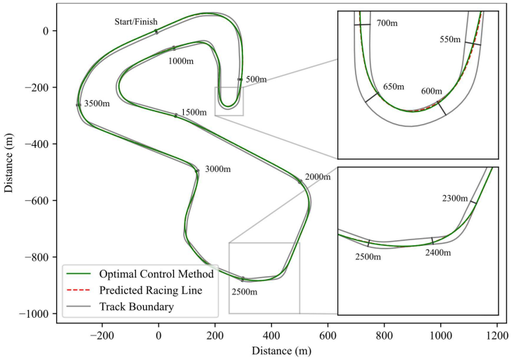
Figure 6 . Comparison of the racing line predicted by the ANN against that calculated via the OCP
원문 · CC BY 4.0 · Sam Garlick, Andrew Bradley · Real-Time Optimal Trajectory Planning for Autonomous Vehicles and Lap Time Simulation Using Machine Learning · 원문 그림 인용 · 원본 PDF 13쪽에서 그림 영역을 추출했습니다.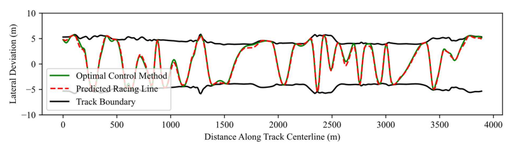
Figure 7 . Lateral deviations from the track centreline predicted by the ANN and calculated via the OCP
원문 · CC BY 4.0 · Sam Garlick, Andrew Bradley · Real-Time Optimal Trajectory Planning for Autonomous Vehicles and Lap Time Simulation Using Machine Learning · 원문 그림 인용 · 원본 PDF 13쪽에서 그림 영역을 추출했습니다.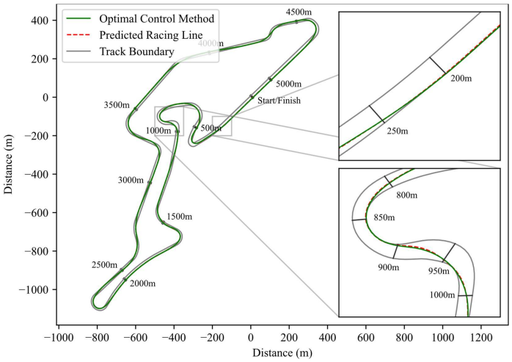
Figure 8 . Comparison of the racing line predicted by the ANN against that calculated via the OCP
원문 · CC BY 4.0 · Sam Garlick, Andrew Bradley · Real-Time Optimal Trajectory Planning for Autonomous Vehicles and Lap Time Simulation Using Machine Learning · 원문 그림 인용 · 원본 PDF 14쪽에서 그림 영역을 추출했습니다.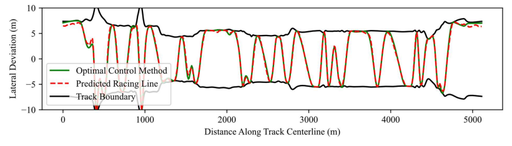
Figure 9 . Lateral deviations from the track centreline predicted by the ANN and calculated via the OCP
원문 · CC BY 4.0 · Sam Garlick, Andrew Bradley · Real-Time Optimal Trajectory Planning for Autonomous Vehicles and Lap Time Simulation Using Machine Learning · 원문 그림 인용 · 원본 PDF 14쪽에서 그림 영역을 추출했습니다.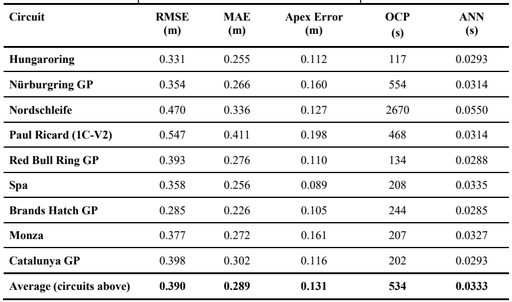
Table 2 . Accuracy of the racing line predicted by the ANN in comparison to the OCP method,
원문 · CC BY 4.0 · Sam Garlick, Andrew Bradley · Real-Time Optimal Trajectory Planning for Autonomous Vehicles and Lap Time Simulation Using Machine Learning · 원문 그림 인용 · 원본 PDF 15쪽에서 그림 영역을 추출했습니다.
Table 3 . Overall accuracy of the ANN predictions in comparison to the OCP
원문 · CC BY 4.0 · Sam Garlick, Andrew Bradley · Real-Time Optimal Trajectory Planning for Autonomous Vehicles and Lap Time Simulation Using Machine Learning · 원문 그림 인용 · 원본 PDF 16쪽에서 그림 영역을 추출했습니다.계산 시간 비교와 적용 범위
계산 시간은 같은 프로세서 환경에서 측정된 OCP 방법과 ANN 예측 시간을 비교합니다. 신경망은 한 서킷의 레이싱 라인을 평균 33ms에 예측하며, 이는 OCP 방법보다 9,000배 이상 빠른 수치로 보고됩니다. 20.8km Nordschleife에서는 ANN이 50ms, OCP 방법이 46분이 걸린다고 보고합니다. 저자들은 윈도우를 동시에 계산할 수 있어 서킷 길이가 늘어도 시간이 크게 증가하지 않는다고 해석합니다. 반면 학습에는 기존 데이터에 대한 광범위한 학습이 필요하고, 이 구현은 속도 프로파일이나 트랙·날씨·차량 파라미터 변화를 다루지 않습니다.
적용 범위와 남은 질문
이 방법은 학습 데이터에 포함된 서킷의 특징 분포에 크게 의존합니다. 저자들은 평균에 가까운 서킷에서는 정확도가 높지만 드문 특징을 가진 서킷에서는 예측이 평균 형태로 치우친다고 설명합니다. 따라서 더 다양한 실제 서킷과 목적에 맞는 데이터 구성이 필요하다고 제안합니다. 또한 학습 데이터의 궤적을 만드는 방법에 따라 예측 라인의 성격이 달라지므로, 신경망이 항상 OCP보다 우수하다는 결론으로 읽으면 안 됩니다. 이 연구는 OCP 라인을 기준으로 한 오차를 측정했으며, 속도 프로파일 예측과 실제 차량 실험은 이 논문의 검증 범위에 포함되지 않습니다.
논문 정보
- 저자
- Sam Garlick, Andrew Bradley
- 학회·저널
- arXiv · 프리프린트
- 최초 공개일
- 2021년 2월 3일
- 등록일
- 2026년 11월 6일
- 수정일
- 2021년 9월 15일
- 버전
- v4
- arXiv
- 2102.02315
- 분류
- cs.RO · cs.AI
- 원문 이용 조건
- CC BY 4.0
- 제공 범위
- 논문 정보, 해설, 허용된 원문 그림
AI 해설은 논문 원문과 별개의 설명이며 오류가 있을 수 있습니다. 원문과 그림은 각 출처의 이용 조건과 따로 표시된 권리를 따릅니다.
초록
Widespread development of driverless vehicles has led to the formation of autonomous racing, where technological development is accelerated by the high speeds and competitive environment of motorsport. A particular challenge for an autonomous vehicle is that of identifying a target trajectory - or, in the case of a competition vehicle, the racing line. Many existing approaches to finding the racing line are either not time-optimal solutions, or are computationally expensive - rendering them unsuitable for real-time application using on-board processing hardware. This study describes a machine learning approach to generating an accurate prediction of the racing line in real-time on desktop processing hardware. The proposed algorithm is a feed-forward neural network, trained using a dataset comprising racing lines for a large number of circuits calculated via traditional optimal control lap time simulation. The network predicts the racing line with a mean absolute error of +/-0.27m, and just +/-0.11m at corner apex - comparable to human drivers, and autonomous vehicle control subsystems. The approach generates predictions within 33ms, making it over 9,000 times faster than traditional methods of finding the optimal trajectory. Results suggest that for certain applications data-driven approaches to find near-optimal racing lines may be favourable to traditional computational methods.
원문 인용
Sam Garlick, Andrew Bradley (2021). Real-Time Optimal Trajectory Planning for Autonomous Vehicles and Lap Time Simulation Using Machine Learning. arXiv:2102.02315v4. https://arxiv.org/abs/2102.02315v4
BibTeX
@misc{garlick2021real,
  title = {{Real-Time Optimal Trajectory Planning for Autonomous Vehicles and Lap Time Simulation Using Machine Learning}},
  author = {Sam Garlick and Andrew Bradley},
  year = {2021},
  eprint = {2102.02315},
  archivePrefix = {arXiv},
  url = {https://arxiv.org/abs/2102.02315v4}
}