Paper commentary
Whose Effect Is It? How Objectives Inflate Learned Subspace Interventions
Learned patching often exceeds whole-state copying because the training objective adds the excess
- Problem Learned subspace patches often change a model's output more than copying the whole state does, so a larger effect was read as stronger evidence. Whether that excess comes from the network or from the training objective was unclear.
- Method The authors prove that, to first order, the effects of orthogonal parts add up to the whole-state effect. Instead of trusting the learned effect, they split it into a whole-state part and an excess that the objective selects.
- Results Cross-entropy DAS ended above T in 1096 of 1124 cases, while squared error ended a median 3.0% from T. Changing the objective removes most of the excess, so a larger learned effect alone is not stronger evidence.
Why a learned part can beat the whole state
Interchange interventions copy part of a model's internal state from a source run into a base run, and the resulting output change serves as evidence. Benchmarks such as CausalGym, RAVEL and MIB score these methods with interchange intervention accuracy, which counts how often the counterfactual output appears. On CausalGym, the median score of DAS is two to three times that of patching the whole state.
Tigges et al. (2024) trained a one-dimensional DAS direction for sentiment, and it scored 109.8% at its best layer. Patching the whole state scored exactly 100% in that same comparison.
Figure 1 shows one such case: Llama-3.2-3B on RAVEL's city-to-language task, measured on 100 test pairs. Here the patched state is the readout, where whole-state patching gives exactly T, the total effect. The angle of 79.6° between the learned direction and the mean change of the state predicts a maximum effect of 3.28 before training. If such scores measure what the network computes, a part of a state would contribute more than the whole state.
Earlier work blamed a dormant pathway or a linear alignment map that partly learns the task, but none says when a part exceeds the whole.
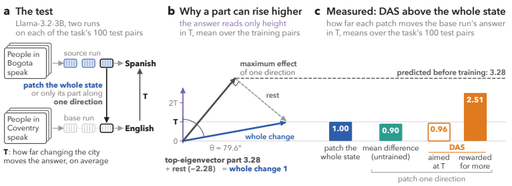
Figure 1 : A learned part of a state can change a model’s output more than the whole state does.
Original paper · CC BY 4.0The open question is whose effect the excess is, the network's or the training objective's. Answering it requires a reference that involves no training, so the authors use whole-state patching, which copies the entire source state and learns nothing.
Splitting a learned effect into orthogonal parts
Orthogonal parts of a state have first-order effects that add up to the effect of the whole state. The expansion neglects terms of second and higher order in the state difference Δ.
Whole-state patching copies the entire source state at a site and learns nothing, so it serves as the reference for every method. Its effect G is the indirect effect through the site, which the paper calls CausalGym's vanilla intervention.
The first-order effects of rank-one interchanges fill the range from λD up to λ1, the largest eigenvalue of M. The network fixes this range, and the upper end λ1 can be computed before any training. The trace of M is the first-order effect of whole-state patching, so the range is set against it.
The predicted maximum λ1 is computed before any training. The margin above T is the maximum effect minus T, and a case has a margin when its maximum effect's interval lies above T.
At the readout, the objective decides where DAS lands
The readout is the cleanest test, because whole-state patching there moves the output by exactly T. The authors trained rank-one DAS in fourteen models, from 124M to 32B parameters, with four objectives and three random initialisations. The analysis keeps 1168 cases that have at least 20 test clusters and an interval for T above zero.
Per model, its median sits at 1.64 to 3.00T, which is 0.76 to 0.97 of the maximum effect. With the per-pair squared error and the same initial directions, DAS ended a median of 3.0% from T. The CDAS divergence ends at a median of 0.91 to 1.06T per model, so the loss, not the initial direction, sets how far the trained direction moves the output.
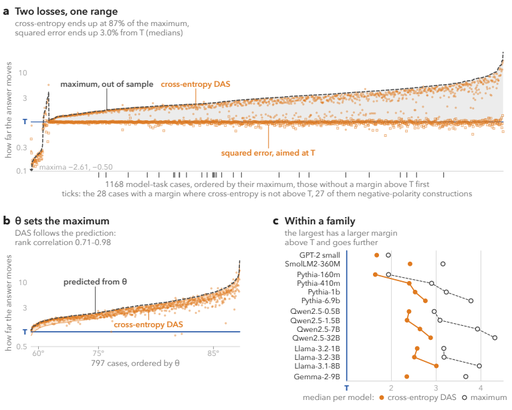
Figure 4 : At the readout, the loss determines where DAS ends up, and one angle predicts the
Original paper · CC BY 4.0 · Toygar Tanyel, Serkan Ayvaz · Whose Effect Is It? How Objectives Inflate Learned Subspace Interventions · Original paper figure · Extracted the figure area from page 18 of the original PDF.A possible confound is that CausalGym's number-agreement tasks also change the subject's lemma, which could lower G. On pairs that change only the number, cross-entropy DAS still ends at a median of 1.20 to 2.14T per model. Held-out pairs don't remove the excess either: on RAVEL's test prompts, cross-entropy DAS lies above T in 223 of the 224 cases with a margin above T.
These pairs still can't separate number from the plural form itself.
On the first-order side, the trace of M lies a median of 0.05 to 3.8% from T per model. Its error takes the form the theory predicts, because computing M at the midpoint should halve the base-point error and reverse its sign. Gemma-2 is the main exception, because its final logits pass through a soft cap with κ = 30. A single angle measured on training pairs predicts the maximum effect before training, and DAS follows this prediction with rank correlation 0.71 to 0.98.
Inside the network, the excess appears at most sites
Inside the network there is no closed-form reference, so whole-state patching has to be measured at each cell. Cross-entropy DAS was trained from three initialisations, while the other objectives were trained from one.
Cross-entropy DAS exceeded the predicted maximum at 4894 cells, and freezing attention removed 0.85 of its effect at those cells. At these cells, the median whole-state patching in its best context, G∗, was 0.01T. Cross-entropy DAS exceeds whole-state patching at most sites, including sites where whole-state patching shows no significant effect.
The authors say this excess mostly runs through attention, so the network's own route carries little of it. The excess is the objective's, because a larger learned effect is then not stronger evidence.
The objective decides how much of this excess appears at a cell. A squared error aimed at T stays above whole-state patching, with a median of 0.04T at cells where whole-state patching shows no effect. A squared error aimed at the cell's own G ends up near whole-state patching instead. Across 460 maps, the first-order excess has a mean rank correlation of 0.62 with the observed excess.
It falls slightly short of the best predictor picked on each map, which reaches 0.68. The range ranks the cells only in part and does not bound the excess.
The first-order account is therefore useful but incomplete inside the network. Where exact effects go beyond it, the authors found that freezing attention removes most of the effect.
What a larger learned effect shows
The authors split a learned effect into the whole-state effect at the site and an excess that the objective chooses within the range. The whole-state effect is the part the network itself produces, because copying the whole state of the source run learns nothing.
This holds at the readout and inside the network. The excess sits at sites where whole-state patching shows no significant positive effect, and it runs largely through attention weights. A squared error aimed at the cell's own G ends up near G, so the objective, not the network, sets the excess.
A larger learned effect alone isn't stronger evidence, so a reader needs the whole-state effect beside it. The authors offer a three-step reporting check that compares a learned effect with whole-state patching wherever it's reported. Off-route effects run largely through attention at sites where the network itself carries no significant effect.
A map of learned effects therefore shows where an objective can move the output, and comparing it with whole-state patching shows where the network itself produces the effect.
Where the first-order account stops
The account is first order, so it describes the readout closely only where the final logits are not capped. Exact effects go beyond the account in two places, and the authors find why in both.
Once the cap is removed, the in-sample maximum exceeds the predicted maximum in none of the tasks. Removing the cap accounts for most of Gemma-2's difference, but not for all of it.
Inside the network, freezing attention removes 0.85 of the effect at cells where DAS exceeds its predicted maximum.
The measurements cover base checkpoints, from 124M to 32B parameters. The authors didn't test instruction-tuned models, and they measure ranks 1 to 64 at the readout. Inside the network, they measure rank one only. The four 7 to 9B models are mapped on three syntactic tasks only. The reference of whole-state patching misses an effect that the network produces only through earlier tokens of a region.
It also misses effects that pass through three or more regions together.
Paper info
- Authors
- Toygar Tanyel, Serkan Ayvaz
- Venue
- arXiv · Preprint
- First published
- 2026-11-3
- Added
- 2026-11-6
- Updated
- 2026-11-3
- Version
- v1
- arXiv
- 2611.05033
- Category
- cs.CL
- Original paper terms
- CC BY 4.0
- What we show
- Paper info, commentary and permitted figures from the original paper
AI commentary is a separate explanation from the original paper and may contain errors. The original paper and figures follow each source's terms of use and any rights noted separately.
Abstract
Interpretability often locates concepts by copying part of a language model's state from one input into another (activation patching). A larger output change counts as stronger evidence that this part carries the concept. Methods that learn which part to copy often change the output more than the whole state does. By that reading, learned parts isolate the concept more cleanly. Yet the whole contains the part. So whose effect is this excess, the network's or the method's? Copying the whole state learns nothing, so it shows what the network produces. We prove that, to first order, the effects of orthogonal parts add up to that of the whole. A part therefore exceeds the whole exactly when the rest moves the output back, which does not require isolating the concept more cleanly. Objectives that reward a larger effect select such parts. Distributed alignment search with cross-entropy, for example, exceeds the whole-state copy just before the output on almost all tasks, and inside the network at most sites. In both, changing only its objective to target what the network produces removes most of the excess. It therefore comes largely from the objective, so a larger learned effect alone is not stronger evidence.
Quote from the paper
Toygar Tanyel, Serkan Ayvaz (2026). Whose Effect Is It? How Objectives Inflate Learned Subspace Interventions. arXiv:2611.05033v1. https://arxiv.org/abs/2611.05033v1
BibTeX
@misc{tanyel2026whose,
  title = {{Whose Effect Is It? How Objectives Inflate Learned Subspace Interventions}},
  author = {Toygar Tanyel and Serkan Ayvaz},
  year = {2026},
  eprint = {2611.05033},
  archivePrefix = {arXiv},
  url = {https://arxiv.org/abs/2611.05033v1}
}