Paper commentary
Remembering Is Not Enough: Evaluating Timing and Omission in Longitudinal AI Mental Health Support
Memory-equipped chatbots gave premature advice after simulated crises
- Problem Single-response safety checks miss whether advice fits a user's recovery over many sessions. Assistants with memory may give premature advice or leave out expected support, and these failures go unseen.
- Method CARE is a framework, built with mental health professionals, that scores each assistant turn as aligned, premature or lagging against the user's recovery state. The authors inject simulated crises into personas built from real chat histories.
- Results Advice was less aligned after a crisis than in matched control stretches, with premature rates of 0.074 versus 0.023 in control. Omission of expected support was common, with OmitR at 0.827 for anxiety in Baseline mode.
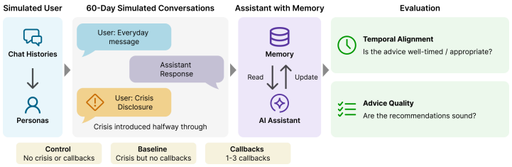
Fig. 2 . Overview of the simulation and evaluation process.
Original paper · CC BY 4.0 · Eli Min, Mohit Chandra, Aamogh Sawant, Mengting Tu, Freya Lin, Ridwan Shams Khan, Reigna El-Yashruti, Christopher L. Smith, Mark Kalinich, John Torous, Munmun De Choudhury · Remembering Is Not Enough: Evaluating Timing and Omission in Longitudinal AI Mental Health Support · Original paper figure · Extracted the figure area from page 6 of the original PDF.Why single responses miss the risk
Current LLM mental health evaluations mostly look at one turn or one session at a time. Those checks ask whether one reply is appropriate, so they can miss failures that only show up across extended interactions. Short-term studies that do follow up have witnessed the decline or disappearance of earlier improvements.
Remembering a detail is not the same as therapeutic continuity, and an assistant may not recognize when that detail matters. More accumulated context also brings known harms, such as sycophancy and responses inconsistent with a user's circumstances. Jain et al. and Pulipaka et al. observed significant increases in sycophancy with larger contexts.
Because the non-linear nature of recovery means needs change, the open question is whether support stays matched to the user's later state.
Prior evaluations of LLM crisis responses focus on clinical appropriateness, suicide risk identification, and harmful replies. A single response can contain appropriate advice yet still be premature or delayed relative to the user's readiness. Expected support can also be absent altogether, which a response-level check doesn't register. The authors therefore ask whether support matches the user's current recovery state after crisis, which is the first research question.
Their second question asks whether advice is clinically sound and what expected support it leaves out.
Simulating crises on top of real chat histories
The authors start from donated chat logs of 22 users, and they simulate conversations on top of those real histories. Llama 3.3-70B-Instruct labels 4,347 sessions with topics, and 266 zero-shot topics shrink to 16 final topics. Sessions are then graded for relevance to each user's journey, and the pipeline matched two annotators 87.1% of the time.
Atomic facts are merged into stages, and annotators marked 83.6% of 244 extracted facts as faithful.
Each persona gets a baseline tone and a health-specific tone, with six options for each, plus Basic or Advanced health literacy. Varying these attributes over fixed seed journeys yields 1,584 personas, so style changes can be compared while the life story stays constant. Blind reviewers rated simulated messages 87.9% faithful, close to the 88.0% they gave original user messages.
Each persona runs 60 sessions, with Qwen 3-8B playing the user and Gemma 4-31B-Instruct playing the assistant. The crisis lands at the 30-session mark, once enough trust exists for the assistant to draw on stored memories.
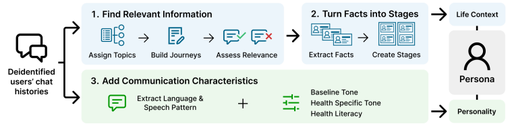
Fig. 1 . Overview of the persona creation pipeline.
Original paper · CC BY 4.0The crisis is one of suicidal ideation, self-harm, or anxiety, and the simulation injects it into the persona's chat. A Control run has no crisis, so it checks whether observed effects come from the injected crises themselves. Baseline runs never revisit the crisis, so the persona keeps discussing its journeys and stages as before. Callback runs assign each persona one to three returns to the crisis, and each return follows a randomly drawn trajectory script.
The assistant's memory keeps persistent user facts organized by persona topic, and it separates the latest update per topic from historical ones. Facts pass through an allowlist before storage, which keeps incidental remarks out of long-term memory. Each write carries the simulated date, so the assistant can reason about how much time has passed.
Before each turn, the memory context fits within a budget of 6,144 tokens.
How CARE scores the timing of advice against recovery state
CARE first asks where the user stands at each assistant turn, using the user's own messages. The recovery states run from Acute through Settling and Open to Rebuilding, and they end in a Final state. Any new crisis sends the user back to Acute, and each assistant action turn is then labeled aligned, premature or lagging.
A premature label means the assistant pushes long-term commitments on someone who still needs immediate support. A lagging label means the assistant offers short-term advice after the user has already signaled readiness for longer-term support. The authors compute AR as aligned turns divided by N, the total number of assistant action turns in an episode.
PR divides premature turns by the same N, so AR and PR share one denominator. LR divides lagging turns by N_ready, the turns sent while the user was Open or Rebuilding. Because the denominators differ, the three rates shouldn't be added up to one.
To check whether mistimed advice belongs to crises, each crisis or callback episode gets a control window. Acute turns are excluded from the control, and the same classifier labels both windows.
Advice Quality works at session level after each crisis or callback, through ProdR, UnprodR and OmitR. OmitR counts sessions that contain none of the behaviors the clinician review team requires. Omission differs from unproductive behavior, because it measures expected support that is absent rather than what the assistant says.
Premature advice, lag and crisis effects
The authors pooled Temporal Alignment rates within each user and compared conditions on the same users. Premature rates were 0.210 for self-harm and 0.210 for anxiety, and 0.204 for SI. In Callback mode, the average premature rate fell to 0.149, a Wilcoxon result with p < 0.001 and r = 0.98. The authors read the largest drop, for SI, as evidence that user-prompted crisis discussion reduces early advice.
Alignment rose only slightly in Callback mode, from 0.783 to 0.806 (p = 0.050). Self-harm and SI gained more than anxiety, but that difference within crisis types wasn't significant (Friedman p ≥ 0.37). Lag rates in Baseline mode were 0.259 for SI, 0.190 for self-harm and 0.416 for anxiety, measured over Open or Rebuilding turns. Callbacks lowered LR numerically to 0.205 for SI, 0.167 for self-harm and 0.258 for anxiety.
None of these lag changes was significant, while the premature rate fell reliably across callback simulations.
The premature gap was larger, at PR 0.074 versus 0.023 (p < 0.001), with a lower control rate for all users. LR was higher in crisis chats overall, at 0.192 versus 0.144, but reliably so only for anxiety at 0.259 versus 0.122.
Early advice therefore depends partly on the crisis itself, instead of on how the assistant paces every reply. The paper's controls show that a crisis window, not general pacing, drives most of the premature-advice gap.
Trajectories and tone shape when the assistant advises
Stall callbacks drew the most premature advice, with a PR of 0.184 against 0.101 for Recovery, 0.077 for Ambivalent and 0.034 for Decoy. Each of these pairwise gaps held after Holm adjustment at p < 0.001. Stall stayed highest in every crisis type, at 0.162 for SI, 0.188 for self-harm and 0.170 for anxiety. For anxiety, the gap between these two trajectories was minimal, at 0.151.
The trajectory term in the mixed-effects model reached significance at p = 0.030. That result depended on Decoy callbacks, which produced a high AR of 0.894. Recovery, Ambivalent and Stall callbacks had AR values of 0.799, 0.792 and 0.788, so they were aligned at about the same rate. As premature advice fell for these trajectories, lag rates rose instead.
The other tones ranged from 0.694 to 0.728, and every Upset comparison reached p < 0.001. Tone also shifted timing, with smaller differences in AR (Friedman p < 0.001, W = 0.23) and in PR (W = 0.25). Upset had the highest AR at 0.812 and the lowest PR at 0.163, while Verbose had an AR of 0.780 and a PR of 0.190. Emotional tone had a small effect on advice frequency (Friedman p = 0.030), but no pairwise difference was significant.
Health literacy didn't significantly affect the measured rates.
Omitted follow-up and planning
Omission is a different kind of failure from unproductive advice, since it measures expected support that never shows up in the conversation. The authors checked each session after a crisis or callback against clinician-recommended behaviors, so the rates cover the whole session rather than single replies. Unproductive behavior was rare, with a mean UnprodR of 0.018 across users and the highest rate in anxiety simulations.
In Baseline mode, OmitR was 0.827 for anxiety, 0.614 for self-harm and 0.593 for SI. In Callback mode, OmitR fell overall, but it stayed at 0.668 for anxiety, 0.383 for self-harm and 0.308 for SI. Examples of omission include failing to provide resources for professional help or techniques for anxiety reduction. A reply-by-reply check tends to miss this gap, because each reply can look fine on its own.
The authors tie this gap to the missing Bridging recommendations that move a user from acute stress toward long-term care. Bridging matters because risk may stay elevated after a crisis, and interventions at this stage have reduced later risk in clinical settings. A chatbot could help draft a safety plan, but the authors suggest designing transitions that bring human support in.
Their framing suggests that evaluating only for harmful outputs can miss failures to provide warranted support, so omission needs its own measure.
What the timing and omission gaps imply
Anxiety was the hardest case for the assistant to time its advice. In Baseline runs, the assistant kept a crisis tone after the user was ready to move on, with LR at 0.416. For anxiety, premature advice didn't fall as sharply as it did for other crisis callbacks. The authors tie this to prior findings that LLMs struggle with implicit and intermediate mental health risks.
Verbose users got the least aligned advice, with AR 0.780 and PR 0.190, so communication style can shift the support a need receives.
Most sessions included a productive behavior, at 0.689, yet the clearest limitation was what the assistant left out. Omission reached 0.827 for anxiety in Baseline runs, where follow-up and next-step planning were most often missing. The authors argue that the Bridging period after a crisis needs support that moves users toward long-term care.
They add that a safety plan drafted with a chatbot should still bring human support into the picture. The authors ask how memory of past crises should be used, since proactive check-ins could reduce relapse but could also feel unwanted.
The authors call for evaluations that cover changing recovery states, ambiguous distress, and prior context the user doesn't revisit. A response that looks appropriate in one turn can still be premature or lagging for a user's recovery trajectory. Simulations, the authors note, are better suited to auditing what an AI system would do than what an individual would do.
Persona attributes should be chosen deliberately, since health literacy didn't significantly change the outcome metrics.
Limits of simulated users, fixed scripts, and LLM judges
The findings come from simulation, so they describe how the assistant behaves with simulated users rather than real ones. The personas were distilled from only 22 users' chat logs, so they miss much of the range of human emotional expression. The labels came from LLM judges, which adds a layer of automated judgment to every reported rate.
Human annotators validated each judgment step, but checking every judgment wasn't feasible at this data scale.
These scripts show how the assistant responds to varied trajectories, but they aren't an exhaustive map of recovery patterns. The fixed probabilities don't estimate how common these trajectories are among people experiencing mental health crises.
Reviewers rated simulated messages as faithful to their personas at 87.9%, close to the 88.0% they rated for original user data. Health literacy didn't significantly contribute to the outcome metrics, even though the assistant's response style differed qualitatively. Researchers therefore need to choose persona attributes deliberately, because adding more simulated attributes won't necessarily strengthen the metrics.
Paper info
- Authors
- Eli Min, Mohit Chandra, Aamogh Sawant, Mengting Tu, Freya Lin, Ridwan Shams Khan, Reigna El-Yashruti, Christopher L. Smith, Mark Kalinich, John Torous, Munmun De Choudhury
- Venue
- arXiv · Preprint
- First published
- 2026-11-5
- Added
- 2026-11-9
- Updated
- 2026-11-5
- Version
- v1
- arXiv
- 2611.08721
- Category
- cs.CY · cs.AI
- Original paper terms
- CC BY 4.0
- What we show
- Paper info, commentary and permitted figures from the original paper
AI commentary is a separate explanation from the original paper and may contain errors. The original paper and figures follow each source's terms of use and any rights noted separately.
Abstract
Evaluations of large language models (LLMs) for mental health support commonly focus on the clinical appropriateness of individual responses, potentially overlooking failures that emerge across extended interactions. As AI assistants accumulate memory of users' circumstances and prior disclosures, this raises an accountability question: Do AI chatbots provide appropriate support as users' needs evolve? We investigate by analyzing 14,256 longitudinal simulations grounded in donated chatbot histories from 22 users, examining how a memory-equipped assistant responds to suicidal ideation, self-harm, and anxiety crises across recovery trajectories and communication styles. We introduce the Context-Aware and Readiness-Evaluative (CARE) framework, developed with mental health professionals, to assess the timing and quality of advice, including omissions. Advice was less aligned with users' readiness after a crisis than in matched control stretches of the same conversation, largely because of premature recommendations, which were most common when recovery stalled. Revisiting a crisis reduced premature advice but not lagging advice, and users' communication style changed how often and when the assistant gave recommendations. Although explicitly unproductive advice was rare, the assistant frequently omitted clinician-expected support such as follow-up and planning for next steps. These findings show the limits of single response-level safety evaluation and the need to assess timing, omission, and consistency across users when holding AI systems accountable for longitudinal support.
Quote from the paper
Eli Min, Mohit Chandra, Aamogh Sawant, Mengting Tu, Freya Lin, Ridwan Shams Khan, Reigna El-Yashruti, Christopher L. Smith, Mark Kalinich, John Torous, Munmun De Choudhury (2026). Remembering Is Not Enough: Evaluating Timing and Omission in Longitudinal AI Mental Health Support. arXiv:2611.08721v1. https://arxiv.org/abs/2611.08721v1
BibTeX
@misc{min2026remembering,
  title = {{Remembering Is Not Enough: Evaluating Timing and Omission in Longitudinal AI Mental Health Support}},
  author = {Eli Min and Mohit Chandra and Aamogh Sawant and Mengting Tu and Freya Lin and Ridwan Shams Khan and Reigna El-Yashruti and Christopher L. Smith and Mark Kalinich and John Torous and Munmun De Choudhury},
  year = {2026},
  eprint = {2611.08721},
  archivePrefix = {arXiv},
  url = {https://arxiv.org/abs/2611.08721v1}
}