Paper commentary
Agentic Attribution of Cloud Resource Ownership
Agentic search derives cloud resource owners from work and code records
- Problem Owner fields in cloud inventories are often missing or stale, so security findings cannot reliably reach the people responsible. Declared ownership does not transfer between organizations because the signal is scattered across partial sources.
- Method The architecture derives ownership from work records, code history, audit logs and identity directories instead of declared owner fields. It first profiles an organization offline into signal procedures, then uses a coordinator agent and parallel investigators to attribute each resource.
- Results On 100 AWS resources, weighted recall reached 92.1% against 54.8% for an unprimed general-purpose agent. Precision was 86.6% against 77.4%, at 0.55 times the agent's cost per unit of coverage.
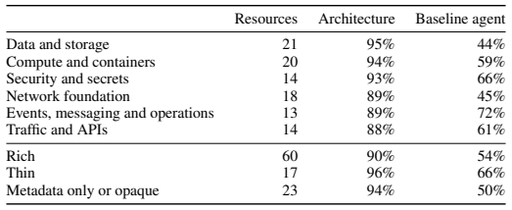
Table 5 : Weighted recall by resource category and signal level (one network, rich resource has no verified owner and is not scored).
Original paper · CC BY 4.0 · Tiltan Gilat, Gal Engelberg, Ariel Zadok, Leon Goldberg · Agentic Attribution of Cloud Resource Ownership · Original paper figure · Extracted the figure area from page 9 of the original PDF.Why declared owners fall short
Security findings get fixed only when they reach the people who answer for the resource, so routing depends on who owns each resource. Where ownership is recorded, it is declared in configuration management databases and asset inventories as owner fields. People fill those fields in by hand or copy them from other declared records.
The authors call the owners held in these records implicit ownership, meaning owners that the records hold but the resource does not. Recovering implicit ownership is hard for four reasons, and the first is that the signal is scattered across partial sources. Fixed rules therefore don't transfer between organizations.
Existing work addresses neighboring questions, such as code ownership measured from contribution shares and triage of transient work items. The authors formalize the task as returning, for a resource r, a set of entities with their evidence pieces and a confidence. The relation pattern decides how much each entity counts, which is why the paper turns to typed relations next.
Ownership as a set of typed relations
The definition treats ownership as a set, not a single value, so an owner is an entity whose tie to a resource the records support. Each member of the set carries a relation pattern, which names the nature of that tie to the resource. The relation, not the entity, is the unit that has to be justified, so one person can hold different patterns on different resources.
Explicit owner and direct work form the strongest level, with explicit owner covering a name in the resource or a recorded action that created it.
Indirect work, relies on it and peripheral follow in decreasing strength, with indirect work covering the surroundings of a resource where the link is inferred. The boundary between direct and indirect work separates people who answer for a resource from people who answer for its surroundings. Maintaining a compute node's database service is direct work on the node, while administering the cloud account it runs in is indirect work.
Rule 3 keeps creating, changing, maintaining and operating at one level, so the builder isn't ranked above the operator. Rule 4 applies only relative to other people related to the same resource, so when nobody does direct work, indirect work becomes the strongest relation.
The people on those records become the candidates, which is how the definition reaches humans behind automation. The weights turn this order into numbers: 1.0 for explicit owner and direct work, 0.5 for indirect work, 0.25 for relies on it and 0.1 for peripheral. When a resource has no direct worker, indirect work counts 1.0, and when a verified explicit owner exists, direct work counts 0.75.
The evaluation applies these weights to 100 resources of 50 ownable types, two per type, drawn from 105 ownable resource types out of 244 classified. Each resource receives a signal level, rich, thin or metadata only and opaque, based on how many applicable signal procedures hold a value for it. The architecture reads relations through the enterprise security brain, which integrates each platform's records in one read-only store.
Compiling one organization offline
The architecture compiles one organization's conventions once, offline, so per-resource reasoning covers only what can't be pre-computed. The hypothesis becomes a signal procedure only after code runs it on the organization's own data and checks that it reaches people.
The platform-wide data layer that these procedures read is the enterprise security brain, which integrates each platform's records in one read-only store.
The second tool is the ownership playbook, the declarative complement to the procedures. Because the agents read it for every resource, profiling becomes context rather than a one-off analysis. The compiled tools then feed the online search, where the investigation agent reads them before issuing live queries for what they don't cover.
Searching evidence for one resource
An investigation starts by inferring what the resource belongs to, which the paper calls its context. This step addresses the scattered signal and the multi-hop links, since the name alone points the search to records in other systems. The paper follows the orchestrator–worker pattern of recent multi-agent systems for this split.
Every role holder on a matching record, whether assignee, reporter, author or reviewer, is registered, not only its leader.
Every failed lookup must be retried or explained, and every person the conclusion mentions must be attributed or ruled out. Otherwise the conclusion is returned for another round.
The model never states the confidence itself. The output is the ownership set A(r), listing each entity with its evidence and its confidence. The relation pattern is then read from that evidence, so the pattern needs no further investigation. Figure 1 shows this loop, with the profiling agents building the signals and the investigation agent calling them.
How the pooled evaluation works
With no ground-truth ownership map, the evaluation scores both systems against a pool of their verified candidates. The baseline is Claude Code, run through the Claude Agent SDK on Claude Sonnet 5.5, and it receives only the resource identifier.
The candidates of both systems for each resource merge into one pool by canonical email, following information retrieval pooling practice. Because the baseline contributes people the architecture never found, the pool doesn't rest on the system under test alone. Recall against this pool is relative, so it ranks systems reliably but bounds true recall from above.
Absence of data is never a contradiction, so the judge never sees either system's confidence. Claude Sonnet 4.6 then assigns a relation pattern to each verified person, with three votes combined per person.
Weighted recall divides the weight of verified people a system found by the weight of all verified people in the pool. Weighted precision gives each verified person its weight and charges each rejected candidate a full 1 in the denominator. The weights come from the relation patterns: explicit owner and direct work 1.0, indirect work 0.5, relies on it 0.25, peripheral 0.1.
When a resource has no direct worker, indirect work counts 1.0, and when it has a verified explicit owner, direct work drops to 0.75.
Coverage against the unprimed agent
The architecture reaches 92.1% weighted recall on coverage, where the baseline agent reaches 54.8%. Macro-averaged over resources, the two systems score 93.3% against 68.5%. The architecture named a verified owner for 99 of 100 resources, whereas the baseline agent managed 89. The architecture alone found 100 of these pairs, and the baseline agent alone found 32.
Both systems find the named explicit owner almost every time, with 47 of 49 for the architecture and 48 for the baseline agent. The real gap sits in direct work, where the architecture finds 131 of 141 people against 53 for the baseline agent. On resources without an explicit owner, the architecture finds 117 of 123 direct workers, while the baseline agent finds 47.
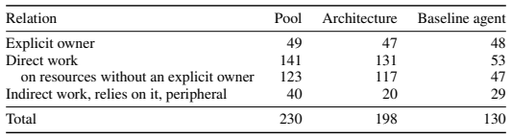
Table 3 : Verified owners by relation pattern.
Original paper · CC BY 4.0The added owners sit beyond the resource itself, in other systems the architecture queries. Code history backs 46% of the architecture's verified owners, against 2% for the baseline agent. Person directories back 68% of its verified owners, compared with 17% for the baseline agent. Of the 32 owners only the baseline agent found, 20 are weaker links such as indirect work or peripheral mentions.
The architecture reached 11 of those 32 during its investigation without proposing them.
Across six resource categories, the architecture's weighted recall stays between 88% and 95%, against 44% to 72% for the baseline agent. Recall stays at 96% on thin resources and 94% where no signal procedure applies, so less pre-computed signal doesn't lower it. Recall is measured against owners the two systems found together, so true recall may be lower than reported.
Precision and cost of attribution
Weighted precision gives each verified person their relation weight and charges every rejected candidate a full 1. The paper attributes the baseline's lower precision to fewer and weaker owners, not to more errors.
Only a few proposals from either system get rejected: 12 for the architecture and 10 for the baseline agent. The judge decided 250 of the 265 pooled candidates, which is 94%.
Cost is computed from recorded token counts at uncached list prices, and it covers per-resource attribution only. A resource costs $0.63 with the architecture and $0.68 with the baseline agent. The architecture uses about 190K input and 25K output tokens per resource. The baseline agent uses about 320K input and 4K output tokens, so its input volume is larger.
Profiling runs once per organization and sits outside these figures.
Per unit of weighted recall, the cost is $0.68 for the architecture against $1.24 for the baseline agent. That gives the architecture 0.55 times the baseline agent's cost per unit of coverage. The paper didn't measure what profiling costs for each organization.
Limitations of the ownership evaluation
The evaluation covers one organization, one cloud provider and 100 resources, so its results don't show how the architecture behaves elsewhere. Profiling learns an organization's ownership conventions from its own data, but how well it works on other organizations is untested. The paper also names one cloud provider and 100 resources as the scope of its results, which limits what the comparison can claim.
No source is a CMDB, so the derived owners aren't compared with declared owners. Recall is measured against the owners the two systems found together, so owners that neither system found are not counted. True recall may therefore be lower than the reported 92.1% and 54.8%.
No agreement study with human annotators was made, so the judge's verdicts aren't checked against human labels.
Paper info
- Authors
- Tiltan Gilat, Gal Engelberg, Ariel Zadok, Leon Goldberg
- Venue
- arXiv · Preprint
- First published
- 2026-11-8
- Added
- 2026-11-10
- Updated
- 2026-11-8
- Version
- v1
- arXiv
- 2611.11340
- Category
- cs.CR · cs.AI
- Original paper terms
- CC BY 4.0
- What we show
- Paper info, commentary and permitted figures from the original paper
AI commentary is a separate explanation from the original paper and may contain errors. The original paper and figures follow each source's terms of use and any rights noted separately.
Abstract
Security tools raise findings across cloud environments, and AI agents now investigate and prioritize them. A finding is still resolved by people: it has to reach the people responsible for fixing it and accountable for the resource it concerns. Ownership is the organizational context that decides who that is. Where recorded, it is declared by hand in configuration management databases or owner tags and goes stale unless kept current; accounts are shared, and automation creates much of the infrastructure. The knowledge sits in work records, code history, audit logs and identity directories, encoded in each organization's own conventions. Recovering it poses four challenges: the signal is scattered across sources, none of them authoritative; the conventions that carry it differ between organizations; reaching an owner takes multi-hop links; and those related to a resource differ in the strength of their relation. We define ownership as a set of entities, people or teams, each related to the resource by one of five patterns ordered by strength. We present a reference architecture for agentic ownership attribution that derives ownership from these records instead of declaring it: it profiles an organization offline into tested signal procedures and an ownership playbook, then attributes each resource with a coordinator agent and parallel investigators, with confidence computed by rules. On 100 resources of 50 Amazon Web Services (AWS) resource types in one organization, we pool the architecture's candidates with those of an unprimed general-purpose agent and verify every evidence piece against the records. The architecture reaches 92.1% weighted recall and 86.6% weighted precision, against 54.8% and 77.4%, at 0.55 times the agent's cost per unit of coverage. The difference lies in people who build and change resources without an explicit owner, found through work records and code history.
Quote from the paper
Tiltan Gilat, Gal Engelberg, Ariel Zadok, Leon Goldberg (2026). Agentic Attribution of Cloud Resource Ownership. arXiv:2611.11340v1. https://arxiv.org/abs/2611.11340v1
BibTeX
@misc{gilat2026agentic,
  title = {{Agentic Attribution of Cloud Resource Ownership}},
  author = {Tiltan Gilat and Gal Engelberg and Ariel Zadok and Leon Goldberg},
  year = {2026},
  eprint = {2611.11340},
  archivePrefix = {arXiv},
  url = {https://arxiv.org/abs/2611.11340v1}
}