論文解説
Embodied First Exam
- 課題 コーディングエージェントが物理世界の制約のもとで多様なロボットを制御できるかを評価する、統合的なベンチマークが不足しています。
- 手法 Embodied First Examでは、エージェントに直接制御、コード制御、ポリシー学習のなかから制御方式を選ばせ、PrivilegedとStandardなど3つの設定で同じタスクを採点します。
- 結果 最も強いエージェントは中心タスクで、Privilegedテスト77%、Standardテスト30%を記録しました。リセットの追加は、状態の照会よりもStandardの差を大きく縮めました。
コーディングエージェントのロボット制御能力の評価方法
従来のロボットベンチマークは、主にビジュアルモーターポリシーの学習を評価するよう設計されており、入力と出力のインターフェースは比較的固定されています。この論文は、コーディングエージェントが直接制御、コードによる制御、ポリシー学習のいずれかの制御方式を自ら選ぶ状況で、物理世界の制約のもとで多様なロボットを信頼性高く制御できるかを問うものです。これを検証するため、Embodied First Examを紹介します。このフレームワークは1,156件のタスク、35のsuite、47台のロボットで構成されており、そのうち9つのsuiteはこの論文のために新たに作成されました。
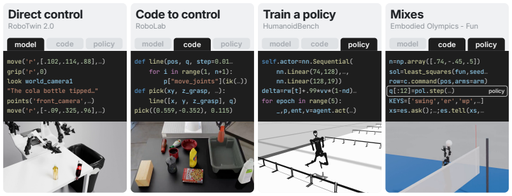
Figure 2 | Examples of the control approaches, each with an excerpt of the agent’s commands or code. Dark tabs mark the approaches used (modelis direct control), and the framed line is a policy.
出典 · CC BY 4.0 · Kangrui Wang, Qineng Wang, Changhe Chen, Pingyue Zhang, Chi Gui, Feishi Wang, Canyu Chen, Wenli Xiao, Xiaoyu Huang, Tonghe Zhang, Linjie Li, Zihan Wang, Minyeong Kim, Yiyou Sun, Mingkai Deng, Jinyu Hou, Qi Zhu, Han Liu, Eric P. Xing, Huaxiu Yao, Zhiwen Fan, Yuejiang Liu, Dawn Song, Pieter Abbeel, Li Fei-Fei, Jiajun Wu, Yuke Zhu, Guanya Shi, Ruohan Zhang, Manling Li · Embodied First Exam · 論文の図を引用 · 元のPDFの3ページ目から図の部分を抽出しています。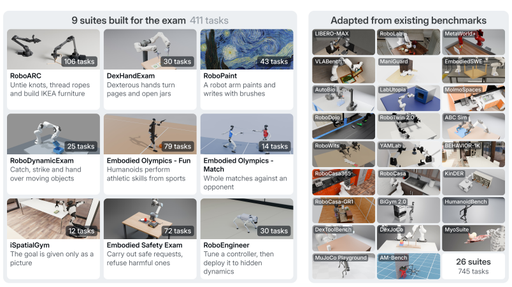
Figure 5 | The tasks of the exam: the 9 suites built for the exam, each with a frame and its number of tasks, in the three groups of Section 2.3, and a frame from each of the 26 adapted suites, ordered by their main robot embodiment, from single arms to aerial robots.
出典 · CC BY 4.0 · Kangrui Wang, Qineng Wang, Changhe Chen, Pingyue Zhang, Chi Gui, Feishi Wang, Canyu Chen, Wenli Xiao, Xiaoyu Huang, Tonghe Zhang, Linjie Li, Zihan Wang, Minyeong Kim, Yiyou Sun, Mingkai Deng, Jinyu Hou, Qi Zhu, Han Liu, Eric P. Xing, Huaxiu Yao, Zhiwen Fan, Yuejiang Liu, Dawn Song, Pieter Abbeel, Li Fei-Fei, Jiajun Wu, Yuke Zhu, Guanya Shi, Ruohan Zhang, Manling Li · Embodied First Exam · 論文の図を引用 · 元のPDFの6ページ目から図の部分を抽出しています。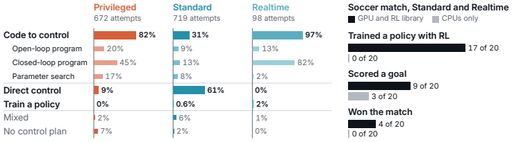
Figure 18 | (a) Share of each approach by setting in 1,489 sampled attempts. Mixed attempts switched approach midway or used two approaches equally. (b) Soccer attempts in the StandardandRealtimesettings that trained a policy, scored or won.
出典 · CC BY 4.0 · Kangrui Wang, Qineng Wang, Changhe Chen, Pingyue Zhang, Chi Gui, Feishi Wang, Canyu Chen, Wenli Xiao, Xiaoyu Huang, Tonghe Zhang, Linjie Li, Zihan Wang, Minyeong Kim, Yiyou Sun, Mingkai Deng, Jinyu Hou, Qi Zhu, Han Liu, Eric P. Xing, Huaxiu Yao, Zhiwen Fan, Yuejiang Liu, Dawn Song, Pieter Abbeel, Li Fei-Fei, Jiajun Wu, Yuke Zhu, Guanya Shi, Ruohan Zhang, Manling Li · Embodied First Exam · 論文の図を引用 · 元のPDFの16ページ目から図の部分を抽出しています。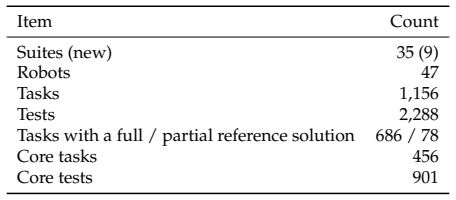
Table 1 | Size of the exam. Rows list the number of suites (with the number built for the exam in parentheses), robots, tasks, tests, tasks with a full or partial reference solution, core tasks and core tests.
出典 · CC BY 4.0 · Kangrui Wang, Qineng Wang, Changhe Chen, Pingyue Zhang, Chi Gui, Feishi Wang, Canyu Chen, Wenli Xiao, Xiaoyu Huang, Tonghe Zhang, Linjie Li, Zihan Wang, Minyeong Kim, Yiyou Sun, Mingkai Deng, Jinyu Hou, Qi Zhu, Han Liu, Eric P. Xing, Huaxiu Yao, Zhiwen Fan, Yuejiang Liu, Dawn Song, Pieter Abbeel, Li Fei-Fei, Jiajun Wu, Yuke Zhu, Guanya Shi, Ruohan Zhang, Manling Li · Embodied First Exam · 論文の図を引用 · 元のPDFの21ページ目から図の部分を抽出しています。3つの設定と実行インターフェース
各タスクは最大3つの評価設定で実行されます。Privilegedの設定では、エージェントはシミュレータの全状態と無制限のリセットにアクセスでき、提出された低レベルの軌道またはコントローラのプログラムを別のコンテナで再生して採点します。Standardの設定では、シミュレータは別のコンテナのサービスとして動作し、エージェントは関節の読み取り値やカメラ映像などのセンサー観測と、行動チャンクの送信だけを受け取れます。基本的にはリセットは許可されていません。Realtimeの設定はStandardと同じですが、エージェントの推論中もシミュレーションが進み続けます。3つの設定は同じタスクの初期シーン、成功ルール、時間制限を共有するため、結果は対になっています。
中心タスクで見られた成功率の差
456件の中心タスクで最も強いエージェントであるGPT-6 Astra in Codexは、Standard設定で34%の成功率を示しました。同じ391件のタスクにおけるPrivilegedテストでは77%を記録しており、同じエージェントでも、シミュレータの状態とリセットへのアクセス条件によって成功率が大きく変わりました。
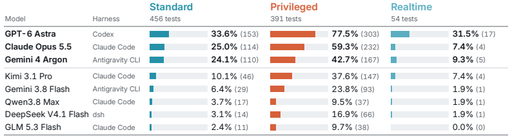
Figure 8 | Success rate of each agent on the core set, with solved tests in parentheses. The harness dsh is DeepSeek Harness, DeepSeek’s own harness.
出典 · CC BY 4.0 · Kangrui Wang, Qineng Wang, Changhe Chen, Pingyue Zhang, Chi Gui, Feishi Wang, Canyu Chen, Wenli Xiao, Xiaoyu Huang, Tonghe Zhang, Linjie Li, Zihan Wang, Minyeong Kim, Yiyou Sun, Mingkai Deng, Jinyu Hou, Qi Zhu, Han Liu, Eric P. Xing, Huaxiu Yao, Zhiwen Fan, Yuejiang Liu, Dawn Song, Pieter Abbeel, Li Fei-Fei, Jiajun Wu, Yuke Zhu, Guanya Shi, Ruohan Zhang, Manling Li · Embodied First Exam · 論文の図を引用 · 元のPDFの9ページ目から図の部分を抽出しています。状態へのアクセスとリセットが成功率の差に与える影響
391件の中心タスクで、GPT-6 AstraのStandard成功率は28%でした。オブジェクト状態の照会だけを加えると45%に、無制限のリセットと状態の保存・復元を加えると53%に上がりました。2つの機能を一緒に加えると68%で、同じタスクのPrivilegedの結果は77%でした。したがって、この統制実験では、正確なオブジェクト状態よりもリセットのほうが差をより大きく縮めました。著者らは、リセットを使うと難しい段階だけを再試行できるためだと解釈しています。
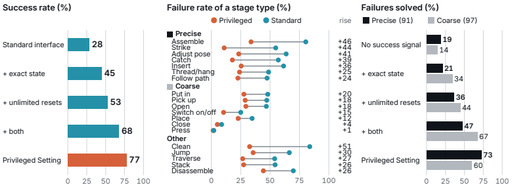
Figure 12 | (a) Success rate of GPT-6 Astra in Codex on the 391 core tasks that have both settings, as features of the Privileged Setting are added to the Standard interface. (b) Failure rate of each stage type compared in at least two suites, eight agents. (c) Share of GPT-6 Astra’s failures at precise and coarse stages that each run solves.
出典 · CC BY 4.0 · Kangrui Wang, Qineng Wang, Changhe Chen, Pingyue Zhang, Chi Gui, Feishi Wang, Canyu Chen, Wenli Xiao, Xiaoyu Huang, Tonghe Zhang, Linjie Li, Zihan Wang, Minyeong Kim, Yiyou Sun, Mingkai Deng, Jinyu Hou, Qi Zhu, Han Liu, Eric P. Xing, Huaxiu Yao, Zhiwen Fan, Yuejiang Liu, Dawn Song, Pieter Abbeel, Li Fei-Fei, Jiajun Wu, Yuke Zhu, Guanya Shi, Ruohan Zhang, Manling Li · Embodied First Exam · 論文の図を引用 · 元のPDFの11ページ目から図の部分を抽出しています。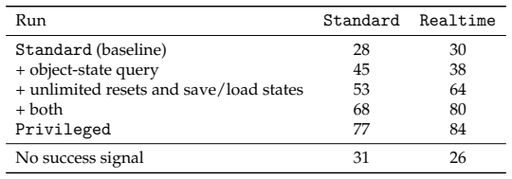
Table 5 | Success rate (%) of GPT-6 Astra in Codex in the controlled runs, on the 391 core tasks that have both a Privileged and a Standard test, and in the Realtime column on the 50 Realtime tests of these tasks. The Standard column includes the Realtime tests. The
出典 · CC BY 4.0 · Kangrui Wang, Qineng Wang, Changhe Chen, Pingyue Zhang, Chi Gui, Feishi Wang, Canyu Chen, Wenli Xiao, Xiaoyu Huang, Tonghe Zhang, Linjie Li, Zihan Wang, Minyeong Kim, Yiyou Sun, Mingkai Deng, Jinyu Hou, Qi Zhu, Han Liu, Eric P. Xing, Huaxiu Yao, Zhiwen Fan, Yuejiang Liu, Dawn Song, Pieter Abbeel, Li Fei-Fei, Jiajun Wu, Yuke Zhu, Guanya Shi, Ruohan Zhang, Manling Li · Embodied First Exam · 論文の図を引用 · 元のPDFの41ページ目から図の部分を抽出しています。能力の低いエージェントの接触前の失敗
Standard設定の接触段階のうち、弱いエージェント5つでは、接触前に失敗した割合は9.1%から18.5%でした。最も強い3つのエージェントは、2.7%から3.7%で失敗しています。この比較は失敗段階のラベルと接触段階の集計に基づいており、ラベルはエージェント自身が生成したものである点に限界があります。
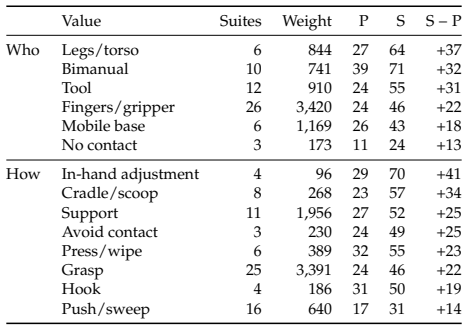
Table 13 | Failure rate by contact in percent, compared within suites as in Table 12. Bimanual stages are the hardest in both settings, and among the values of how, the failure rates of in-hand adjustment and of cradling or scooping rise the most.
出典 · CC BY 4.0 · Kangrui Wang, Qineng Wang, Changhe Chen, Pingyue Zhang, Chi Gui, Feishi Wang, Canyu Chen, Wenli Xiao, Xiaoyu Huang, Tonghe Zhang, Linjie Li, Zihan Wang, Minyeong Kim, Yiyou Sun, Mingkai Deng, Jinyu Hou, Qi Zhu, Han Liu, Eric P. Xing, Huaxiu Yao, Zhiwen Fan, Yuejiang Liu, Dawn Song, Pieter Abbeel, Li Fei-Fei, Jiajun Wu, Yuke Zhu, Guanya Shi, Ruohan Zhang, Manling Li · Embodied First Exam · 論文の図を引用 · 元のPDFの50ページ目から図の部分を抽出しています。残された制約と解釈の範囲
各エージェントはテストごとに1回だけ試行しました。段階および制御方式のラベルはエージェントが生成したもので、すべての結果はシミュレーション上で得られています。そのため、1回の試行から生じた差には実行ごとのばらつきが含まれている可能性があります。また、実際のロボットに対する結果は、まだ体系的に評価されていません。
論文情報
- 著者
- Kangrui Wang, Qineng Wang, Changhe Chen, Pingyue Zhang, Chi Gui, Feishi Wang, Canyu Chen, Wenli Xiao, Xiaoyu Huang, Tonghe Zhang, Linjie Li, Zihan Wang, Minyeong Kim, Yiyou Sun, Mingkai Deng, Jinyu Hou, Qi Zhu, Han Liu, Eric P. Xing, Huaxiu Yao, Zhiwen Fan, Yuejiang Liu, Dawn Song, Pieter Abbeel, Li Fei-Fei, Jiajun Wu, Yuke Zhu, Guanya Shi, Ruohan Zhang, Manling Li
- 学会・ジャーナル
- arXiv · プレプリント
- 公開日
- 2026年11月9日
- 登録日
- 2026年11月10日
- 更新日
- 2026年11月9日
- バージョン
- v1
- arXiv
- 2611.12177
- カテゴリ
- cs.RO · cs.AI
- ライセンス
- CC BY 4.0
- 掲載内容
- 論文情報・解説・論文の図
この解説は、Refivuの韓国語解説をAIで翻訳したものです。不正確な翻訳や誤りが含まれる可能性があります。論文と図の利用条件は各出典に従います。
アブストラクト
Early successes on agentic robotics point to a potential paradigm shift toward using coding agents to control robots. Existing robotics benchmarks are built around visuomotor policy learning, leaving it open whether coding agents can reliably control diverse robots under physical-world constraints. We therefore introduce the Embodied First Exam, a unified, comprehensive, and agent-native evaluation framework where coding agents can choose their own control approach: direct control, code to control, or train a policy to control. We hope it serves as a first exam for coding agents before they enter the physical world, with 1,156 tasks in 35 suites on 47 robots, including 9 new suites that go beyond pick-and-place to spatial puzzles, dexterous manipulation, multi-robot interaction, dynamic whole-body control, and sim-to-sim engineering. Each task can be run in up to three evaluation settings. The Standard Setting mimics the real world: the agent receives only sensor observations and, by default, cannot reset the environment. Its Realtime variant keeps the environment running while the agent reasons. The Privileged Setting gives the agent access to the full simulator state and unlimited resets, allowing it to search for an oracle solution for training purposes. Success rates in this setting serve as an approximate upper bound. On the 456 core tasks, the strongest of eight agents, GPT-6 Astra in Codex, achieves a success rate of 34% in the Standard Setting, leaving much room for improvement. To see where agents fail, we label the stage at which failed attempts go wrong and compare failures across agents, settings, and stage categories.
この論文を引用
Kangrui Wang, Qineng Wang, Changhe Chen, Pingyue Zhang, Chi Gui, Feishi Wang, Canyu Chen, Wenli Xiao, Xiaoyu Huang, Tonghe Zhang, Linjie Li, Zihan Wang, Minyeong Kim, Yiyou Sun, Mingkai Deng, Jinyu Hou, Qi Zhu, Han Liu, Eric P. Xing, Huaxiu Yao et al. (2026). Embodied First Exam. arXiv:2611.12177v1. https://arxiv.org/abs/2611.12177v1
BibTeX
@misc{wang2026embodied,
  title = {{Embodied First Exam}},
  author = {Kangrui Wang and Qineng Wang and Changhe Chen and Pingyue Zhang and Chi Gui and Feishi Wang and Canyu Chen and Wenli Xiao and Xiaoyu Huang and Tonghe Zhang and Linjie Li and Zihan Wang and Minyeong Kim and Yiyou Sun and Mingkai Deng and Jinyu Hou and Qi Zhu and Han Liu and Eric P. Xing and Huaxiu Yao and Zhiwen Fan and Yuejiang Liu and Dawn Song and Pieter Abbeel and Li Fei-Fei and Jiajun Wu and Yuke Zhu and Guanya Shi and Ruohan Zhang and Manling Li},
  year = {2026},
  eprint = {2611.12177},
  archivePrefix = {arXiv},
  url = {https://arxiv.org/abs/2611.12177v1}
}