논문 해설
Neural Modular Physics for Elastic Simulation
탄성 시뮬레이션을 위한 신경 모듈형 물리
- 연구 문제 탄성 시뮬레이션에서 end-to-end 신경 시뮬레이터는 내력이나 응력 같은 중간 물리량을 드러내지 않아 해석과 물리 제약 적용이 어렵습니다.
- 연구 방법 NMP는 고전적 FEM의 변형 구배 계산, 요소 힘 조립, 시간 적분 구조를 따라 neural constitutive module과 neural integration module로 분해하고, 독립 학습 후 공동 fine-tuning을 적용합니다.
- 주요 결과 NMP는 CUBE, BOB, SPOT, CUBEXL 등에서 기준 신경 시뮬레이터보다 낮은 장기 롤아웃 RMSE를 보고하며, FRICTION에서는 알려지지 않은 마찰 효과를 데이터로 학습했다고 보고합니다.
기존 신경 시뮬레이터의 물리적 한계
학습 기반 물리 시뮬레이터는 보통 하나의 신경망을 end-to-end로 최적화하여 동역학 전체를 근사합니다. 이 방식은 빠르고 유연하지만, 내력이나 응력처럼 시뮬레이션에 필요한 중간 물리량을 외부에서 확인하기 어렵고, 알려진 물리 제약을 직접 걸기도 어렵습니다. 이 논문은 이러한 불투명성이 장기 롤아웃의 물리적 신뢰성을 떨어뜨린다고 문제를 설정합니다. 이에 대해 고전적 유한요소법은 변형 구배 계산, 요소 힘 조립, 시간 적분이라는 모듈 구조를 가지므로, 이 구조를 신경 모듈로 옮기는 것이 연구의 출발점입니다.
neural constitutive module과 neural integration module로의 분해
NMP는 탄성 시뮬레이션 계산 흐름을 두 개의 신경 모듈로 나눕니다. neural constitutive module은 각 요소의 변형 구배 F_e로부터 응력 P_e=f_θ(F_e)를 예측하고, 요소 내력 B_e^T P_e V_e를 전체 내부력 f_int로 조립합니다. neural integration module은 정점 위치, 속도, 내부력을 입력받아 속도 증분 Δv=g_ϕ(x_t,v_t,f_int)를 예측하고, v_{t+1}=v_t+Δv, x_{t+1}=x_t+hv_{t+1}로 상태를 갱신합니다. 이때 경계 조건과 충돌 처리는 전통적 방식으로 남겨 둡니다. neural integration module은 질량 행렬과 외력 항을 학습으로 근사하며, 입력 좌표의 전역 평행이동과 회전 차이를 줄이기 위해 학습 가능한 T-Net 정렬 모듈을 앞단에 둡니다.
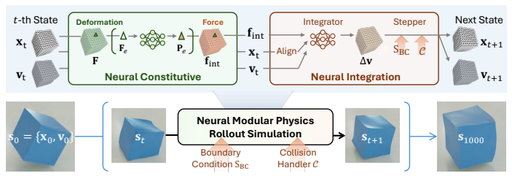
Figure 1 : Neural Modular Physics (NMP) modularizes elastic physics simulation into two parts: neural constitutive module to compute internal forcesf int, and neural integration module to evolve system states t ={x t,v t}and handle traditional boundary conditionsS BC and collisionC.
원문 · CC BY 4.0 · Yifei Li, Haixu Wu, Zeyi Xu, Tuur Stuyck, Wojciech Matusik · Neural Modular Physics for Elastic Simulation · 원문 그림 인용 · 원본 PDF 4쪽에서 그림 영역을 추출했습니다.독립 pre-training과 공동 fine-tuning
NMP는 모듈 역할이 섞이는 붕괴를 피하기 위해 두 단계 학습을 사용합니다. 첫 단계에서는 neural constitutive module과 neural integration module을 각각 FEM에서 얻은 중간 물리량으로 독립적으로 지도합니다. 두 번째 단계에서는 사전 학습된 두 모듈을 함께 미세 조정하여 서로의 출력에 적응시킵니다. 이 단계에서 부피 보존 제약을 추가할 수 있습니다. 저자들은 두 모듈을 처음부터 함께 학습하면 내부력이 물리적 의미를 잃는다고 관찰하며, 독립 학습이 이를 막는다고 해석합니다.
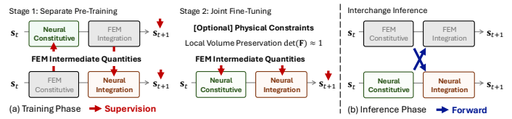
Figure 2 : Modular physics training strategy and inference scheme. A two-stage training paradigm is employed to optimize neural modules, where the first-stage separate training can effectively avoid module collapse and the second joint finetuning can further leverage the physical constraints.
원문 · CC BY 4.0 · Yifei Li, Haixu Wu, Zeyi Xu, Tuur Stuyck, Wojciech Matusik · Neural Modular Physics for Elastic Simulation · 원문 그림 인용 · 원본 PDF 5쪽에서 그림 영역을 추출했습니다.부피 보존 제약의 구현
중간 물리량인 변형 구배를 사용하면 국소 부피 보존을 손실로 직접 다룰 수 있습니다. 부피 보존은 거의 비압축성인 탄성체에서 변형 구배의 행렬식 det(F_e)이 1 근처에 머무른다는 조건으로 표현됩니다. 논문은 이 조건을 허용 편차 ε_volume=0.05를 넘는 부분에만 벌점을 주는 힌지 손실 L_volume=Σ_e max(|det(F_e)−1|−ε_volume,0)²로 구현합니다. 이 항은 fine-tuning 단계에서 중간 물리량과 예측값의 L2 손실에 가중치 0.1로 더해집니다. 원문은 이 제약이 정확도 지표를 크게 높이지는 않지만 물리적 일관성을 일관되게 높인다고 보고합니다.
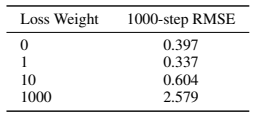
Table 6 : Physical constraint loss weight anal- ysis. The following test is conducted on the “real-world” CUBEscenario in Figure 6.
원문 · CC BY 4.0 · Yifei Li, Haixu Wu, Zeyi Xu, Tuur Stuyck, Wojciech Matusik · Neural Modular Physics for Elastic Simulation · 원문 그림 인용 · 원본 PDF 20쪽에서 그림 영역을 추출했습니다.평가 환경과 기준선
평가는 CUBE, CUBEXL, SPOT, BOB, FRICTION의 다섯 환경에서 수행됩니다. 앞의 네 환경은 완전한 물리 정보를 갖는 설정이고, FRICTION은 알려지지 않은 마찰 동역학을 포함합니다. 네 환경에서는 neo-Hookean 재료 모델로 참조 궤적을 생성하며, 각 데이터셋은 1,000 step 궤적 32개의 학습 세트와 8개의 검증 궤적으로 구성됩니다. 비교 기준은 MeshGraphNet, EGNO, Transolver이며, 이 기준 모델들은 NMSE 손실로 100 epoch 학습되었습니다. 학습 시퀀스는 최대 200 steps이므로 500과 1,000-step 평가는 학습 범위를 넘어서는 시간 외삽입니다.
장기 롤아웃 정확도
Table 1에서 NMP는 기준 신경 시뮬레이터보다 정점 위치 RMSE가 낮습니다. 저자들이 보고한 바에 따르면 1,000-step 롤아웃에서 60% 이상의 오차 감소가 나타납니다. 예를 들어 BOB의 1,000-step RMSE는 NMP 0.579, MeshGraphNet 2.104, EGNO 2.770, Transolver 1.782입니다. 다만 이 결과는 학습 시퀀스보다 긴 외삽 설정에서 얻은 것입니다. 기준 모델들이 긴 롤아웃에서 실패하는 이유에 대해 저자들은 중간 물리량에 대한 명시적 지도가 없기 때문이라고 해석합니다.
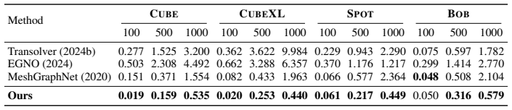
Table 1 : We report RMSE between the model-simulated vertex positions and ground truth simulation across different rollout horizons. See Appendix C.1 for baseline visualizations.
원문 · CC BY 4.0 · Yifei Li, Haixu Wu, Zeyi Xu, Tuur Stuyck, Wojciech Matusik · Neural Modular Physics for Elastic Simulation · 원문 그림 인용 · 원본 PDF 7쪽에서 그림 영역을 추출했습니다.
Table 4 : Standard deviations of RMSE for Table 1 (computed over 8 validation trajectories).
원문 · CC BY 4.0 · Yifei Li, Haixu Wu, Zeyi Xu, Tuur Stuyck, Wojciech Matusik · Neural Modular Physics for Elastic Simulation · 원문 그림 인용 · 원본 PDF 19쪽에서 그림 영역을 추출했습니다.미지 초기 조건과 고해상도 일반화
NMP는 학습에 없던 초기 속도와 속도 및 자세 조합에서도 BOB와 CUBE의 1,000-step 궤적을 생성합니다. CUBEXL에서는 학습 시 10,648 정점 메시로 학습하고 21,952 정점 메시에서 평가했으며, 저자들은 정점별 신경 모듈이 더 조밀한 메시로 확장된다고 설명합니다. 이 결과는 시각화와 정성적 비교에 기반하므로, 일반화 정도를 수치 지표로 확정한 근거로 읽지는 않습니다.
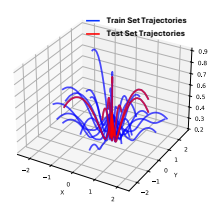
Figure 10 :Visualization of trajectories with different initial conditions on CUBE.
원문 · CC BY 4.0 · Yifei Li, Haixu Wu, Zeyi Xu, Tuur Stuyck, Wojciech Matusik · Neural Modular Physics for Elastic Simulation · 원문 그림 인용 · 원본 PDF 18쪽에서 그림 영역을 추출했습니다.물리 시뮬레이터 및 NCLaw와의 비교
FRICTION 환경에서 순수 물리 시뮬레이터와 NCLaw는 시스템 식별로 추정한 입력 파라미터를 사용하지만, NMP는 데이터로부터 마찰 효과를 학습합니다. 원문은 NMP가 오리가 짧게 미끄러진 뒤 멈추는 마찰 효과를 재현하며, NCLaw와 순수 물리 시뮬레이터는 접촉 동역학을 포착하지 못했다고 보고합니다. 효율 측면에서는 BOB의 1,000-step 추론 시간이 NMP 2250 ms, 물리 시뮬레이터 90275 ms, NCLaw 97121 ms로 기록됩니다. 원문은 NMP가 물리 시뮬레이터보다 약 40배 빠르고 Transolver보다 5배 이상 빠르다고 보고합니다.
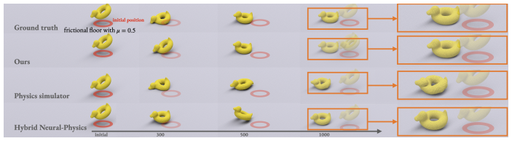
Figure 5 : Simulation comparison on FRICTIONenvironment with unknown frictional dynamics. We mark the initial position of duck-surface contact with red circles.
원문 · CC BY 4.0 · Yifei Li, Haixu Wu, Zeyi Xu, Tuur Stuyck, Wojciech Matusik · Neural Modular Physics for Elastic Simulation · 원문 그림 인용 · 원본 PDF 8쪽에서 그림 영역을 추출했습니다.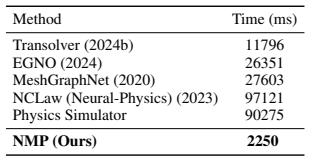
Table 2 : Efficiency comparison among dif- ferent methods on the BOBtask. Inference time for 1,000-step rollout is recorded.
원문 · CC BY 4.0 · Yifei Li, Haixu Wu, Zeyi Xu, Tuur Stuyck, Wojciech Matusik · Neural Modular Physics for Elastic Simulation · 원문 그림 인용 · 원본 PDF 8쪽에서 그림 영역을 추출했습니다.절제 실험과 물리 제약의 효과
모듈을 함께 학습하는 설정에서는 내부력 f_int가 잡음이 많은 힘장이 되어 물리적 의미를 잃습니다. 반면 두 단계 학습을 쓰면 이러한 붕괴가 나타나지 않는다고 저자들은 보고합니다. 부피 보존 손실을 포함한 전체 방법은 CUBE의 1,000 step에서 부피 변화가 5%를 넘는 사면체 수를 줄이며, 원문은 가장 많은 위반 수를 10% 줄인다고 보고합니다. 이 결과는 부피 보존 손실 한 가지 설정에서의 비교이며, 다른 제약 종류까지 확대된 결론은 아닙니다.
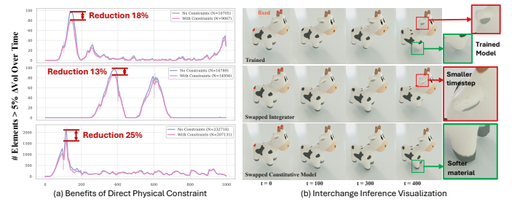
Figure 8 :(a)Impact of physical constraintson three trajectories in CUBE. The curve records the number of tetrahedra exceeding 5% volume change at each time step and the legend counts the total number violating during 1,000 steps.(b)Interchange inference.Top: Sequence generated by our trained base model. Middle: Replacing the neural integration module with a semi-implicit integrator with a much smaller timestep. Bottom: Replacing the neural constitutive module with a softer St. Venant material increases deformation, visible in the foot position.
원문 · CC BY 4.0 · Yifei Li, Haixu Wu, Zeyi Xu, Tuur Stuyck, Wojciech Matusik · Neural Modular Physics for Elastic Simulation · 원문 그림 인용 · 원본 PDF 10쪽에서 그림 영역을 추출했습니다.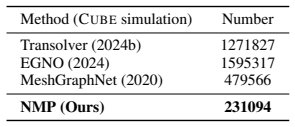
Table 5 : Physics validation of different mod- els, where we record the number of tetrahe- dra exceeding 5% volume change. A smaller number indicates better physical soundness.
원문 · CC BY 4.0 · Yifei Li, Haixu Wu, Zeyi Xu, Tuur Stuyck, Wojciech Matusik · Neural Modular Physics for Elastic Simulation · 원문 그림 인용 · 원본 PDF 19쪽에서 그림 영역을 추출했습니다.적용 범위와 한계
저자들은 현재 실험이 탄성 시뮬레이션에 한정되어 있으며 유체 같은 다른 물리 영역은 향후 과제로 남긴다고 밝힙니다. 또한 NMP는 CUBE에서 구한 중간 물리량을 기반으로 학습하며, 실제 세계의 중간 물리량은 측정할 수 없다는 점에서 실환경 전이는 제한된 시연으로 제시됩니다. 원문은 비용 비교가 특정 모델과 하드웨어 조건에서 측정되었음을 명시하므로, 효율 수치는 해당 조건에서만 해석해야 합니다.
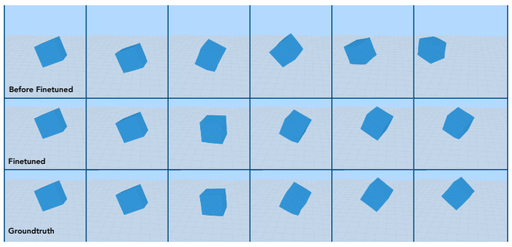
Figure 6 : A proof-of-concept experiment of “sim to real” transfer. We pretrain an NMP model on the CUBEand finetune it on a scenario with unknown external force and a softer material. To mimic the real-world simulation task, only the position information is accessible during finetuning. ized modularization architecture, which allows us to introduce only lightweight neural modules, rather than the unwieldy monolithic model. Therefore, NMP is around 40×faster than the tradi- tional physics simulator and over 5×faster than the advanced neural operator Transolver (Wu et al., 2024b), where the latter has to infer the complete unwieldy model at each step.
원문 · CC BY 4.0 · Yifei Li, Haixu Wu, Zeyi Xu, Tuur Stuyck, Wojciech Matusik · Neural Modular Physics for Elastic Simulation · 원문 그림 인용 · 원본 PDF 9쪽에서 그림 영역을 추출했습니다.논문 정보
- 저자
- Yifei Li, Haixu Wu, Zeyi Xu, Tuur Stuyck, Wojciech Matusik
- 학회·저널
- arXiv · 프리프린트
- 최초 공개일
- 2025년 12월 17일
- 등록일
- 2026년 10월 30일
- 수정일
- 2025년 12월 17일
- 버전
- v1
- arXiv
- 2512.15083
- 분류
- cs.LG · cs.CE
- 원문 이용 조건
- CC BY 4.0
- 제공 범위
- 논문 정보, 해설, 허용된 원문 그림
AI 해설은 논문 원문과 별개의 설명이며 오류가 있을 수 있습니다. 원문과 그림은 각 출처의 이용 조건과 따로 표시된 권리를 따릅니다.
초록
Learning-based methods have made significant progress in physics simulation, typically approximating dynamics with a monolithic end-to-end optimized neural network. Although these models offer an effective way to simulation, they may lose essential features compared to traditional numerical simulators, such as physical interpretability and reliability. Drawing inspiration from classical simulators that operate in a modular fashion, this paper presents Neural Modular Physics (NMP) for elastic simulation, which combines the approximation capacity of neural networks with the physical reliability of traditional simulators. Beyond the previous monolithic learning paradigm, NMP enables direct supervision of intermediate quantities and physical constraints by decomposing elastic dynamics into physically meaningful neural modules connected through intermediate physical quantities. With a specialized architecture and training strategy, our method transforms the numerical computation flow into a modular neural simulator, achieving improved physical consistency and generalizability. Experimentally, NMP demonstrates superior generalization to unseen initial conditions and resolutions, stable long-horizon simulation, better preservation of physical properties compared to other neural simulators, and greater feasibility in scenarios with unknown underlying dynamics than traditional simulators.
원문 인용
Yifei Li, Haixu Wu, Zeyi Xu, Tuur Stuyck, Wojciech Matusik (2025). Neural Modular Physics for Elastic Simulation. arXiv:2512.15083v1. https://arxiv.org/abs/2512.15083v1
BibTeX
@misc{li2025neural,
  title = {{Neural Modular Physics for Elastic Simulation}},
  author = {Yifei Li and Haixu Wu and Zeyi Xu and Tuur Stuyck and Wojciech Matusik},
  year = {2025},
  eprint = {2512.15083},
  archivePrefix = {arXiv},
  url = {https://arxiv.org/abs/2512.15083v1}
}