Paper commentary
Social Interaction Breaks Replicate Independence in Controlled-Clone LLM Agents
Interaction makes cloned LLM agents drift apart from identical starts
- Problem Multi-agent LLM studies treat agents from one model as independent replicates, even after they interact. That assumption has never been tested with matched controls.
- Method SocCogEval gives each clone the same base model and prompt, differing only in a private brief. It then compares 30 rounds of interaction with none, measuring off-topic drift.
- Results Interaction raised off-topic BFI-10 drift by +0.917 on Greenfield and +0.912 on Riverton, with the briefs held fixed.
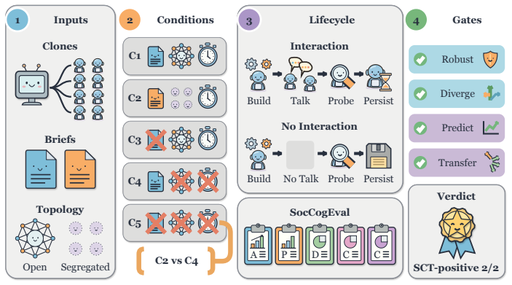
Figure 3 :FSIP pipeline:inputs, conditionsC 1–C5, run lifecycle, gates and verdict.
Original paper · CC BY 4.0 · Zheng, Yandan, Luo, Haoran, Luu, Anh Tuan · Social Interaction Breaks Replicate Independence in Controlled-Clone LLM Agents · Original paper figure · Extracted the figure area from page 3 of the original PDF.Why copies of one model look like independent samples
Most of these studies still count the agents as interchangeable samples after they have talked for many rounds. If interaction alters the agents, a population that has interacted is effectively one sample, so counting its agents separately inflates the evidence. Existing tests don't settle this, because benchmarks score a frozen model and social simulations usually assign personas at the start, which mixes priors with the effect of interaction.
A valid test therefore needs three things: no initial differences between agents, a way to separate a brief's effect from interaction's effect, and a probe that sits off the discussed topic.
Controlled clones and the contrast that isolates interaction
The core idea is to start every agent from the same state and then change one thing at a time. In any condition without briefs the clones are bit-identical at the start, so when briefs are assigned the brief document is the only initial difference.
The Factorial Social Interaction Protocol crosses brief presence with 30 rounds of interaction, and the default horizon is 30 rounds. The main contrast, (C2)-(C4), keeps the asymmetric A and B briefs in both conditions and switches the 30 rounds of interaction on or off. C2 splits the agents into two components with Brief A and Brief B, while C4 assigns the same briefs with no interaction.
C3 keeps the C2 topology without briefs to isolate interaction alone, and C5 has no brief and no interaction to set the initialization noise floor. C1 uses symmetric briefs, so the (C2)-(C1) contrast mixes brief symmetry with topology, and the authors report it only descriptively.
The solo-generation control C6 gives each agent three private generation calls per round and one memory extraction, with no partner. That yields 720 content and 240 extraction calls per run, matching the intended logical totals of C2. So (C6)-(C4) measures the shift from solo generation, and (C2)-(C6) compares social history with solo history.
One round, two scenarios and the models
Each round runs a Build-Talk-Probe-Persist cycle. Build updates a typed Social-Relational Memory (SRM) hypergraph from the previous round's conversations. Talk forms four random pair conversations among eight agents, with six turns each. Persist then writes the round artifacts to disk.
Greenfield is a community-grant allocation problem with $10M across five categories, and Riverton is a workforce transition budget with $5M across five categories. Both use 5-dimensional allocation vectors, so the Part 1 metrics are comparable across the two scenarios. Each scenario gives the agents two briefs that differ only moderately in their values.
The primary model is Qwen3-122B-FP8, served locally with vLLM. Five other model variants ran on C2, C4 and C5 in both scenarios, with three runs per condition and scenario. Primary factorial analyses filter by run id, so cross-variant replicas can't enter the within-Qwen3-122B-FP8 baseline. The selected dataset holds 168 runs. Content generation and BFI-10 used temperature 0.7, while allocation, prediction and memory extraction used temperature 0.
Scoring drift at the run level
Each agent's drift adds the absolute pre-to-post shift on each of the five BFI-10 factors, after reverse-scoring items 1, 3, 4, 5 and 7. A run's drift is the mean of its agents' drifts, and a condition contrast subtracts one condition's run mean from another's. Because the sum runs over five factor-level shifts, a drift of 0.92 corresponds to about 0.18 Likert points per factor.
Unsigned L1 can grow through consistent movement or through spread, so the authors also report signed factor contrasts and variance ratios separately. Conditions are compared with two-sided exact permutation tests, which enumerate every label allocation, and with run-bootstrap 95% intervals.
An SCT-positive verdict needs three gates: a Part 1 allocation contrast on (C2)-(C5), a BFI-10 gate on (C2)-(C5), and a BFI-10 gate on the pure-interaction (C2)-(C4).
Does interaction, not the brief, move the profile?
With the briefs held fixed, interaction raised BFI-10 drift by +0.917 on Greenfield and +0.912 on Riverton, with exact run-level p-values of 0.0008 and 0.0039. The BFI-10 items are unrelated to either scenario, so the shift can't be read as a change of opinion on the discussed budget.
Interaction alone, (C3)-(C5), is +1.225 on Greenfield but only +0.383 on Riverton, where it isn't significant (p=0.6071). Among the five FSIP contrasts, only (C2)-(C4) is positive, large and significant in both scenarios.
Re-probing, memory and solo generation checks
At temperature zero, the same frozen C2 and C4 states give raw contrasts of +1.227 on Greenfield and +1.094 on Riverton. C4 gives the same pre and post score under its identical prompt, so the raw differences are the informative scale.
With SRM extraction disabled, the C2 minus C5 contrast stays positive at +1.708 on Greenfield and +0.958 on Riverton, using 3 vs. 3 runs. Both exact two-sided p-values are 0.10, the smallest value that 3 vs. 3 runs can reach, so the authors present this as exploratory evidence.
Solo generation lifts drift above C4 but leaves it below C2, with C6 at 1.450 on Greenfield and 1.425 on Riverton. C6 minus C4 is +0.688 on Greenfield (p=0.0159) and +0.713 on Riverton (p=0.0079). C2 minus C6 is +0.230 and +0.200, with p=0.143 and p=0.392, so the authors see room for an extra contribution from reciprocal interaction that the data don't separate.
From the budget decision to off-topic probes
For Decision, the (C2)-(C5) allocation contrast clears all five dimensions on Greenfield, with mean g=+1.61, and four of five on Riverton, with mean g=+1.19. The agents first separate on the allocation problem, and the later off-topic shift follows that on-topic separation.
For Prediction, each C2 agent predicts its in-group peers more accurately than its out-group agents. On Riverton, in-group MAE is 3.25, compared to 6.15 for out-group peers, and on Greenfield it is 4.18, compared to 7.10. The in-group targets were exposed during interaction, while the out-group targets were absent from the predictor's context, which the authors call an exposed-peer predictive advantage.
For Transfer, the signed factor shifts move in coherent directions: kappa is +0.302 for extraversion and +0.358 for neuroticism on Greenfield, and -0.263 for agreeableness and -0.362 for openness on Riverton. Riverton's aggregate L1 variance ratio is 4.11, compared to 0.47 on Greenfield, so its movement is more driven by spread.
Cross-model breadth and design effect
For the pure-interaction (C2)-(C4) contrast, all five model-level scenario averages are positive, with a one-sided exact sign test p=0.031. DeepSeek-V3's Riverton cell is near zero and slightly reversed, and a 3 vs. 3 two-sided permutation test has a minimum attainable p of 0.10. The authors therefore describe the breadth as directional rather than as a confirmed effect in every cell.
Riverton's secondary probes and one clone
On Riverton, conformity is positive on (C2)-(C4), with g=-0.62 and p=0.002. On Greenfield the same conformity contrast is null, with g=-0.05 and p=0.81. Consistency on (C2)-(C4) is positive on Riverton, with g=+1.74, but null on Greenfield, with g=+0.01.
The authors suggest that Riverton's workplace framing builds stronger group identification than Greenfield's community-grant framing, which would explain the stronger response. This is offered as an account, not as a tested result.
A fixed rule selected one clone, Blake, with Brief A, whose belief moved from a Foundational First plan to a Human Readiness Shield. Its twin, with the same brief and no interaction, stayed unchanged and showed 4.00 for both in-group and out-group MAE.
Limitations
The no-SRM ablation uses 3 vs. 3 runs per scenario and is reported as exploratory evidence. BFI-10 was named the primary transfer outcome in this manuscript without external preregistration. The authors make no topology claim, because the C1 comparison mixes brief symmetry with topology. Qwen3-VL-32B's standardized g is inflated by an unstable pooled SD, so its raw drift is the safer reading.
DeepSeek's historical runs used provider identifiers whose exact revisions were not recorded. GLM-4.7-Flash's retest drift is near the random-answer level, so that variant is uninformative.
Paper info
- Authors
- Zheng, Yandan, Luo, Haoran, Luu, Anh Tuan
- Venue
- arXiv · Preprint
- First published
- 2026-11-22
- Added
- 2026-11-24
- Updated
- 2026-11-22
- Version
- v1
- arXiv
- 2611.29581
- Category
- cs.MA
- Original paper terms
- CC BY 4.0
- What we show
- Paper info, commentary and permitted figures from the original paper
AI commentary is a separate explanation from the original paper and may contain errors. The original paper and figures follow each source's terms of use and any rights noted separately.
Abstract
Multi-agent LLM evaluations and social simulations create many agents from one model and treat them as independent replicates, even after the agents interact. This assumption remains untested with matched controls. We introduce SocCogEval, a controlled-clone assay for Social Cognitive Transfer (SCT). Clones share the base model, system prompt, and decoding parameters and differ only in a private brief, and a factorial protocol separates the brief, 30 rounds of interaction, and initialization noise. On Qwen3-122B-FP8, interaction with the briefs held fixed raises off-topic BFI-10 response-profile drift by $\bar{\Delta}=+0.917$ and $+0.912$ in two topically disjoint scenarios (exact $p=0.0008$ and $0.0039$). The drift is larger than under the brief alone, persists under temperature-zero re-probing, and stays positive without typed memory extraction in exploratory tests. Matched solo generation reproduces part of it, and social interaction remains highest. Across five more model variants, every scenario-averaged interaction contrast is positive. Each interacting population is therefore one replicate, and treating its agents as independent requires paired no-interaction controls. Our code and data are publicly available at https://github.com/koanatakiyo/SocCogEval.
Quote from the paper
Zheng, Yandan, Luo, Haoran, Luu, Anh Tuan (2026). Social Interaction Breaks Replicate Independence in Controlled-Clone LLM Agents. arXiv:2611.29581v1. https://arxiv.org/abs/2611.29581v1
BibTeX
@misc{yandan2026social,
  title = {{Social Interaction Breaks Replicate Independence in Controlled-Clone LLM Agents}},
  author = {Zheng, Yandan and Luo, Haoran and Luu, Anh Tuan},
  year = {2026},
  eprint = {2611.29581},
  archivePrefix = {arXiv},
  url = {https://arxiv.org/abs/2611.29581v1}
}