논문 해설
Of Mice and Machines: A Comparison of Learning Between Real World Mice and RL Agents
쥐와 기계에 대하여: 실제 쥐와 강화학습 에이전트의 학습 비교
- 연구 문제 포식자 회피 미로에서 실제 생쥐와 RL 에이전트가 벽 따라가기, 대기, 방문 패턴에서 어떻게 다른지 비교하고, 그 차이를 줄이는 방법을 검토합니다.
- 연구 방법 표준 경험 재생을 부정적 경험 중심으로 바꾼 TISB와 Q값 분산을 TD 목표의 패널티로 넣은 VP-TDMPC-2를 제안하고 쥐 행동과 비교합니다.
- 주요 결과 VP-TDMPC-2는 쥐와의 방문 패턴 중첩을 20.9%에서 86.1%로 높이고, 대기 행동 비율을 표준 TDMPC-2의 0%에서 약 32.4%로 높였다고 보고됩니다. 다만 쥐의 극단적 벽 따라가기 패턴은 재현되지 않았습니다.
연구 질문: 쥐와 RL 에이전트는 포식자 회피를 같은 방식으로 수행하는가
이 논문은 포식자를 피해 목표 지점으로 가야 하는 미로에서 실제 생쥐와 강화학습 에이전트가 얼마나 비슷하게 행동하는지 묻습니다. 실험에서 쥐는 물 보상이 있는 구역으로 향하면서 포식자 로봇의 위협을 피해야 하며, 같은 과제를 cellworld gymnasium 시뮬레이션으로 옮긴 환경에서 RL 에이전트를 학습시켜 비교합니다. 두 집단의 성공률은 비슷하지만(쥐 86%, RL 약 80%) 성공 과정은 크게 다릅니다. 쥐는 벽을 따라 이동하고 포식자가 보이지 않는 입구에서 오래 머무르는 반면, TDMPC-2 에이전트는 곧장 목표로 향합니다. 저자들은 이 차이가 위험을 평가하고 대기하는 능력의 차이에서 온다고 보고 그 원인을 찾습니다.
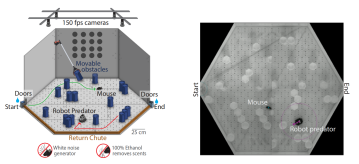
Figure 1 .Real Mouse Setting
원문 · CC BY 4.0 · Han, Shuo, Espinosa, German, Huang, Junda, Dombeck, Daniel A., MacIver, Malcolm A., Stadie, Bradly C. · Of Mice and Machines: A Comparison of Learning Between Real World Mice and RL Agents · 원문 그림 인용 · 원본 PDF 2쪽에서 그림 영역을 추출했습니다.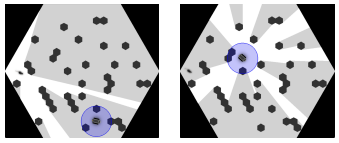
Figure 2 . RL Setting: Mouse’s view (left), predator’s view (right).
원문 · CC BY 4.0 · Han, Shuo, Espinosa, German, Huang, Junda, Dombeck, Daniel A., MacIver, Malcolm A., Stadie, Bradly C. · Of Mice and Machines: A Comparison of Learning Between Real World Mice and RL Agents · 원문 그림 인용 · 원본 PDF 2쪽에서 그림 영역을 추출했습니다.TISB: 부정적 경험을 더 자주 학습에 쓰는 재생 버퍼
TISB는 표준 경험 재생을 수정해 부정적 경험이 학습에 더 자주 쓰이도록 합니다. 첫 번째 구성요소인 위협 경험 재조정은 샘플링되는 학습 배치에 부정적 전이가 지정된 비율만큼 들어가도록 합니다. 이 비율 실험은 5000 단계 동안 5개 랜덤 시드로 0%부터 100%까지 설정을 바꾸었고, 배치의 50%가 부정 경험일 때 최적 성능이 나타났습니다. 두 번째 구성요소인 위협 경험 증폭은 샘플링할 때 부정적 경험의 보상을 200배로 키워 그 경험이 더 강한 행동 변화를 일으키게 합니다. 본문 각주에 따르면 작은 증폭 계수는 행동 변화가 제한적이었고, 200을 넘는 값은 학습을 늦추면서 뚜렷한 이득을 주지 않았습니다.
장기 실험에서 TISB는 주로 증폭 메커니즘으로 구현되었습니다.
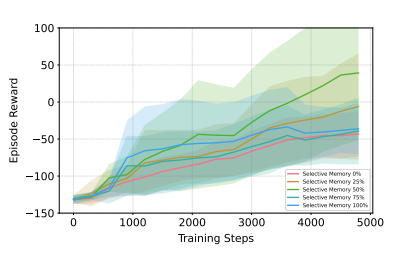
Figure 7 . Experiments over 5000 steps show that 50% negative experiences yield optimal performance (5 random seeds).
원문 · CC BY 4.0 · Han, Shuo, Espinosa, German, Huang, Junda, Dombeck, Daniel A., MacIver, Malcolm A., Stadie, Bradly C. · Of Mice and Machines: A Comparison of Learning Between Real World Mice and RL Agents · 원문 그림 인용 · 원본 PDF 5쪽에서 그림 영역을 추출했습니다.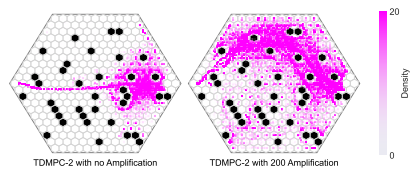
Figure 8 . Standard TDMPC-2 with limited exploration patterns; Right: With a Threat Experience Amplification factor of 200, showing increased path diversity and enhanced wall-following behavior.
원문 · CC BY 4.0 · Han, Shuo, Espinosa, German, Huang, Junda, Dombeck, Daniel A., MacIver, Malcolm A., Stadie, Bradly C. · Of Mice and Machines: A Comparison of Learning Between Real World Mice and RL Agents · 원문 그림 인용 · 원본 PDF 5쪽에서 그림 영역을 추출했습니다.Q값 분산 패널티를 넣은 TD 목표
두 번째 기여는 Q값 분산을 이용해 TD 목표를 수정하는 것입니다. VP-TDMPC-2는 TDMPC-2의 버퍼와 TD 목표를 수정해 구현되며, 목표 값은 다음과 같습니다. \[ TD_{target} = r_t + \gamma \left( Q(s_{t+1}, \pi(s_{t+1})) - \alpha \, \mathrm{Var}_{a \in A}\left(Q(s_{t+1}, a)\right) \right) \] 여기서 α는 분산 패널티의 강도를 정하는 계수입니다. 분산은 행동 공간에서 균일하게 샘플링한 400개 행동에 대해 5개 Q 네트워크 앙상블이 예측한 Q값들로 계산됩니다. 같은 상태에서 행동별 결과 차이가 클수록 분산이 커져 패널티가 커지므로, 이 방식은 불확실성이 큰 상태에만 선택적으로 벌점을 줍니다.
저자들은 포식자가 나타나거나 접근할 때 분산이 급증한다는 경험적 분석을 근거로 이 설계를 택했습니다.
SMiRL 비교군과 잠재 공간 근사
SMiRL은 예측하기 어려운 상태에 보상 페널티를 주는 비교 방법입니다. 본 연구는 완전한 조건부 밀도 p(s_t | s_{<t}) 추정 대신 잠재 공간의 평균제곱 예측 오차를 음의 로그우도의 근사로 사용했습니다. 고정 분산 가우시안 가정에서 MSE와 음의 로그우도는 덧셈 상수만큼만 다르다고 설명됩니다. 그러나 TDMPC-2에 SMiRL을 결합한 실험에서는 쥐처럼 입구에서 기다리는 행동이 나타나지 않았고, TISB와 함께 쓰면 TISB의 경로 탐색 효과가 상쇄되는 것으로 관찰되었습니다. 저자들은 이 원인을 SMiRL이 모든 상태 전이를 똑같이 벌점화하기 때문으로 해석합니다.
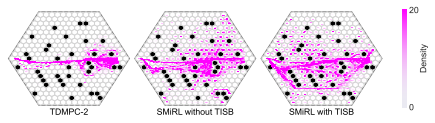
Figure 9 . Density plots: TDMPC-2 (left), SMiRL without TISB (middle), and SMiRL with TISB (right). SMiRL may negate TISB’s effect, as indicated by only minor changes in the main density regions.
원문 · CC BY 4.0 · Han, Shuo, Espinosa, German, Huang, Junda, Dombeck, Daniel A., MacIver, Malcolm A., Stadie, Bradly C. · Of Mice and Machines: A Comparison of Learning Between Real World Mice and RL Agents · 원문 그림 인용 · 원본 PDF 6쪽에서 그림 영역을 추출했습니다.벽 따라가기와 방문 패턴 비교
행동 비교의 핵심 지표는 벽 따라가기 비율과 방문 패턴 중첩입니다. 벽 따라가기 비율은 궤적에서 벽을 따라 이동한 비율로, 쥐는 약 70%이고 TDMPC-2 궤적은 0.0%로 보고되었습니다. 방문 패턴 중첩은 두 에이전트가 같은 상태를 방문했는지를 측정하며 방문 빈도가 일대일로 같은지는 측정하지 않습니다. 이 지표에서 TDMPC-2는 쥐와 20.9%가 겹쳤고, RL 에이전트는 아레나의 21.3%, 쥐는 77%를 방문했습니다. VP-TDMPC-2는 같은 지표에서 86.1%로 높아졌지만, 쥐에게 나타난 극단적 벽 따라가기 패턴은 충분히 재현하지 못했습니다. 이 결과는 선택된 최고 체크포인트와 하나의 대표 설정에서 얻은 것입니다.
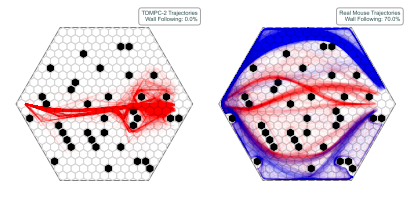
Figure 3 . Trajectory plots: RL (left) vs Mouse (right). Blue indi- cates wall-following trajectories (thigmotaxis), while red indicates non-wall-following trajectories.
원문 · CC BY 4.0 · Han, Shuo, Espinosa, German, Huang, Junda, Dombeck, Daniel A., MacIver, Malcolm A., Stadie, Bradly C. · Of Mice and Machines: A Comparison of Learning Between Real World Mice and RL Agents · 원문 그림 인용 · 원본 PDF 4쪽에서 그림 영역을 추출했습니다.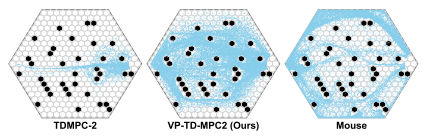
Figure 11 . Final states visitation pattern comparison of original TDMPC-2 (left), to our VP-TDMPC2 (middle: trained with TISB and Variance-Penalized TD learning) and Mouse (right).
원문 · CC BY 4.0 · Han, Shuo, Espinosa, German, Huang, Junda, Dombeck, Daniel A., MacIver, Malcolm A., Stadie, Bradly C. · Of Mice and Machines: A Comparison of Learning Between Real World Mice and RL Agents · 원문 그림 인용 · 원본 PDF 7쪽에서 그림 영역을 추출했습니다.대기 행동과 에피소드 길이
대기 행동은 처음 여섯 단계 안에서 거리 변화가 0.1 단위 미만인 움직임으로 정의되며 1,000개 궤적에서 측정되었습니다. 표준 TDMPC-2의 대기 행동 비율은 0%였고, 쥐는 약 27.7%, VP-TDMPC-2는 약 32.4%였습니다. 에피소드 길이는 TDMPC-2가 평균 7.09단계, VP-TDMPC-2가 13.89단계, 쥐가 14.04단계로 보고되었습니다. 다만 그림 13의 설명에는 VP-TD-MPC2 평균이 14.25로 적혀 있어 본문의 13.89와 차이가 있습니다. 이 분포는 5에서 50 사이의 에피소드로 필터링된 값입니다. 저자들은 더 긴 에피소드를 더 신중한 계획의 결과로 해석합니다.
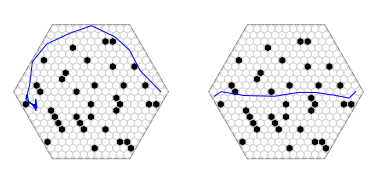
Figure 5 . An example of distinct behaviors: Mouse (left) exhibits hesitation (dense segments near entrance), while RL agent (right) takes a direct path. Additional examples are in the Appendix.
원문 · CC BY 4.0 · Han, Shuo, Espinosa, German, Huang, Junda, Dombeck, Daniel A., MacIver, Malcolm A., Stadie, Bradly C. · Of Mice and Machines: A Comparison of Learning Between Real World Mice and RL Agents · 원문 그림 인용 · 원본 PDF 4쪽에서 그림 영역을 추출했습니다.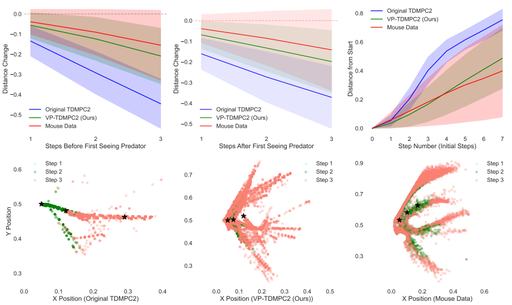
Figure 10 . Top row: Mean changes in goal-agent distance before and after predator detection (left, middle), and initial mean movement distances (right). Shaded areas show standard deviation. Bottom row: Spatial distribution of first three steps for each agent, with black stars indicating mean positions. The black stars show that mouse data and VP-TDMPC2 maintain more consistent, cautious initial positions, while baseline TDMPC2’s mean positions spread out more rapidly, indicating less conservative early behavior. (1 unit = the diameter of the hexagonal arena)
원문 · CC BY 4.0 · Han, Shuo, Espinosa, German, Huang, Junda, Dombeck, Daniel A., MacIver, Malcolm A., Stadie, Bradly C. · Of Mice and Machines: A Comparison of Learning Between Real World Mice and RL Agents · 원문 그림 인용 · 원본 PDF 7쪽에서 그림 영역을 추출했습니다.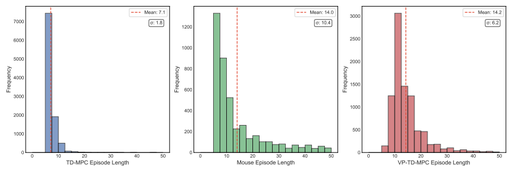
Figure 13 . Comparison of episode length distributions across models and mice (filtered for episodes with length between 5 and 50 to exclude trivial failures and outlier trajectories unlikely to reflect meaningful exploratory behavior). TD-MPC2: Mean = 7.09, SD = 1.77, Range = [5, 46]; Mouse: Mean = 14.04, SD = 10.40, Range = [5, 50]; VP-TD-MPC2: Mean = 14.25, SD = 6.24, Range = [6, 50]; VP-TD-MPC2 reproduces mouse-like exploratory durations more faithfully than standard TD-MPC2, with a longer mean episode length and greater behavioral variability.
원문 · CC BY 4.0 · Han, Shuo, Espinosa, German, Huang, Junda, Dombeck, Daniel A., MacIver, Malcolm A., Stadie, Bradly C. · Of Mice and Machines: A Comparison of Learning Between Real World Mice and RL Agents · 원문 그림 인용 · 원본 PDF 14쪽에서 그림 영역을 추출했습니다.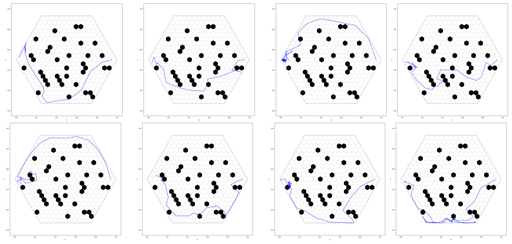
Figure 14 . More mouse trajectories, demonstrating consistent waiting behavior at the entrance and strong thigmotactic patterns (wall-following behavior). We added slight noise to highlight the waiting path.
원문 · CC BY 4.0 · Han, Shuo, Espinosa, German, Huang, Junda, Dombeck, Daniel A., MacIver, Malcolm A., Stadie, Bradly C. · Of Mice and Machines: A Comparison of Learning Between Real World Mice and RL Agents · 원문 그림 인용 · 원본 PDF 15쪽에서 그림 영역을 추출했습니다.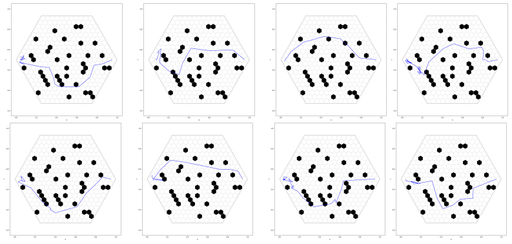
Figure 15 . More VP-TDMPC-2 trajectories, exhibiting similar waiting patterns at the starting point and emerging thigmotactic tendencies, closely resembling mice behavior. We added slight noise to highlight the waiting path.
원문 · CC BY 4.0 · Han, Shuo, Espinosa, German, Huang, Junda, Dombeck, Daniel A., MacIver, Malcolm A., Stadie, Bradly C. · Of Mice and Machines: A Comparison of Learning Between Real World Mice and RL Agents · 원문 그림 인용 · 원본 PDF 15쪽에서 그림 영역을 추출했습니다.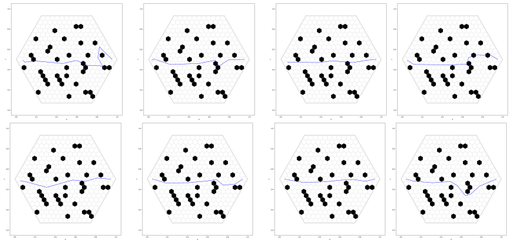
Figure 16 . More TDMPC-2 trajectories, showing direct, goal-oriented paths with predator avoidance occurring only in close proximity to the goal, lacking the strategic caution observed in mice. We added slight noise to highlight the waiting path, otherwise it would be visually obscured due to overlapping trajectory lines.
원문 · CC BY 4.0 · Han, Shuo, Espinosa, German, Huang, Junda, Dombeck, Daniel A., MacIver, Malcolm A., Stadie, Bradly C. · Of Mice and Machines: A Comparison of Learning Between Real World Mice and RL Agents · 원문 그림 인용 · 원본 PDF 16쪽에서 그림 영역을 추출했습니다.쥐 궤적 기반 IQL 정책과 KL 발산
오프라인 RL 실험에서는 쥐 궤적 데이터로 IQL 정책을 학습해 쥐 행동의 대리 정책으로 삼고, 이를 온라인 RL 정책과 비교합니다. KL 발산은 KL(π_IQL(·|s) ∥ π_RL(·|s))로 정의되며, 대표 상태 부분집합에서 평균한 값입니다. 보고된 값은 6.4386으로 두 정책의 분포 차이가 큽니다. 다만 쥐 궤적 데이터가 적어 완전한 쥐 정책을 학습하기 어렵다고 저자들이 밝혔습니다. CQL과 COMBO는 기본 궤적은 재현했지만 대기 행동은 놓쳤고, IQL은 대기 행동과 궤적 패턴을 더 잘 포착했다고 보고됩니다.
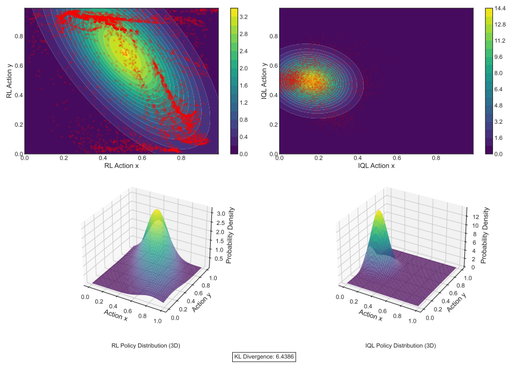
Figure 17 .KL Divergence between online RL and IQL policies (IQL representing mouse behavior)
원문 · CC BY 4.0 · Han, Shuo, Espinosa, German, Huang, Junda, Dombeck, Daniel A., MacIver, Malcolm A., Stadie, Bradly C. · Of Mice and Machines: A Comparison of Learning Between Real World Mice and RL Agents · 원문 그림 인용 · 원본 PDF 18쪽에서 그림 영역을 추출했습니다.LLM 에이전트의 행동
LLM 에이전트는 ChatGPT-4를 사용해 쥐와 같은 부분 관측 제약 아래 매 시간 단계마다 이동을 결정합니다. 시각 표현과 텍스트 과제 설명을 입력으로 받으며, 프롬프트는 최적 전략에 대한 암시가 없도록 중립적으로 설계되었습니다. API 비용 때문에 시도 수가 적었지만, 궤적에서는 시작할 때 전략적 고려 없이 들어가는 무모한 행동이 나타났습니다. 포식자를 마주치면 회피 행동을 보이지만 쥐의 적응적 전략에는 미치지 못했다고 저자들은 해석합니다. 부록 F의 제목은 ChatGPT-4o로 표기되어 본문의 ChatGPT-4 표기와 차이가 있습니다.
적용 범위와 한계
VP-TDMPC-2는 증명 개념 방법으로 제시되며 학습 안정성이 제한적입니다. 신중한 행동은 특정 하이퍼파라미터 설정에서만 나타났고, 패널티 계수를 높이면 지나치게 신중한 정책이, 낮추면 위험 선호 정책이 나올 수 있습니다. 환경은 실제 포식자의 무작위성을 모방하도록 설계되어 고정 시드에서도 확률적이며, 이 때문에 표준 벤치마크보다 학습이 불안정할 수 있습니다. 또한 쥐에게 나타나는 극단적 벽 따라가기 패턴은 아직 재현되지 않았습니다. 저자들은 이 패턴을 쥐의 선천적 행동 사전 지식과 관련지어 해석합니다.
논문 정보
- 저자
- Han, Shuo, Espinosa, German, Huang, Junda, Dombeck, Daniel A., MacIver, Malcolm A., Stadie, Bradly C.
- 학회·저널
- arXiv · 프리프린트
- 최초 공개일
- 2025년 5월 18일
- 등록일
- 2026년 10월 30일
- 수정일
- 2025년 10월 14일
- 버전
- v3
- arXiv
- 2505.12204
- 원문 이용 조건
- CC BY 4.0
- 제공 범위
- 논문 정보, 해설, 허용된 원문 그림
AI 해설은 논문 원문과 별개의 설명이며 오류가 있을 수 있습니다. 원문과 그림은 각 출처의 이용 조건과 따로 표시된 권리를 따릅니다.
초록
Recent advances in reinforcement learning (RL) have demonstrated impressive capabilities in complex decision-making tasks. This progress raises a natural question: how do these artificial systems compare to biological agents, which have been shaped by millions of years of evolution? To help answer this question, we undertake a comparative study of biological mice and RL agents in a predator-avoidance maze environment. Through this analysis, we identify a striking disparity: RL agents consistently demonstrate a lack of self-preservation instinct, readily risking ``death'' for marginal efficiency gains. These risk-taking strategies are in contrast to biological agents, which exhibit sophisticated risk-assessment and avoidance behaviors. Towards bridging this gap between the biological and artificial, we propose two novel mechanisms that encourage more naturalistic risk-avoidance behaviors in RL agents. Our approach leads to the emergence of naturalistic behaviors, including strategic environment assessment, cautious path planning, and predator avoidance patterns that closely mirror those observed in biological systems.
원문 인용
Han, Shuo, Espinosa, German, Huang, Junda, Dombeck, Daniel A., MacIver, Malcolm A., Stadie, Bradly C. (2025). Of Mice and Machines: A Comparison of Learning Between Real World Mice and RL Agents. arXiv:2505.12204v3. https://arxiv.org/abs/2505.12204v3
BibTeX
@misc{shuo2025mice,
  title = {{Of Mice and Machines: A Comparison of Learning Between Real World Mice and RL Agents}},
  author = {Han, Shuo and Espinosa, German and Huang, Junda and Dombeck, Daniel A. and MacIver, Malcolm A. and Stadie, Bradly C.},
  year = {2025},
  eprint = {2505.12204},
  archivePrefix = {arXiv},
  url = {https://arxiv.org/abs/2505.12204v3}
}