논문 해설
Building and Auditing Chemical Datasets with LLMs: A General LLM-as-a-Judge Framework Applied to Homogeneous Catalytic PET Depolymerisation
LLM으로 화학 데이터셋 구축 및 감사하기: 균일 촉매 PET 해중합에 적용한 범용 LLM-as-a-Judge 프레임워크
- 연구 문제 PET 촉매 해중합 문헌의 실험 레코드를 자동 추출할 때, 추출값이 원문에 근거하고 같은 실험에 속하는지를 정답 없이 검증하는 문제를 다룹니다.
- 연구 방법 추출기 LLM이 청크 UUID를 인용하며 레코드를 만들고, 독립 LLM 심사자가 전체 논문과 대조해 필드별 판정과 인용된 수정안을 제안합니다.
문헌에서 실험 데이터를 감사 가능하게 추출하는 문제
PET 해중합 촉매 문헌의 실험 조건과 수율은 여러 논문의 본문, 표, 보조 정보에 흩어져 있어 수작업 추출이 느리고 확장하기 어렵습니다. LLM은 논문에서 스키마에 맞는 레코드를 빠르게 뽑을 수 있지만, 생성된 수천 개 레코드를 정답 없이 검증하는 일이 남습니다. 특히 같은 촉매와 용매를 공유하면서 촉매량, 온도, 반응 시간만 다른 실험들이 한 논문에 섞여 있으면, 필드 값이 서로 다른 실험에서 가져와져도 레코드가 그럴듯하게 보일 수 있습니다. 이 논문은 이런 연결 오류를 찾기 위해 추출 결과를 원문 청크 인용과 함께 독립 LLM 심사자가 검토하는 방법을 다룹니다.
인용 기반 추출과 LLM 심사의 두 단계
파이프라인은 두 단계로 나뉩니다. 첫 단계에서 추출기 LLM은 UUID가 부여된 청크화된 논문, 스키마, 도메인 지침과 하나의 작업 예시를 받아 JSON 레코드를 생성하며, 각 레코드는 source_chunk_ids 필드로 근거 청크를 가리킵니다. 두 번째 단계에서 독립 심사 모델인 gpt-oss-120b는 전체 청크화된 논문과 추출된 레코드를 함께 읽고, 필드별로 원문 지지 여부를 판정하며, 인용된 근거와 함께 수정안을 제안합니다. 심사자는 판정 전에 2~5문장의 근거 비평을 청크 UUID와 함께 작성하도록 요구받습니다. 이렇게 추출과 검증을 분리하여, 심사자가 추출 과정의 결과를 그대로 신뢰하지 않고 원문과 직접 대조하게 합니다.
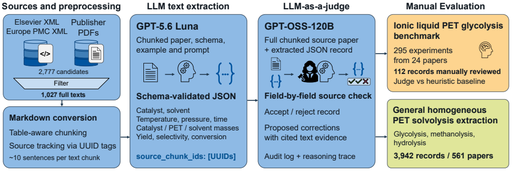
Fig. 1 Overview of the large language model (LLM) extraction and auditing pipeline for homogeneous catalytic poly(ethylene terephthalate) (PET) depolymerisation. Articles identified through Scopus are retrieved as XML or PDF files, converted to Markdown and segmented into text and table chunks with universally unique identifiers (UUIDs), preserving table structure. The extraction model (GPT-5.6 Luna) receives the chunked and UUID- tagged paper, a predefined schema, domain-specific guidelines, and one labelled worked example from an open-licensed glycolysis paper, excluding the target article. Schema-constrained extraction produces JSON records containing catalyst and solvent identities, reaction conditions, reactant amounts, and reaction outcomes. Each record includes a source chunk UUID field linking the extracted information to supporting source chunks. An independent LLM judge (GPT-OSS-120B) evaluates each record against the full chunked paper, issues an accept/reject verdict and proposes corrections supported by cited text evidence and a reasoning trace. Judge validation uses an ionic liquid benchmark comprising 295 curated experiments from 24 papers, with manual assessment of 112 extracted records and comparison against a heuristic grader. The resulting dataset covers PET glycolysis, methanolysis and hydrolysis, retaining raw extractions alongside audit logs and proposed corrections.
원문 · CC BY 4.0 · Muhammad bin Javaid, Karim K. Ben Hicham, Enkhnyam Battulga, Alexander Mitsos, Martin Grohe · Building and Auditing Chemical Datasets with LLMs: A General LLM-as-a-Judge Framework Applied to Homogeneous Catalytic PET Depolymerisation · 원문 그림 인용 · 원본 PDF 3쪽에서 그림 영역을 추출했습니다.심사 방법의 검증: 휴리스틱 채점과 수동 평가
심사 방법은 정답 없는 대규모 데이터에 적용하기 전에 이온성 액체 PET 글리콜리시스 기준 데이터셋(295개 실험, 24편 논문)에서 검증되었습니다. 기준 채점은 순서 없는 다중 실험 레코드를 최적 이분 매칭 문제로 정식화하고, 헝가리안 알고리즘으로 추출 레코드와 기준 실험 사이의 일대일 할당을 전체 패널티가 최소가 되도록 구합니다. 필드별 패널티 p_k는 0에서 1 사이이며, 수치는 상대 오차가 20%에서 상한을 갖고 촉매는 문자열 유사도 기준으로, 용매는 정확한 문자열 일치로 평가됩니다. 10개 필드의 비가중 평균이 쌍의 패널티이며, 촉매 유사도가 0.60 이상이고 평균 패널티가 τ=0.30 미만일 때 참양성으로 인정됩니다.
압력은 대부분 1 atm이라는 이유로 채점에서 제외되었습니다.
심사 판정과 수동 평가의 일치
평가 가능한 259개 레코드에서 배포 조합인 GPT-5.6 Luna 추출기와 GPT-OSS-120B 심사자는 휴리스틱 채점과 242건, 93.4%에서 일치했습니다. 전체 296개 레코드에서는 일치율이 82.8%(245/296)이며, 여기에는 두 채점자가 모두 거부한 세 개의 여분 추출 결과가 포함됩니다. 두 자동 채점자의 일치만으로는 둘이 같은 오류를 낼 가능성을 배제할 수 없으므로, 저자들은 수동 평가를 추가했습니다. 수동 평가는 불일치한 51개 레코드, 둘 다 문제로 표시한 12개 레코드, 둘 다 수용한 레코드 중 무작위 49개를 포함한 112개 레코드를 대상으로 했습니다. 심사자의 판정은 수동 평가와 96건, 85.7%에서 일치했습니다.
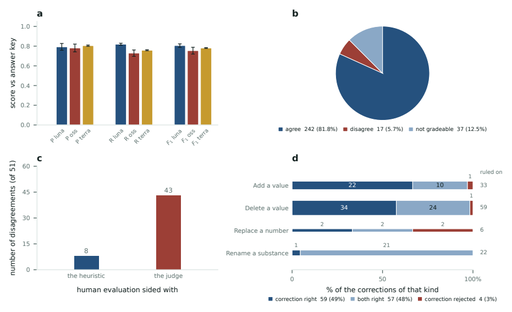
Fig. 2 Extraction performance and automated grader validation. (a) Precision (P), recall (R), andF 1 scores across candidate extraction models evaluated against the curated benchmark dataset. (b) Grader consensus across 296 benchmark records. The 81.8% slice represents mutual agreement on evaluable records (242/259, 93.4%); total agreement reaches 82.8% when accounting for three uncurated records mutually rejected by both graders. (c) Manual evaluation outcomes across the 51 informative disagreement pairs, where 43 cases favored the judge and only 8 favored the heuristic. (d) Human evaluation of judge-proposed corrections by edit type across 120 reviewed interventions, showing that 97% were either demonstrably correct (49%) or represented equally valid reporting variants (“both right”, 48%), with only 4 proposals (3%) rejected as erroneous.
원문 · CC BY 4.0 · Muhammad bin Javaid, Karim K. Ben Hicham, Enkhnyam Battulga, Alexander Mitsos, Martin Grohe · Building and Auditing Chemical Datasets with LLMs: A General LLM-as-a-Judge Framework Applied to Homogeneous Catalytic PET Depolymerisation · 원문 그림 인용 · 원본 PDF 5쪽에서 그림 영역을 추출했습니다.프롬프트 절제: 작업 예시 수와 청크 인용 요구
프롬프트 절제는 24개 기준 논문에 대해 세 번의 독립 반복으로 수행되었습니다. 작업 예시 하나를 포함하면 제로샷 대비 F1 점수가 +0.025 올랐지만 p=0.082로 유의하지 않았습니다. 최대 다섯 개까지 예시를 늘려도 유의한 향상은 보이지 않았으므로, 저자들은 하나의 예시가 형식 안내에 충분하다고 해석합니다. 청크 인용을 요구한 설정은 F1 점수를 0.716±0.043에서 0.780±0.021로 +0.064 높였으며 p=0.079입니다. 이 값도 유의 기준 α=0.05에는 미치지 못하므로, 방향은 일관되지만 통계적으로 확정된 효과로 읽을 수는 없습니다.
배포 규모 데이터베이스의 판정 분포와 인용 해결률
심사자는 이 3,942개 레코드를 모두 검토했고, 2,661건(67.5%)은 그대로 수용되었으며 1,202건(30.5%)은 수정안과 함께 거부되었고 79건(2.0%)은 즉시 거부되었습니다. 추출된 14,098개 원천 청크 인용 중 13,602건(96.5%)은 해당 논문의 유효한 청크에 해결되었습니다. 이 수치는 이 파이프라인이 실제 배포 데이터에서 얻은 분포이며, 수정안이 모두 정답이라는 뜻은 아닙니다.
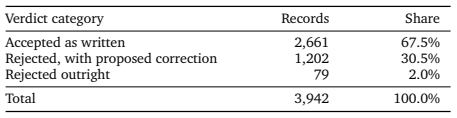
Table 3 The judge’s verdicts on the released dataset.
원문 · CC BY 4.0 · Muhammad bin Javaid, Karim K. Ben Hicham, Enkhnyam Battulga, Alexander Mitsos, Martin Grohe · Building and Auditing Chemical Datasets with LLMs: A General LLM-as-a-Judge Framework Applied to Homogeneous Catalytic PET Depolymerisation · 원문 그림 인용 · 원본 PDF 8쪽에서 그림 영역을 추출했습니다.적용 범위와 한계
벤치마크는 PET 글리콜리시스 실험 295개에 한정됩니다. 메탄올리시스와 가수분해에도 같은 스키마가 적용되지만, 이 두 경로는 수동 기준 데이터로 검증되지 않았습니다. 프롬프트 예시도 모두 글리콜리시스 논문에서 가져왔으므로 다른 용매와 반응 조건에서는 성능이 다를 수 있습니다. 심사 단계는 추출기가 놓친 실험을 찾지 못하므로 정확성을 검사할 뿐 완전성을 보장하지 않습니다. 또한 심사자는 일부 잘못된 경고를 내며, 자동 수정은 새로운 오류를 만들 수 있으므로 저자들은 수정 제안을 검토 가능한 변경 로그로 공개했습니다. 청크 인용의 일부는 프롬프트 예시 ID를 복사한 탓에 실제 텍스트에 연결되지 않습니다.
논문 정보
- 저자
- Muhammad bin Javaid, Karim K. Ben Hicham, Enkhnyam Battulga, Alexander Mitsos, Martin Grohe
- 학회·저널
- arXiv · 프리프린트
- 최초 공개일
- 2026년 11월 8일
- 등록일
- 2026년 11월 10일
- 수정일
- 2026년 11월 8일
- 버전
- v1
- arXiv
- 2611.11030
- 분류
- cs.CL · cs.AI · cs.DL
- 원문 이용 조건
- CC BY 4.0
- 제공 범위
- 논문 정보, 해설, 허용된 원문 그림
AI 해설은 논문 원문과 별개의 설명이며 오류가 있을 수 있습니다. 원문과 그림은 각 출처의 이용 조건과 따로 표시된 권리를 따릅니다.
초록
Large language models can rapidly extract structured multivariate experimental data from the chemistry literature, yet verifying thousands of generated records without ground truth remains difficult. We present a general, citation-grounded extraction and verification methodology centered on an independent "LLM-as-a-judge", applied to the literature on homogeneous catalytic poly(ethylene terephthalate) (PET) depolymerisation. In this pipeline, an extractor LLM generates schema-enforced records from research papers with citations to document chunks tagged with universally unique identifiers (UUIDs); an independent LLM judge then reads the full paper alongside each record, flags unsupported fields, and proposes cited corrections. Prompt ablations show that requiring chunk-level citations not only provides provenance down to specific paragraphs and tables but also improves extraction accuracy. Before deploying the judge at scale, we benchmarked it against manual evaluation on extractions from a hand-curated reference set of 295 ionic-liquid-catalysed PET glycolysis experiments. The judge agreed with human evaluation on 85.7% of reviewed records and was significantly more effective than a heuristic string-matching baseline at catching errors across related experiments. Deployed across 3,942 extracted records from 561 papers, the framework accepted 67.5% of them as written. Its proposed corrections concentrated on quantitative fields, where the extractor often conflated related experiments. We release the extracted dataset with the complete LLM judge audit logs, as well as the Chemistry Data Extractor Toolkit, an open-source application implementing this end-to-end pipeline in a code-free, browser-based environment for document parsing, customizable schema and prompt design, model-agnostic extraction and auditing, interactive provenance-highlighted review, and reproducible dataset bundling.
원문 인용
Muhammad bin Javaid, Karim K. Ben Hicham, Enkhnyam Battulga, Alexander Mitsos, Martin Grohe (2026). Building and Auditing Chemical Datasets with LLMs: A General LLM-as-a-Judge Framework Applied to Homogeneous Catalytic PET Depolymerisation. arXiv:2611.11030v1. https://arxiv.org/abs/2611.11030v1
BibTeX
@misc{javaid2026building,
  title = {{Building and Auditing Chemical Datasets with LLMs: A General LLM-as-a-Judge Framework Applied to Homogeneous Catalytic PET Depolymerisation}},
  author = {Muhammad bin Javaid and Karim K. Ben Hicham and Enkhnyam Battulga and Alexander Mitsos and Martin Grohe},
  year = {2026},
  eprint = {2611.11030},
  archivePrefix = {arXiv},
  url = {https://arxiv.org/abs/2611.11030v1}
}