Paper commentary
Iterated creation, grading, and revision of data science projects by language models
Language model graders' feedback steadily improves agent-written data science projects
- Problem Agent-written data science projects often fail to run, and it was unknown whether feedback from AI graders helps. Earlier work never checked execution or let writers revise after grading.
- Method The authors have a writer model build a full data science project and a grader model score it. The writer then revises its submission using the grader's rubric comments, over three rounds.
- Results The average score rose from 59 percent to 76 percent after the third round. Gains were larger for weaker writers, and self-grading scored about 9 percentage points higher.
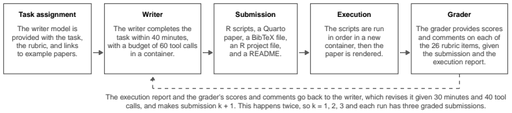
Figure1 :In each of three rounds the writer creates a submission, the submission is executed in a new
Original paper · CC BY 4.0 · Rohan Alexander · Iterated creation, grading, and revision of data science projects by language models · Original paper figure · Extracted the figure area from page 6 of the original PDF.Why agent-built projects stall
Most earlier agent benchmarks give a model a dataset and one target answer, which real data science rarely looks like. The task here asks for the whole job: a model downloads, cleans, tests and analyses data, then writes a paper about it. Benchmarks such as those built on a Kaggle leaderboard score reward a single numerical answer or set of analysis decisions.
Real-world data science tends to be less clear-cut, so a single target answer doesn't capture the work.
Previous work found that LLMs can produce every part of such a project, including grading it, but their writers had little tool-use. Their graders also didn't execute the scripts, so nobody checked whether the project actually ran. A project written once gives the model no way to learn what broke. So the authors ask whether a grader's comments can push a project further over repeated rounds.
The setup gives the writer the grader's score and comment for every rubric item, plus the execution report.
The question matters because LLM-as-a-judge graders have lower agreement with experts on tasks that need domain knowledge. Graders also tend to favour their own output, and self-bias is well documented. Still, AI feedback has proven useful in some settings, such as the ICLR 2025 randomized study of reviewer feedback. The authors also ask whether a weaker model can usefully advise a stronger one.
They further ask whether the feedback itself, or simply the opportunity to keep going, is what matters.
One round of the writer-grader loop
One round starts with a writer model that builds a complete data science project in a container. The writer works agentically with a shell, a file writer, a file reader and a file lister. The session ends when the writer ends it, when it uses up its tool calls or time, or when it replies without calling a tool. The submission keeps the files in the directory at that point, and it leaves out the data and the rendered output.
The submission is then evaluated in a new container, where the R scripts run in filename order. The paper is rendered with Quarto in that same container, which has R, Python, Quarto and a wide range of packages. The container has network access, which the authors note is typically needed to download data. A neutral executor checks whether the download and cleaning scripts exit without error and write at least one data file.
It also checks whether the test and model scripts exit without error and whether the Quarto file produces a PDF. A submission counts as executing when the scripts run without errors and the paper renders. The execution report lists the five outcomes, each script's exit status and running time, and the error lines for any failed step.
The grader receives the rubric, all the files the writer created, and the execution report. Some breaches, such as using simulated rather than real data, can result in a zero overall. If a grade cannot be read or a rubric item lacks a mark, the grader gets chances to fix it, and otherwise the round's grade is unavailable. The submission's score is a percentage rounded to the nearest whole number.
After the round, the writer gets back its files, the execution report, and the grader's comment and score for every rubric item. The writer revises the submission with the same tools, and the new submission is executed and graded the same way. The authors use three rounds in total because they expect the gains from self-revision to shrink with each round.
Each run therefore produces three graded submissions, and the writer begins each revision from its own earlier files. Two variations test what the feedback adds: one keeps the three rounds with no feedback, and the other gives one session with 140 tool calls and 100 minutes. In the no-feedback variation, the writer continues its own session and can run its scripts and render its paper again.
The single-session variation makes one submission with no revision, and every grader marks it.
How much the scores rise, and for whom
About a third of that rise comes from fewer submissions receiving zero. If we remove those submissions, the increase runs from 70 percent to 80 percent. So the gain is real, but part of it comes from removing failures rather than from better projects.
The gain depends on the writer. A large part of that spread reflects how much room for improvement each writer had at the start.
Most of the gain arrives with the first revision. That first revision is where the writer sees the grader's comments for the first time.
Feedback is not the only source of gain, because extra budget helps too. Revising without any feedback, but with the same additional time and tool calls in the second and third rounds, gets writers other than Haiku 4.5 part of the way. Giving the whole budget at once, with no rounds of revision, gets four of the seven writers to within three points of their final submission with feedback.
Still, revising after feedback usually produces the highest scores.
Why revisions sometimes break a working project
Across all three rounds, 111 of the 441 submissions do not execute. Seventeen runs never execute in any of the three rounds, and 16 of those were written by Z.AI's GLM-5.3 Flash.
GLM-5.3 Flash shows the sharpest gap, since only 1 of its 21 first-round submissions executes.
Feedback can also break a submission that once worked, so the loop cuts both ways. Without feedback, fewer broken submissions get fixed, but fewer working submissions also get broken.
How far a grader's score can be trusted
Graders don't agree on the level of the score, even when they grade the same submissions. Every grader scored the same first-round submissions, so the gaps come from the graders rather than the work.
The same grader gives much steadier scores when it grades the same submission again. Graders disagree on levels but often agree on order.
Repeated grading of the same final submission is the test of consistency within a grader. Each final submission was scored three times by the grader of its run, using the same files and execution report. Gemini 3.8 Flash tends to agree with itself because its scores are often at the maximum.
Own-noise matters when judging round-to-round changes.
Self-grading inflates scores for some graders much more than others. Part of this gap reflects how each model grades every writer, not only its own work.
Limitations of the evidence
Fifty-one gradings returned no usable grade because the submission was too large for the grader to read. The grader sees only text, so the study can't show how a rendered PDF or its figures would have been scored. The study covers one assignment for third-year statistics students, so the scores don't show how the loop performs on other data science tasks.
The task is a broad assignment with a rubric of 26 items and 108 points, which limits how far the scores generalize.
Models were queried through OpenRouter with fallback to other hosts disabled. Each model is served through its own developer, so the results reflect those hosts at those dates.
The design stops at three rounds, and the authors note that gains in earlier work usually shrink with each round. They didn't test longer loops, so the evidence says nothing about whether improvement continues past the third round.
Paper info
- Authors
- Rohan Alexander
- Venue
- arXiv · Preprint
- First published
- 2026-11-3
- Added
- 2026-11-6
- Updated
- 2026-11-3
- Version
- v1
- arXiv
- 2611.05548
- Category
- cs.AI · cs.CL
- Original paper terms
- CC BY 4.0
- What we show
- Paper info, commentary and permitted figures from the original paper
AI commentary is a separate explanation from the original paper and may contain errors. The original paper and figures follow each source's terms of use and any rights noted separately.
Abstract
We evaluate the extent to which agentic AI models can complete an end-to-end data science project, and how this improves with feedback. A 'writer' model with specific tools creates a complete data science project including downloading, cleaning, and analyzing a dataset, and writing a short paper about it. The project is executed and a 'grader' model evaluates it. The writer can then revise its submission, and this repeats for a total of three rounds. We consider seven models from five developers: Anthropic, OpenAI, Google, DeepSeek, and Z.AI. Each model is both a writer and a grader, so there are 49 writer-grader pairs and we run each pair three times. Of the 147 initial submissions, 107 run and render, and the average score increases from 59 per cent to 76 per cent after the final round of feedback. By writer the extent of the increase ranges from 3 percentage points for Anthropic's Opus 5.5 to 46 percentage points for Anthropic's Haiku 4.5, and by grader it ranges from 13 percentage points for Google's Gemini 3.8 Flash to 32 percentage points for Anthropic's Haiku 4.5. When a model grades its own writing the score tends to be about 9 percentage points higher than the average of what the other models give it. About half of the difference that we see from round to round is within the grader's own noise. Feedback generally results in the highest marks, but even just having the chance to revise, or having the additional budget, in terms of time or tool calls, without any feedback, results in considerable increases for some of the models but not for others. We find that how much such a loop helps depends on which model plays which role, but weaker models generally do not improve stronger models.
Figures from the paper
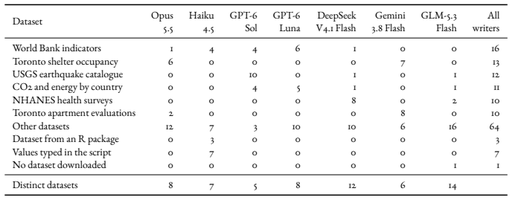
Table2 :Numberoffinalsubmissionsthatuseeachdataset,bywriter,forthesixmostcommondatasets.
Original paper · CC BY 4.0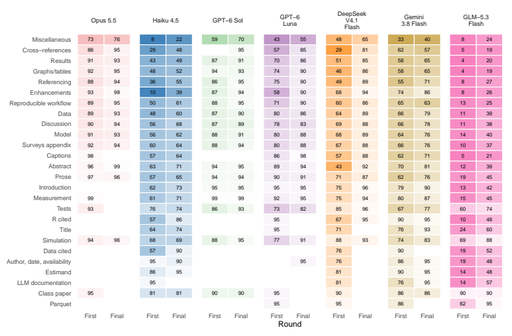
Figure4 :Theaveragescoreinthefirstroundandinthefinalroundasapercentageofthemaximum,for
Original paper · CC BY 4.0Quote from the paper
Rohan Alexander (2026). Iterated creation, grading, and revision of data science projects by language models. arXiv:2611.05548v1. https://arxiv.org/abs/2611.05548v1
BibTeX
@misc{alexander2026iterated,
  title = {{Iterated creation, grading, and revision of data science projects by language models}},
  author = {Rohan Alexander},
  year = {2026},
  eprint = {2611.05548},
  archivePrefix = {arXiv},
  url = {https://arxiv.org/abs/2611.05548v1}
}