論文解説
Camera equalisation of an 11.5x drop in environmental illuminance: four imitation-learning policies on an SO-101 arm
環境照度が11.5倍低下したときのカメラ等化:SO-101ロボットアームにおける4つの模倣学習ポリシー
- 課題 部屋の照度(lux)だけを記録していても、ポリシーが見ているカメラ入力の変化は説明できないかもしれません。
- 結果 成功率は、通常照明で20/40、低照度で19/40となり、大きな差はありませんでした。
ロボット評価でluxがポリシーの入力を説明できない問題
実際のロボットベンチマークでは、部屋の照度(lux)を照明条件として記録することがよくあります。この論文では、同じluxであっても同じカメラ入力を意味するとは限らないという仮定を、実験で検証しています。研究上の問いは2つです。1つ目は、SO-101ロボットアームで4つの模倣学習ポリシーのpick-and-place成功率が、部屋の照度が約11.5倍低くなったときにどれだけ変わるかです。2つ目は、照度の変化が、ポリシーが実際に受け取るカメラ画像の明るさと統計にどれだけ反映されるかです。この実験は探索的な付随研究であり、事前登録はされていません。
同じデモで学習した4つのポリシーと2つの照明条件
4つのポリシーはACT、SmolVLA、Diffusion Policy、π0.5で、いずれも同じ50個の遠隔操作によるデモで学習されています。デモは約500luxで記録されました。ACTのResNet-18はImageNetの重みから開始し、Diffusion PolicyのResNet-18は最初から学習されています。SmolVLAとπ0.5は、事前学習済みのvision-language-action基盤モデルからファインチューニングされています。評価用のチェックポイントはポリシーごとに異なり、ACTは30,000ステップ、SmolVLAは6,000ステップ、Diffusion Policyは50,000ステップ、π0.5は6,000ステップです。
通常照明は、室内の人工照明を点灯し、録画時点の照度に合わせた条件です。低照度条件は、人工照明をすべて消し、窓を覆って自然光を減らした条件です。そのため低照度では、照度の水準だけでなく、光源、色、方向も変わっています。各ブロックは、バッチN00からN09までの10回のrolloutで構成されています。

Table 1 : Checkpoints benched. Cooldowns used a1−√·learning-rate decay.
出典 · CC BY 4.0 · Simon Cowling · Camera equalisation of an 11.5x drop in environmental illuminance: four imitation-learning policies on an SO-101 arm · 論文の図を引用 · 元のPDFの2ページ目から図の部分を抽出しています。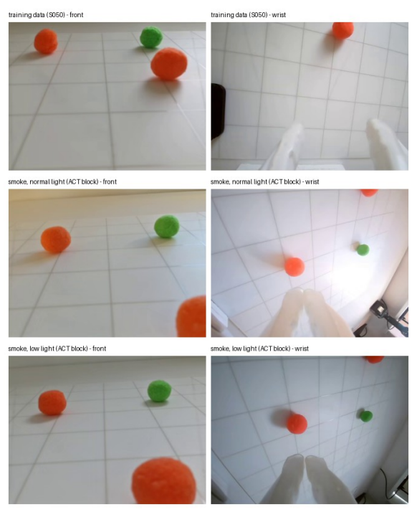
Figure 2 : First frames of a training episode and of placement N00 in the normal-light and low-light ACT blocks; front camera left, wrist camera right. The low-light frames are barely darker than the others. In normal light the wrist view shows a bright reflection on the floor that does not appear in training or in low light.
出典 · CC BY 4.0 · Simon Cowling · Camera equalisation of an 11.5x drop in environmental illuminance: four imitation-learning policies on an SO-101 arm · 論文の図を引用 · 元のPDFの5ページ目から図の部分を抽出しています。成功率の比較とポリシーごとの違い
通常照明では4つのポリシーの成功は20/40で、低照度では19/40でした。ポリシー間の感度の差に関する交互作用検定は、p = 0.86でした。プールしたMantel–Haenszelのオッズ比は0.89で、95%信頼区間は0.34から2.33です。この結果は10回のrolloutブロックに基づくものなので、大きな変化しか検出できません。著者らは大きな低下は起こりにくいと解釈していますが、10ポイントの低下は排除されないと述べています。
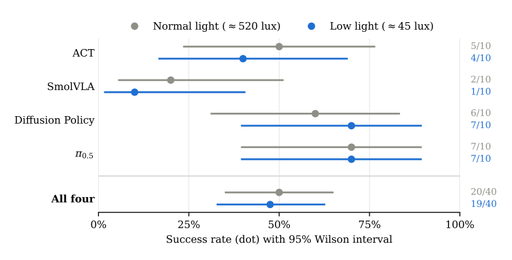
Figure 1 : Success by policy and light level; 80 rollouts, 10 per cell, placements N00–N09.
出典 · CC BY 4.0 · Simon Cowling · Camera equalisation of an 11.5x drop in environmental illuminance: four imitation-learning policies on an SO-101 arm · 論文の図を引用 · 元のPDFの3ページ目から図の部分を抽出しています。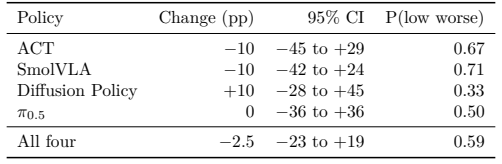
Table 2 : Change in success, low minus normal. Intervals are Newcombe intervals; P(low worse) is the Beta(1,1) posterior. The pooled change is the raw difference; the posterior median of the policy average is−2.1points. All Fisher and McNemarp-values were 1.00.
出典 · CC BY 4.0 · Simon Cowling · Camera equalisation of an 11.5x drop in environmental illuminance: four imitation-learning policies on an SO-101 arm · 論文の図を引用 · 元のPDFの3ページ目から図の部分を抽出しています。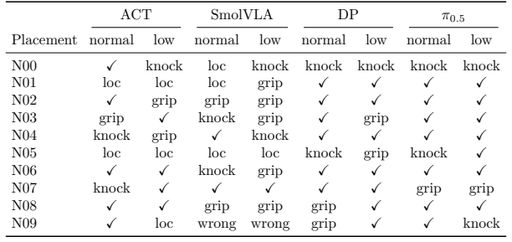
Table 6 : Every rollout. ✓ success; loc = location failure; grip = grip failure; knock = ball knocked out of reach; wrong = wrong object. The DP repeat block is in Table 5.
出典 · CC BY 4.0 · Simon Cowling · Camera equalisation of an 11.5x drop in environmental illuminance: four imitation-learning policies on an SO-101 arm · 論文の図を引用 · 元のPDFの9ページ目から図の部分を抽出しています。カメラ設定と画像統計が照度の差を吸収した仕組み
照度は作業空間で大きく違っていましたが、カメラ画像の明るさはそれほど変わりませんでした。同じ設定で、frontカメラの平均lumaは1.03倍低くなり、wristカメラは1.24倍低くなりました。ガンマ2.2で線形の光に換算すると、frontは約7%、wristは約38%少ない線形の光を受けていたと計算されます。ただし、この換算値は論文の説明に基づくものです。論文は、対数基準ではfrontが約3%、wristが約20%減少し、それが実際の照度低下に反映されたと報告しています。両カメラは自動露出と自動ホワイトバランスに設定されており、著者らは、この自動調整が差を吸収した可能性が高いと解釈しています。
露出を固定した対照実験は行われていません。wristカメラでは明るさが19%低下し、コントラストも8%低下しました。正規化していない鮮明度の34%の低下は、明るさの低下で説明できます。明るさで正規化すると、鮮明度は133から134でほぼ同じでした。
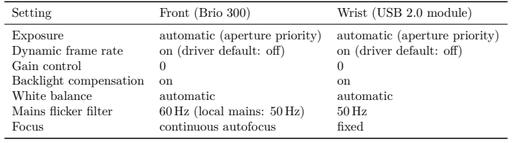
Table 3 : Camera settings.
出典 · CC BY 4.0 · Simon Cowling · Camera equalisation of an 11.5x drop in environmental illuminance: four imitation-learning policies on an SO-101 arm · 論文の図を引用 · 元のPDFの4ページ目から図の部分を抽出しています。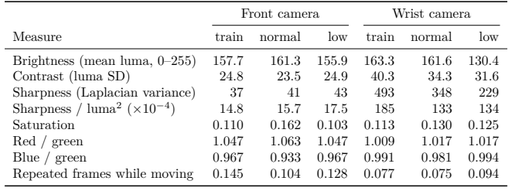
Table 4 : Image statistics, means over episodes (training: 20 S050 episodes).
出典 · CC BY 4.0 · Simon Cowling · Camera equalisation of an 11.5x drop in environmental illuminance: four imitation-learning policies on an SO-101 arm · 論文の図を引用 · 元のPDFの4ページ目から図の部分を抽出しています。
Table 7 : Illuminance by block (lux), normal / low.
出典 · CC BY 4.0 · Simon Cowling · Camera equalisation of an 11.5x drop in environmental illuminance: four imitation-learning policies on an SO-101 arm · 論文の図を引用 · 元のPDFの9ページ目から図の部分を抽出しています。繰り返しブロックに見られた単一ブロックのばらつき
DP低照度ブロックは偶然もう一度実行されたもので、2回の成功数はいずれも7/10でした。しかし、2回の実行で同じバッチが成功したのは6/10で、独立を仮定した場合に期待される5.8と同程度です。したがって、成功数が同じでも、バッチごとの結果は偶然に近い形で変わることがあります。著者らは、これが単一の10-rolloutブロックの比較で超えるべきばらつきの下限だと解釈しています。

Table 5 : The two low-light DP blocks.✓success; loc, grip, knock: failure labels.
出典 · CC BY 4.0 · Simon Cowling · Camera equalisation of an 11.5x drop in environmental illuminance: four imitation-learning policies on an SO-101 arm · 論文の図を引用 · 元のPDFの6ページ目から図の部分を抽出しています。適用範囲と残された限界
この結果は、1台のリグ、1つのタスク、50個のデモというデータ量、ポリシーごとに1つのチェックポイントから得られたものです。低照度での影、まぶしさ、ちらつき、通常光より明るい照明は試されていません。カメラ設定は実験後にv4l2-ctlで読み取ったもので、実験中には記録されていません。センサーノイズは、圧縮された映像では評価できませんでした。また、SmolVLAは通常照明で10回中2回しか成功しなかったため、最大20ポイントの低下しか示せませんでした。照明効果に関する最終的な結論は、露出を固定した追加実験によって確認する必要があります。
論文情報
- 著者
- Simon Cowling
- 学会・ジャーナル
- arXiv · プレプリント
- 公開日
- 2026年11月10日
- 登録日
- 2026年11月11日
- 更新日
- 2026年11月10日
- バージョン
- v1
- arXiv
- 2611.13810
- カテゴリ
- cs.RO
- ライセンス
- CC BY 4.0
- 掲載内容
- 論文情報・解説・論文の図
この解説は、Refivuの韓国語解説をAIで翻訳したものです。不正確な翻訳や誤りが含まれる可能性があります。論文と図の利用条件は各出典に従います。
アブストラクト
Real-robot benchmarks of learned visuomotor policies often record room illuminance as the lighting condition. We show that, on a typical low-cost rig, room light and image light can be almost unrelated. Four imitation-learning policies (ACT, SmolVLA, Diffusion Policy and pi0.5) were trained on the same 50 demonstrations of a pick-and-place task on an SO-101 arm. Each was run for ten rollouts at about 520 lux and again at about 45 lux, an 11.5x reduction. Success was 20/40 in normal light and 19/40 in low light: a change of -2.5 percentage points (95% CI -23 to +19), with no evidence that the policies differed in sensitivity (interaction p = 0.86). The recorded video shows why: mean image brightness was only 3% lower in low light on the front camera and 19% lower on the wrist camera. Both cameras were set to automatic exposure and white balance, which most likely absorbed the difference; exposure was not locked in this experiment. An accidental repeat of one 10-rollout block reproduced its success count (7/10) but matched the first block at only 6 of 10 placements, consistent with chance. We conclude that lux alone does not describe what a policy sees. Camera settings, and image statistics compared with the training recordings, are the quantities to report and control. Data and code are public.
この論文を引用
Simon Cowling (2026). Camera equalisation of an 11.5x drop in environmental illuminance: four imitation-learning policies on an SO-101 arm. arXiv:2611.13810v1. https://arxiv.org/abs/2611.13810v1
BibTeX
@misc{cowling2026camera,
  title = {{Camera equalisation of an 11.5x drop in environmental illuminance: four imitation-learning policies on an SO-101 arm}},
  author = {Simon Cowling},
  year = {2026},
  eprint = {2611.13810},
  archivePrefix = {arXiv},
  url = {https://arxiv.org/abs/2611.13810v1}
}